Tallac Village, Sacramento
Updated · 2,570 residents
Tallac Village is a quiet, residential enclave in southeast Sacramento known for its consistent mid-century layout and strong community health insurance coverage. While the neighborhood offers a functional, walkable grid and a moderate level of local activity, residents should expect noticeable noise from nearby road traffic.
Key Highlights
About Tallac Village
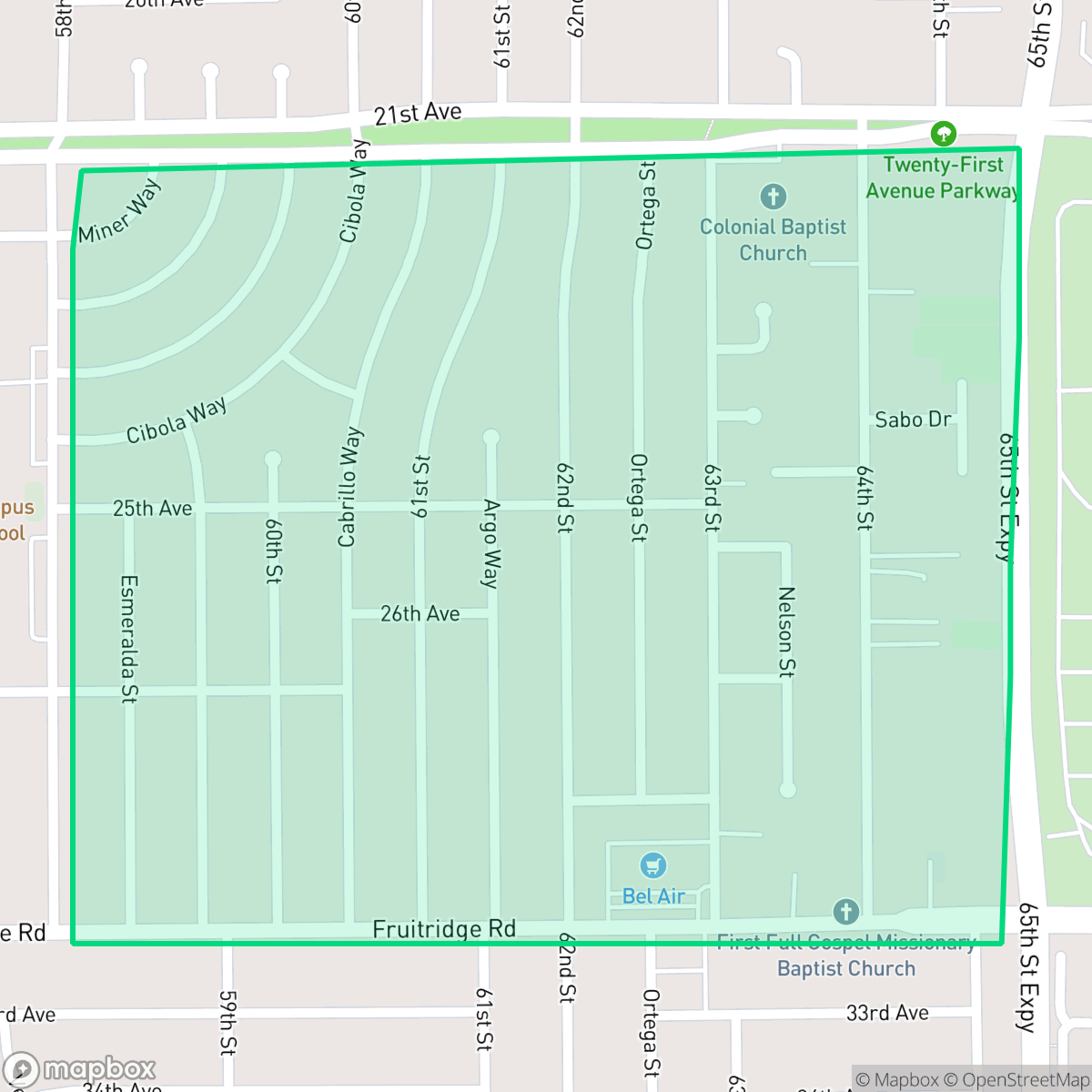
Established in 1943–1944, Tallac Village is a historic southeast Sacramento neighborhood developed by builder Manuel Freitas Jacinto, who constructed the residential subdivision alongside the adjacent Tallac Village Shopping Center. Diverging from traditional gridiron street patterns of the early 20th century, the neighborhood was designed with winding, curvilinear streets and quiet cul-de-sacs. Annexed by the city in the late 1940s, Tallac Village experienced a massive post-World War II building boom, with over 90 percent of its homes constructed between 1940 and 1969. The neighborhood is highly regarded for its distinctive mid-century modern aesthetic, characterized by single-story, flat-roofed homes built with durable cinderblock construction on spacious lots. Today, it remains a well-preserved slice of mid-century Americana.
The neighborhood maintains a stable, residential atmosphere characterized by its total lack of industrial hazards and a high rate of health insurance coverage among residents. It provides a balanced suburban environment where local services and green spaces contribute to a moderate level of daily activity. The layout prioritizes pedestrian access, with a comprehensive sidewalk network that allows for safe movement through the residential blocks.
Prospective residents should be aware of certain trade-offs, particularly regarding acoustic comfort, as road traffic generates a consistent noise level throughout the area. Additionally, the neighborhood falls within the Sacramento City Unified School District, which currently faces significant fiscal challenges and administrative instability. While the area offers a secure and well-defined suburban experience, individuals should weigh these environmental and educational factors when considering the location.
Neighborhood Scores Across 15 Qualities
Homes in this area feature typical suburban spacing with some buffers between neighbors, though density is slightly higher than the Sacramento average. Residential lots often have closely packed structures and common backyard fencing, according to iHuus data.
A structured grid and comprehensive sidewalk network make navigating residential blocks safe and easy. According to iHuus data, this neighborhood offers superior pedestrian accessibility compared to the Sacramento average.
Standard tract housing defines the landscape here, featuring uniform rooflines and modest yards. This visual character is slightly below the Sacramento average according to iHuus data.
Accessible walking areas are provided by continuous sidewalks and nearby school fields; however, overall accessibility to green space is slightly below the Sacramento average according to iHuus data.
Residential layouts here consist primarily of single-family homes on small plots, offering a suburban character that is nearly identical to the Sacramento average. According to iHuus data, the area features a mix of standard suburban density and occasional small commercial clusters.
Local dining and social spots provide a more active atmosphere than many other parts of Sacramento. While certain blocks remain quiet and residential, there is a notable presence of diverse restaurants and essential services within the area.
Frequent disturbances from nearby freeway and railroad traffic characterize this area. According to iHuus data, acoustic comfort in Tallac Village is notably lower than the Sacramento average.
Air quality levels fluctuate between acceptable and unhealthy, with occasional concerns for sensitive groups. This status is largely consistent with the average experienced across Sacramento.
Industrial presence is minimal and comparable to the city average, consisting primarily of residential and light commercial zones. While large warehouses are visible on the western edge, residents should be aware of a nearby EPA Superfund site that could potentially impact local soil or groundwater.
Health insurance access is lower in this area than the Sacramento average, according to iHuus data. Residents may find fewer locally covered options for medical services compared to the rest of the city.
Voting patterns and census indicators in Tallac Village reflect a deeply liberal leaning that is slightly more pronounced than the Sacramento average.
A diverse range of age groups resides here, including young adults, families, and seniors. This demographic distribution is largely consistent with the broader Sacramento area, according to iHuus data.
Residual flood risk exists within this area as it sits within a 500-year floodplain, though safety levels remain higher than the Sacramento average according to iHuus data.
Address-Level Insights for Tallac Village


iHuus Neighborhood Intelligence Insights
Get address-level neighborhood insights for Tallac Village
- Street-level scores — see how individual blocks compare, not just neighborhood averages
- Micro-zone boundaries — identify quiet pockets, flood boundaries, and walkable clusters before you visit
- 15 dimensions in full — walkability, noise, air quality, school quality, insurance coverage, population age profile, urban/rural index, and more
- Boundary risk alerts — know if your address sits near a block boundary where scores drop, the kind of detail no listing will ever mention
- School insights — individual school ratings and insights, not just district-level data
- Compare before you commit — side-by-side data across neighborhoods, down to block precision
No credit card required
Compare with Any Neighborhood
| Dimension | Tallac Village | Airport |
|---|---|---|
| 🚶 Walkabilityavg 8.5 | ||
| 🔊 Acoustic Comfortavg 3.22 | ||
| 🤫 Privacy Indexavg 5.34 | ||
| 🎨 Visual Appealavg 6.3 | ||
| 🐕 Dog Friendlinessavg 6.98 | ||
| 🗺️ Urban-Rural Indexavg 6.57 | ||
| ✨ Neighborhood Vibeavg 4.66 | ||
| 🏥 Health Insurance Coverageavg 7.4 | ||
| 🌿 Air Qualityavg 6.12 | ||
| 🏭 Industrial Proximityavg 8.32 | ||
| 🌊 Flood Safetyavg 6.04 | ||
| 🗳️ Ideological Leanavg 9.49 | ||
| 👥 Population Age Profileavg 4.75 | ||
| 🔥 Fire Safetyavg 0 | ||
| 🏫 School Quality |
Tallac Village Rankings
School Districts Serving Tallac Village
School Insights for Tallac Village
Below average outcomes; significant attendance and academic challenges.
School Insights
See what's really behind every school rating near Tallac Village
- Individual school ratings — each school's own score with outcome context, not just a district average
- Enrollment & class size data — student-to-teacher ratio and how it compares to the state average
- Full demographics breakdown — ethnicity and gender composition for every school in the enrollment zone
- Every school in the district — all schools within the enrollment boundary ranked by rating, not just the closest one
- Grade levels & benchmarks — elementary through high school, with below/above state-average flags
No credit card required