Johnson Heights, Sacramento
Updated · 1,363 residents
Johnson Heights is a quiet, suburban enclave in Sacramento characterized by a mix of mid-century residential homes and light industrial spaces. While the area offers a stable living environment, residents should anticipate significant road noise and limited walkability compared to other parts of the city.
Key Highlights
About Johnson Heights
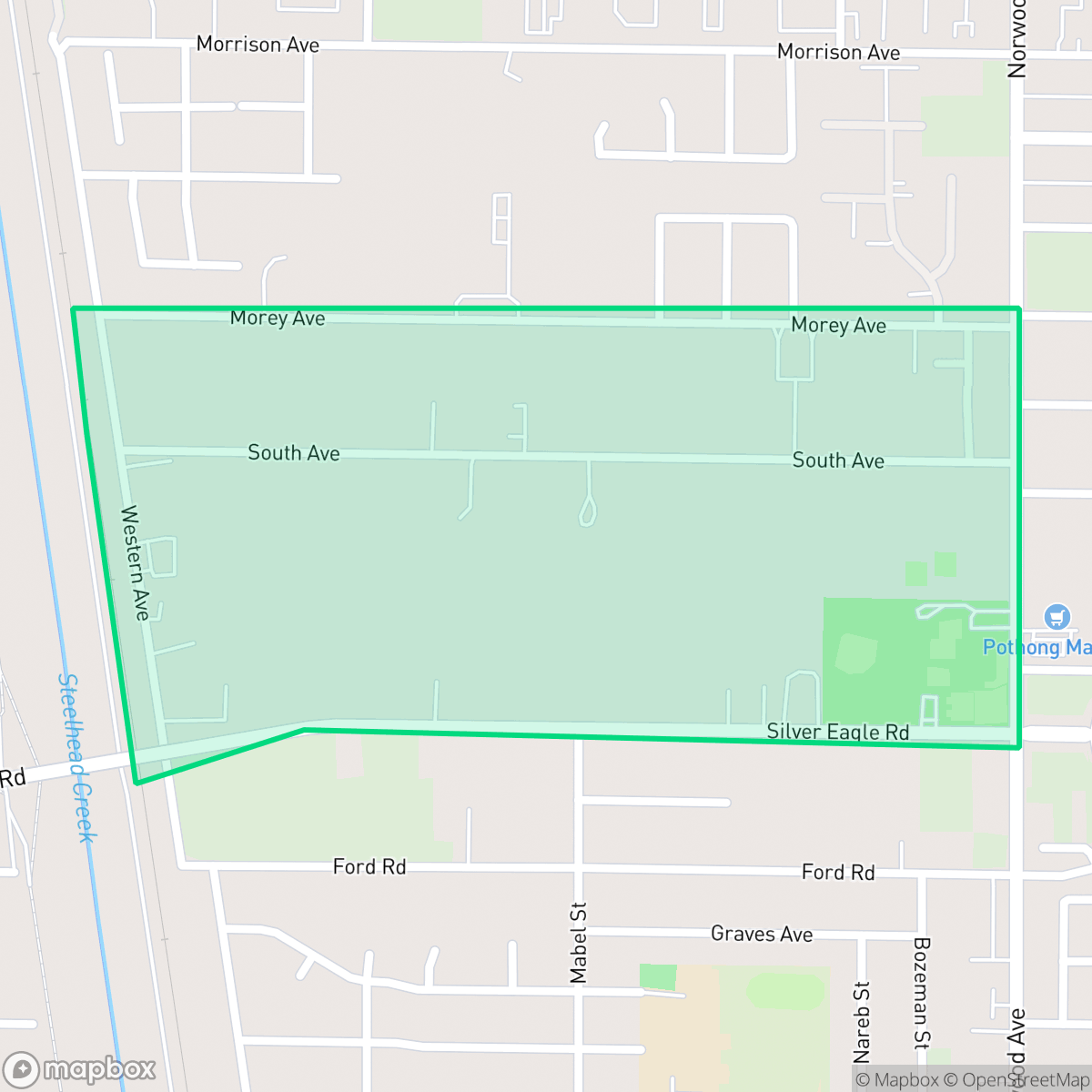
The Johnson Heights neighborhood in Sacramento, California, traces its origins to a subdivision plat recorded on December 20, 1910. Located within the North Sacramento Community Plan Area, the neighborhood historically developed alongside the growth of North Sacramento, which incorporated in 1924 and later merged with the City of Sacramento in 1964. Much of the residential housing stock in Johnson Heights—consisting primarily of single-family homes and small apartment buildings—was constructed during a building boom between 1940 and 1969, spurred by the nearby McClellan Air Force Base. Today, the area is characterized by signature streets like Morey Avenue, South Avenue, and Silver Eagle Road, and is often planned in tandem with the adjacent Oak Knoll subarea.
The area functions as a compact residential pocket that blends established housing with active commercial corridors. It maintains a consistent suburban feel, with streets like Morey Avenue and South Avenue serving as primary local thoroughfares. The neighborhood provides a functional, if understated, living environment that balances proximity to local industry with residential stability, offering a distinct sense of place within the broader North Sacramento community.
Prospective residents should note that the neighborhood experiences elevated noise levels primarily due to road traffic. While the area benefits from relatively high flood safety, it faces challenges regarding acoustic comfort and limited pedestrian infrastructure. Families may find the local school district, Twin Rivers Unified, to be in a period of transition marked by academic variance and staffing concerns. This location is best suited for those prioritizing affordability and a quiet, suburban pace over high-density walkability or immediate access to urban amenities.
Neighborhood Scores Across 15 Qualities
Residential spacing is varied, with some houses located closely together and others situated on larger lots. This level of separation between neighbors is slightly higher than the Sacramento average, according to iHuus data.
Pedestrian movement is supported by a structured grid and safe crossings, though walkability levels are lower than the Sacramento average. Low traffic residential cul-de-sacs and sidewalks on select streets provide a stable environment for walking.
Uniform rooflines and small, tidy yards characterize this area. The visual landscape is slightly less varied than the Sacramento average, according to iHuus data.
Wide sidewalk verges and large public school fields provide reliable walking areas for pets. According to iHuus data, these features offer slightly fewer connected green spaces than the Sacramento average.
Low density housing and significant open lots provide a semi-rural atmosphere that is very similar to the Sacramento average. Residents can expect a landscape defined by single-family homes situated among large lots and greenery.
Low levels of activity and limited commercial density make this a subdued area where most errands require a vehicle. According to iHuus data, the neighborhood lacks the social energy and pedestrian-friendly amenities found more frequently across Sacramento.
Frequent noise from nearby railroad tracks and major freeways is common in this area. According to iHuus data, acoustic levels are slightly higher than the Sacramento average.
Air quality levels in this area fluctuate between acceptable and unhealthy levels on certain days. According to iHuus data, these conditions are largely in line with the average seen throughout Sacramento.
Residential life is largely undisturbed by heavy industry, as the area consists mainly of quiet streets and occasional light commercial activity. This lack of significant industrial presence is consistent with the broader Sacramento area, according to iHuus data.
Health insurance accessibility is below the Sacramento average. According to iHuus data, a significant portion of the local population lacks coverage.
Voting patterns and census indicators in Johnson Heights reflect a deeply liberal leaning that is consistent with the broader Sacramento area.
Residents will find a balanced demographic of young adults, families, and seniors, though the population leans slightly younger than the Sacramento average according to iHuus data.
Some residual flood risk exists because certain areas fall within the 500-year floodplain. This level of safety is slightly higher than the Sacramento city average, according to iHuus data.
Address-Level Insights for Johnson Heights


iHuus Neighborhood Intelligence Insights
Get address-level neighborhood insights for Johnson Heights
- Street-level scores — see how individual blocks compare, not just neighborhood averages
- Micro-zone boundaries — identify quiet pockets, flood boundaries, and walkable clusters before you visit
- 15 dimensions in full — walkability, noise, air quality, school quality, insurance coverage, population age profile, urban/rural index, and more
- Boundary risk alerts — know if your address sits near a block boundary where scores drop, the kind of detail no listing will ever mention
- School insights — individual school ratings and insights, not just district-level data
- Compare before you commit — side-by-side data across neighborhoods, down to block precision
No credit card required
Compare with Any Neighborhood
| Dimension | Johnson Heights | Airport |
|---|---|---|
| 🚶 Walkabilityavg 8.5 | ||
| 🔊 Acoustic Comfortavg 3.22 | ||
| 🤫 Privacy Indexavg 5.34 | ||
| 🎨 Visual Appealavg 6.3 | ||
| 🐕 Dog Friendlinessavg 6.98 | ||
| 🗺️ Urban-Rural Indexavg 6.57 | ||
| ✨ Neighborhood Vibeavg 4.66 | ||
| 🏥 Health Insurance Coverageavg 7.4 | ||
| 🌿 Air Qualityavg 6.12 | ||
| 🏭 Industrial Proximityavg 8.32 | ||
| 🌊 Flood Safetyavg 6.04 | ||
| 🗳️ Ideological Leanavg 9.49 | ||
| 👥 Population Age Profileavg 4.75 | ||
| 🔥 Fire Safetyavg 0 | ||
| 🏫 School Quality |
Johnson Heights Rankings
School Districts Serving Johnson Heights
School Insights for Johnson Heights
Below average outcomes; significant attendance and academic challenges.
School Insights
See what's really behind every school rating near Johnson Heights
- Individual school ratings — each school's own score with outcome context, not just a district average
- Enrollment & class size data — student-to-teacher ratio and how it compares to the state average
- Full demographics breakdown — ethnicity and gender composition for every school in the enrollment zone
- Every school in the district — all schools within the enrollment boundary ranked by rating, not just the closest one
- Grade levels & benchmarks — elementary through high school, with below/above state-average flags
No credit card required