Hansen Park Golf Course, Sacramento
Updated · 286 residents
Hansen Park Golf Course is a quiet, residential enclave defined by its proximity to the expansive, nature-filled Hansen Ranch Park. While the area offers a peaceful, rural-like atmosphere and high visual appeal, it lacks local commercial amenities and requires a vehicle for most daily tasks.
Key Highlights
About Hansen Park Golf Course
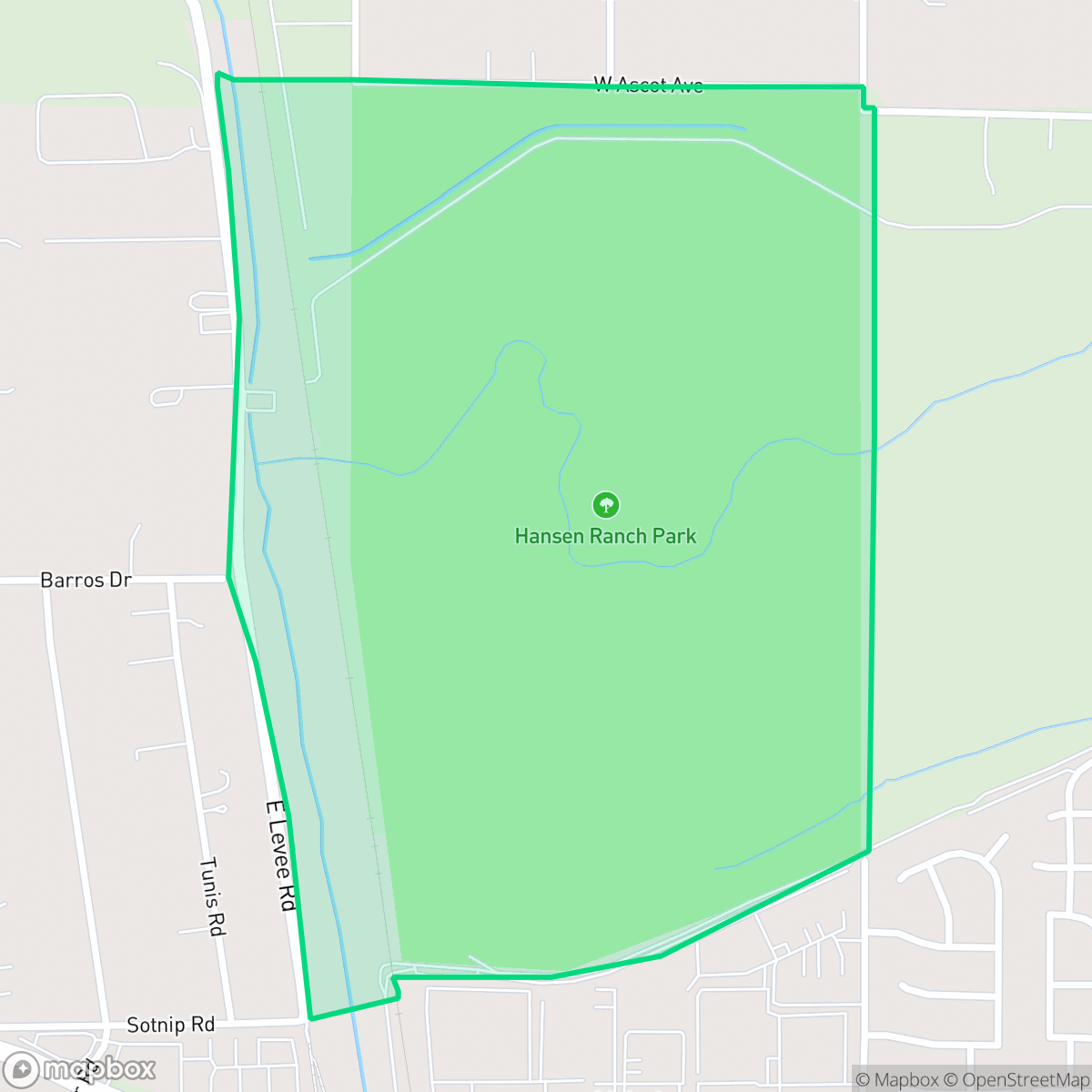
The Hansen Park Golf Course neighborhood in North Sacramento centers around the 268-acre Carl F. Hansen Regional Park (now Hansen Ranch Park). The land was donated to the City of Sacramento by the Hansen family in 1963 and 1985 with the stipulation that it be used for public recreation. Although the city initially planned a premier public golf course designed by GOLFPLAN in the 1980s, the project was ultimately shelved due to environmental and hydrological concerns regarding the site's undeveloped floodplain, which is crossed by Dry Creek and Linda Creek. Today, the park remains a serene nature preserve teeming with wildlife like herons, egrets, and coyotes. The surrounding residential neighborhood, largely developed in the 1990s, consists primarily of single-family homes adjacent to this preserved open space.
The neighborhood is characterized by its low-density residential layout and immediate access to undeveloped green space. Residents benefit from a high degree of privacy and a scenic environment that attracts wildlife, making it a quiet retreat from the typical urban pace. The area maintains a distinct rural feel despite its location within the city, with a lack of commercial development contributing to a very low level of neighborhood activity. According to data, the area is predominantly residential and offers a serene setting for those seeking distance from the city's denser, more active districts.
Prospective residents should note that the area is not designed for pedestrians, as daily errands typically require driving. While the neighborhood boasts strong health insurance coverage and a scenic setting, it faces significant environmental challenges, including low flood and fire safety ratings. Families should also consider that local schools, served by the Robla and Twin Rivers districts, currently face academic and staffing challenges. The neighborhood is best suited for those who prioritize privacy and natural surroundings over walkability and proximity to urban commercial centers.
Neighborhood Scores Across 15 Qualities
Residential spacing varies throughout the area, with some sections featuring homes situated very close to one another. This level of density is slightly higher than the Sacramento average, according to iHuus data.
Residential cul-de-sacs and a sidewalk network provide safe pedestrian access, though the area is less walkable than much of Sacramento. Sidewalks are primarily available on one side of the street, according to iHuus data.
Uniform tract housing with tidy yards and consistent rooflines characterizes the area. This level of visual variety is roughly in line with the typical scenery found across Sacramento.
Expansive grassy fields and connected green spaces offer ample exercise areas for pets. According to iHuus data, this area is slightly more dog friendly than the Sacramento average due to wide paths and low traffic exposure.
Open land and scattered greenery provide a more semi-rural atmosphere than much of the surrounding Sacramento area. According to iHuus data, the landscape features a blend of residential tracts and adjacent wetlands.
Minimal commercial activity and a low density of destinations make this a largely quiet, residential area. According to iHuus data, the neighborhood lacks the vibrant retail presence and social energy found in much of Sacramento.
Constant noise from nearby airport flight paths and heavy transit infrastructure makes this area significantly louder than the Sacramento average. According to iHuus data, the proximity to runways creates a lack of acoustic comfort for residents.
Air quality levels here fluctuate between acceptable and unhealthy, presenting occasional concerns for sensitive groups. This level of air quality is roughly in line with the Sacramento city average, according to iHuus data.
Logistics hubs and large warehouses are concentrated on the western edge, resulting in a higher industrial presence than the Sacramento average. While some areas feature quiet residential streets and green spaces, other sections experience active commercial daytime traffic.
Health insurance enrollment among residents is notable but remains lower than the Sacramento average, according to iHuus data.
Political leanings in this area are predominantly liberal, though the community is slightly less progressive than the Sacramento city average according to iHuus data.
Residents live alongside a balanced demographic of young adults, families, and seniors. According to iHuus data, this age distribution is slightly more varied than the typical Sacramento profile.
Flood risk in this area is comparable to the Sacramento average, though a lack of detailed FEMA studies means the specific level of danger remains undetermined. Residents should exercise standard caution during extreme weather events, according to iHuus data.
Address-Level Insights for Hansen Park Golf Course


iHuus Neighborhood Intelligence Insights
Get address-level neighborhood insights for Hansen Park Golf Course
- Street-level scores — see how individual blocks compare, not just neighborhood averages
- Micro-zone boundaries — identify quiet pockets, flood boundaries, and walkable clusters before you visit
- 15 dimensions in full — walkability, noise, air quality, school quality, insurance coverage, population age profile, urban/rural index, and more
- Boundary risk alerts — know if your address sits near a block boundary where scores drop, the kind of detail no listing will ever mention
- School insights — individual school ratings and insights, not just district-level data
- Compare before you commit — side-by-side data across neighborhoods, down to block precision
No credit card required
Compare with Any Neighborhood
| Dimension | Hansen Park Golf Course | Airport |
|---|---|---|
| 🚶 Walkabilityavg 8.5 | ||
| 🔊 Acoustic Comfortavg 3.22 | ||
| 🤫 Privacy Indexavg 5.34 | ||
| 🎨 Visual Appealavg 6.3 | ||
| 🐕 Dog Friendlinessavg 6.98 | ||
| 🗺️ Urban-Rural Indexavg 6.57 | ||
| ✨ Neighborhood Vibeavg 4.66 | ||
| 🏥 Health Insurance Coverageavg 7.4 | ||
| 🌿 Air Qualityavg 6.12 | ||
| 🏭 Industrial Proximityavg 8.32 | ||
| 🌊 Flood Safetyavg 6.04 | ||
| 🗳️ Ideological Leanavg 9.49 | ||
| 👥 Population Age Profileavg 4.75 | ||
| 🔥 Fire Safetyavg 0 | ||
| 🏫 School Quality |
Hansen Park Golf Course Rankings
School Districts Serving Hansen Park Golf Course
School Insights for Hansen Park Golf Course
Below average outcomes; significant attendance and academic challenges.
School Insights
See what's really behind every school rating near Hansen Park Golf Course
- Individual school ratings — each school's own score with outcome context, not just a district average
- Enrollment & class size data — student-to-teacher ratio and how it compares to the state average
- Full demographics breakdown — ethnicity and gender composition for every school in the enrollment zone
- Every school in the district — all schools within the enrollment boundary ranked by rating, not just the closest one
- Grade levels & benchmarks — elementary through high school, with below/above state-average flags
No credit card required