Cal Expo, Sacramento
Updated · 1,412 residents
Cal Expo is defined by its expansive fairgrounds and proximity to the American River, offering a quiet, low-density environment with significant open space. While the area provides a serene setting for residents, it features limited commercial activity and relies on nearby hubs for daily services.
Key Highlights
About Cal Expo
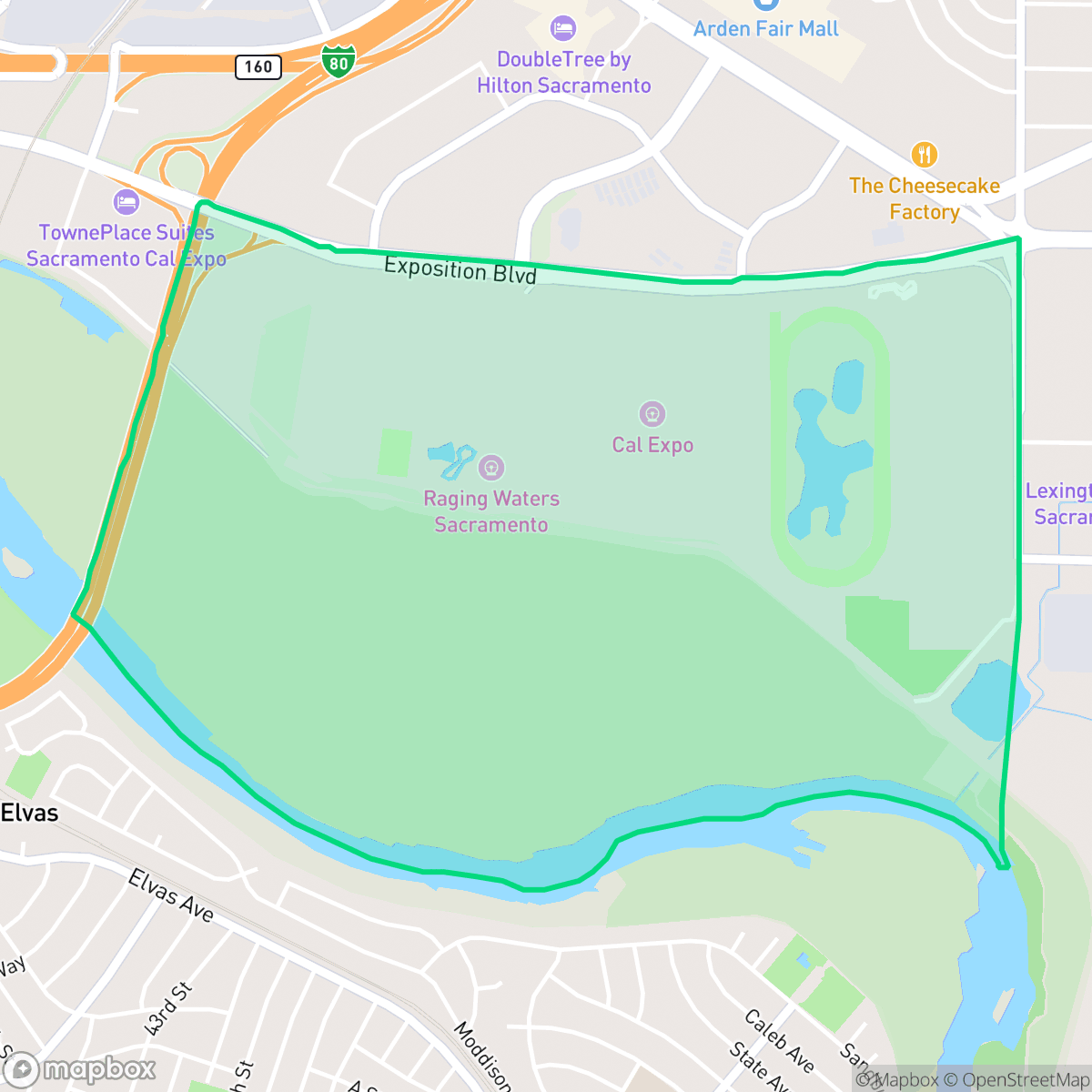
The Cal Expo neighborhood in Sacramento is defined by the 350-acre California Exposition and State Fairgrounds. Planning began in 1948 when the state purchased undeveloped land along the American River to replace the outgrown Stockton Boulevard fairgrounds. Dedicated by Governor Ronald Reagan in 1967 and opened in 1968, the complex features an Exposition Center designed by the prominent San Francisco firm Wurster, Bernardi and Emmons in the Brutalist style. The site incorporates a permanent monorail system modeled after Montreal’s Expo '67 and an iconic, mid-century painted water tower. In 2012, the entrance was enhanced with the historic 'CALIFORNIA' letters donated by the Disneyland Resort. The surrounding residential and commercial Point West area developed primarily from the 1970s onward, creating a bustling hub centered around this landmark event space.
The neighborhood is defined by its vast, open landscape and the presence of the fairgrounds, which dominate the local geography. The environment is notably quiet, characterized by low-density development and natural corridors that provide a buffer from the busier urban parts of Sacramento. Residents here benefit from a more spacious, rural-leaning atmosphere, though the presence of industrial infrastructure and major roadways contributes to a moderate level of ambient noise.
Those considering this area should note the limited local business presence, which necessitates travel for most daily errands. While the neighborhood offers good dog-friendly spaces and a sense of seclusion, it faces challenges regarding fire safety and proximity to industrial sites. Prospective residents should also be aware that local schools fall under districts currently facing significant operational and academic hurdles, making this area better suited for those prioritizing open space and quiet over immediate access to dense urban amenities or top-tier school systems.
Neighborhood Scores Across 15 Qualities
Residential spacing offers a moderate level of separation between neighbors, providing slightly more buffer than the Sacramento average. According to iHuus data, homes typically feature standard suburban setbacks and fenced backyards.
Residential streets feature mature tree canopies and safe crossings, though the overall sidewalk network is less extensive than the Sacramento average. According to iHuus data, many areas remain navigable for pedestrians due to low traffic volumes.
Manicured properties and premium amenities like private pools are frequently observed here, making the area more visually appealing than the Sacramento average according to iHuus data.
Access to the American River trails and local parks provides excellent green space for pets. According to iHuus data, the area offers more connected trails and safer walking paths than the Sacramento average.
Open natural spaces and river corridors provide a more rural character than the typical Sacramento landscape. Residential areas feature a mix of dense suburban layouts and low-density clusters near woodland and fields.
Low density and industrial landscapes create a quiet, remote atmosphere with very few local social hubs. According to iHuus data, the area lacks the vibrant commercial energy found in much of Sacramento.
A constant hum from nearby busy streets defines the local acoustic environment. This level of ambient noise is slightly higher than the Sacramento average, according to iHuus data.
Air quality in this area fluctuates between acceptable and unhealthy levels, particularly for sensitive groups. According to iHuus data, these conditions are roughly in line with the average found throughout Sacramento.
Residential life remains largely undisturbed by heavy industry, as the area is primarily composed of quiet streets and light commercial use. While a wastewater treatment plant and electrical substation are present, the neighborhood lacks significant industrial hazards and is comparable to the Sacramento average.
Health insurance accessibility is notably higher here than in the rest of Sacramento. According to iHuus data, a substantial majority of the local population maintains medical coverage.
Voting patterns and census indicators show a deeply liberal political leaning that is slightly more pronounced than the Sacramento average.
Residents live alongside a balanced mix of young adults, families, and older populations. This demographic spread is roughly in line with the broader Sacramento area, according to iHuus data.
Some residual flood risk exists due to the area being located within a 500-year floodplain, though safety levels are slightly higher than the Sacramento average according to iHuus data.
Address-Level Insights for Cal Expo


iHuus Neighborhood Intelligence Insights
Get address-level neighborhood insights for Cal Expo
- Street-level scores — see how individual blocks compare, not just neighborhood averages
- Micro-zone boundaries — identify quiet pockets, flood boundaries, and walkable clusters before you visit
- 15 dimensions in full — walkability, noise, air quality, school quality, insurance coverage, population age profile, urban/rural index, and more
- Boundary risk alerts — know if your address sits near a block boundary where scores drop, the kind of detail no listing will ever mention
- School insights — individual school ratings and insights, not just district-level data
- Compare before you commit — side-by-side data across neighborhoods, down to block precision
No credit card required
Compare with Any Neighborhood
| Dimension | Cal Expo | Airport |
|---|---|---|
| 🚶 Walkabilityavg 8.5 | ||
| 🔊 Acoustic Comfortavg 3.22 | ||
| 🤫 Privacy Indexavg 5.34 | ||
| 🎨 Visual Appealavg 6.3 | ||
| 🐕 Dog Friendlinessavg 6.98 | ||
| 🗺️ Urban-Rural Indexavg 6.57 | ||
| ✨ Neighborhood Vibeavg 4.66 | ||
| 🏥 Health Insurance Coverageavg 7.4 | ||
| 🌿 Air Qualityavg 6.12 | ||
| 🏭 Industrial Proximityavg 8.32 | ||
| 🌊 Flood Safetyavg 6.04 | ||
| 🗳️ Ideological Leanavg 9.49 | ||
| 👥 Population Age Profileavg 4.75 | ||
| 🔥 Fire Safetyavg 0 | ||
| 🏫 School Quality |
Cal Expo Rankings
School Districts Serving Cal Expo
School Insights for Cal Expo
Below average outcomes; significant attendance and academic challenges.
School Insights
See what's really behind every school rating near Cal Expo
- Individual school ratings — each school's own score with outcome context, not just a district average
- Enrollment & class size data — student-to-teacher ratio and how it compares to the state average
- Full demographics breakdown — ethnicity and gender composition for every school in the enrollment zone
- Every school in the district — all schools within the enrollment boundary ranked by rating, not just the closest one
- Grade levels & benchmarks — elementary through high school, with below/above state-average flags
No credit card required