Avondale, Sacramento
Updated · 4,233 residents
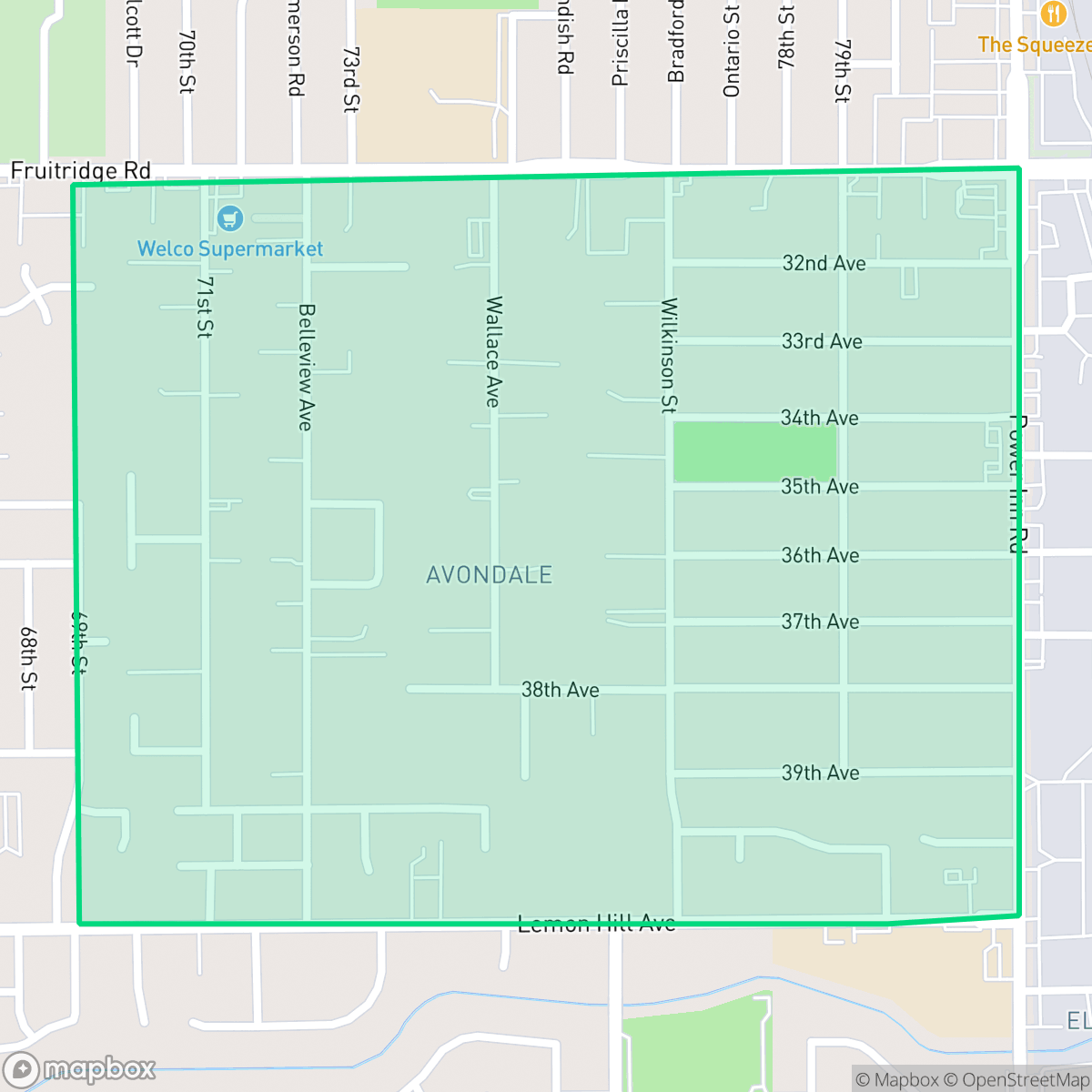
Avondale is a quiet, suburban enclave in southeast Sacramento known for its peaceful acoustic environment and strong community ties. The area offers consistent walkability and ample green space for pet owners, though residents should be aware of the surrounding industrial context and the ongoing challenges within the local school district.
Key Highlights
About Avondale
Established in southeast Sacramento in the mid-20th century, Avondale is a historically working-class neighborhood characterized by a mix of mid-century single-family homes and 1930s ranch-style houses. During the 20th century, discriminatory housing practices like redlining and racial covenants shaped the area into a diverse enclave. Today, Avondale is defined by its rich multicultural identity, with a significant Vietnamese and Mexican heritage. Local community activism is a core part of its history; the Avondale Glen Elder Neighborhood Association (AGENA) notably spearheaded environmental justice campaigns, including a high-profile legal challenge in the late 2000s against underground natural gas storage beneath local homes. George Sim Park serves as a central community hub and recreational oasis for the neighborhood's residents.
The neighborhood maintains a low-density residential atmosphere, characterized by consistent sidewalk networks and a notably quiet acoustic profile. Unlike busier urban centers, the area provides a steady, low-key environment where residents benefit from minimal noise pollution. George Sim Park serves as a primary recreational asset, complemented by various grassy canal buffers that enhance the aesthetic and utility of the local landscape.
Prospective residents should weigh the benefits of this peaceful setting against certain logistical trade-offs. While the area is dog-friendly and accessible, it faces challenges related to industrial proximity and the broader fiscal instability of the Sacramento City Unified School District. The neighborhood is best suited for those prioritizing a quiet, suburban lifestyle and community-oriented living, provided they are prepared to navigate the complexities of the local school system and regional environmental considerations.
Neighborhood Scores Across 15 Qualities
Residential spacing provides a modest buffer between neighbors, offering slightly more separation than the Sacramento average. According to iHuus data, the area features a mix of detached homes with small side yards and typical suburban setbacks.
Consistent sidewalk networks and marked intersections make navigating the area on foot easy. According to iHuus data, the sidewalk connectivity is slightly above the Sacramento average.
Standard tract housing defines the area, featuring uniform rooflines and modest yards. According to iHuus data, the visual landscape is slightly less diverse than the Sacramento average.
Wide sidewalks, grassy canal buffers, and nearby parklands provide ample space for pet exercise. According to iHuus data, the availability of continuous green spaces and continuous paths is slightly below the Sacramento city average.
Residential blocks blend single-family homes with large industrial and commercial corridors. This layout is largely consistent with the broader Sacramento area.
Primarily composed of industrial and suburban blocks, this area is notably less active than the Sacramento average. Most daily errands and dining options require a vehicle due to the low density of walkable businesses and the prevalence of freight corridors.
Frequent noise from nearby freeway and railroad corridors impacts the area. According to iHuus data, acoustic comfort levels are slightly below the Sacramento average.
Air quality levels fluctuate between acceptable and unhealthy periods, presenting occasional concerns for sensitive groups. According to iHuus data, these conditions are largely consistent with the average found across Sacramento.
Mixed-use zones blend residential areas with active commercial traffic and heavy industrial facilities. Residents should be aware of a nearby EPA Superfund site which, according to iHuus data, may present potential environmental concerns regarding soil and groundwater.
Health insurance access among Avondale residents is consistent with the Sacramento city average. Data from iHuus shows a stable level of coverage across the neighborhood.
Voting patterns and census indicators show a very strong liberal leaning, which is consistent with the broader Sacramento area according to iHuus data.
Residents live alongside a balanced variety of young adults, families, and older generations. This demographic distribution is roughly in line with the average found across Sacramento.
Flood risk in this area is slightly higher than the Sacramento average due to its location within a 500-year floodplain. According to iHuus data, some residual flood risk exists despite being outside the primary high-risk zones.
Address-Level Insights for Avondale


iHuus Neighborhood Intelligence Insights
Get address-level neighborhood insights for Avondale
- Street-level scores — see how individual blocks compare, not just neighborhood averages
- Micro-zone boundaries — identify quiet pockets, flood boundaries, and walkable clusters before you visit
- 15 dimensions in full — walkability, noise, air quality, school quality, insurance coverage, population age profile, urban/rural index, and more
- Boundary risk alerts — know if your address sits near a block boundary where scores drop, the kind of detail no listing will ever mention
- School insights — individual school ratings and insights, not just district-level data
- Compare before you commit — side-by-side data across neighborhoods, down to block precision
No credit card required
Compare with Any Neighborhood
| Dimension | Avondale | Airport |
|---|---|---|
| 🚶 Walkabilityavg 8.5 | ||
| 🔊 Acoustic Comfortavg 3.22 | ||
| 🤫 Privacy Indexavg 5.34 | ||
| 🎨 Visual Appealavg 6.3 | ||
| 🐕 Dog Friendlinessavg 6.98 | ||
| 🗺️ Urban-Rural Indexavg 6.57 | ||
| ✨ Neighborhood Vibeavg 4.66 | ||
| 🏥 Health Insurance Coverageavg 7.4 | ||
| 🌿 Air Qualityavg 6.12 | ||
| 🏭 Industrial Proximityavg 8.32 | ||
| 🌊 Flood Safetyavg 6.04 | ||
| 🗳️ Ideological Leanavg 9.49 | ||
| 👥 Population Age Profileavg 4.75 | ||
| 🔥 Fire Safetyavg 0 | ||
| 🏫 School Quality |
Avondale Rankings
School Districts Serving Avondale
School Insights for Avondale
Below average outcomes; significant attendance and academic challenges.
School Insights
See what's really behind every school rating near Avondale
- Individual school ratings — each school's own score with outcome context, not just a district average
- Enrollment & class size data — student-to-teacher ratio and how it compares to the state average
- Full demographics breakdown — ethnicity and gender composition for every school in the enrollment zone
- Every school in the district — all schools within the enrollment boundary ranked by rating, not just the closest one
- Grade levels & benchmarks — elementary through high school, with below/above state-average flags
No credit card required