Cherry Glen, Roseville
Updated · 2,578 residents
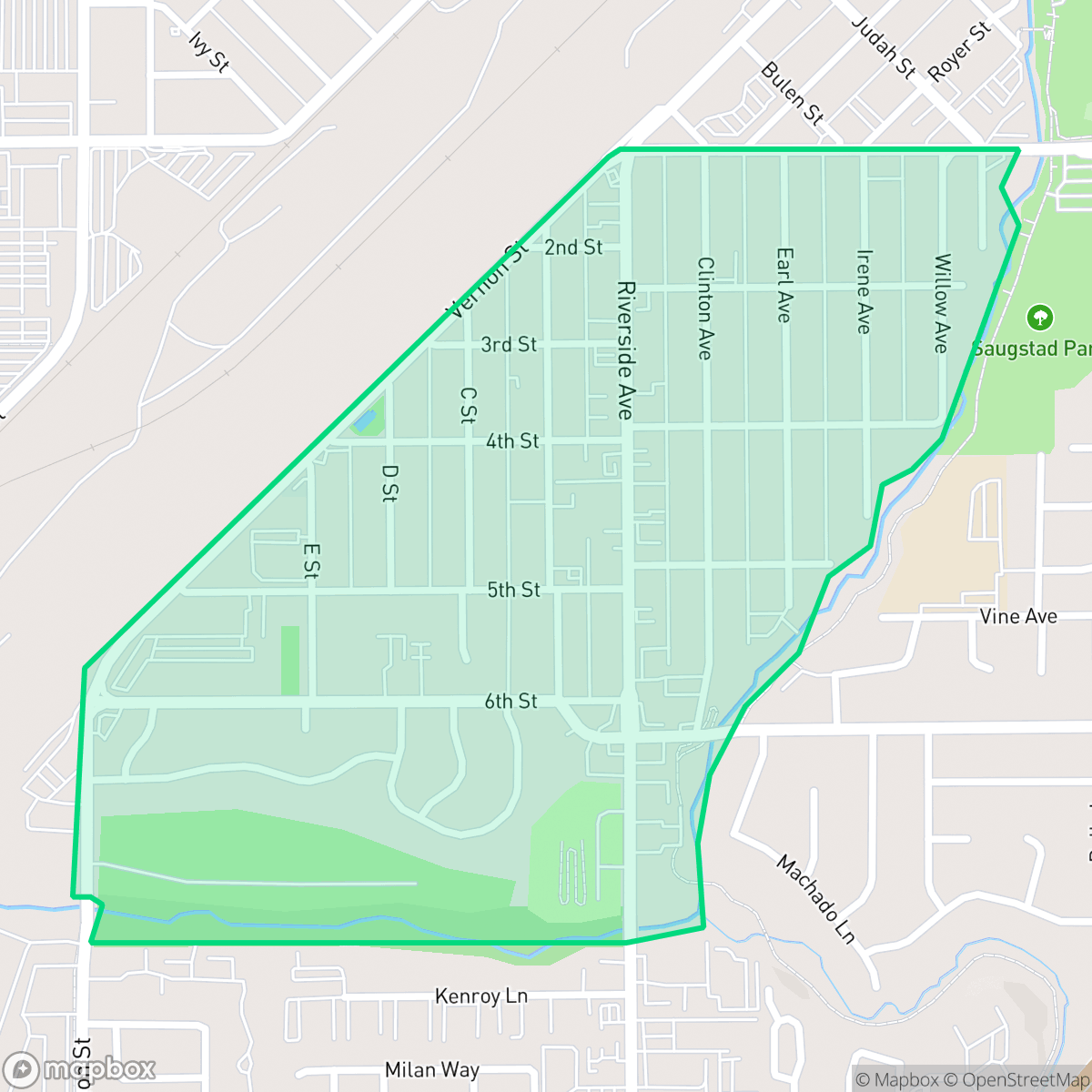
Cherry Glen is an established residential area in Roseville, California, defined by its mid-century housing and dense suburban layout. While it provides access to local community hubs like Saugstad Park, the neighborhood experiences notable noise from nearby rail and industrial transport zones.
Key Highlights
About Cherry Glen
The Cherry Glen neighborhood in Roseville, California, was originally developed by early settler Lewis Leroy King. In 1890, King built his residence, Elm Court, and planted a 40-acre vineyard of table grapes nearby. King, along with his daughter Lelia, named many of the neighborhood’s streets after family members, including King Road, Earl Avenue, Clinton Avenue, Irene Avenue, and Douglas Boulevard. Today, Cherry Glen is characterized by its well-established, older housing stock, with many of its single-family homes dating back to the mid-20th century (primarily between 1940 and 1969) and some constructed prior to 1940.
The neighborhood serves as a distinct residential pocket where mid-century single-family homes sit on modest lots. The area maintains a suburban feel, though it is physically influenced by its proximity to a large-scale rail yard and logistics infrastructure. This industrial presence creates a unique environment that balances residential life with active commercial transport, resulting in a landscape that is both historic and functional. Local residents benefit from proximity to community spaces such as Better Foods Deli and Saugstad Park, which offer essential social and recreational outlets.
Prospective residents should consider the trade-offs regarding acoustic comfort, as the active rail lines contribute to higher ambient noise levels compared to other parts of Roseville. While the residential streets offer standard sidewalk access, the rail corridor acts as a significant physical barrier that limits overall walkability. The area is well-suited for those prioritizing access to the high-performing Roseville Joint Union High School District and a location that integrates established suburban character with regional transport connectivity.
Neighborhood Scores Across 15 Qualities
Residential structures are relatively closely spaced with limited setbacks between neighbors. This level of density is slightly higher than the Roseville average, according to iHuus data.
Sidewalks are available on residential streets, though heavy rail infrastructure and industrial zones act as significant barriers to movement. This level of connectivity is lower than the Roseville average, according to iHuus data.
Uniform tract housing and compact lots characterize this area. According to iHuus data, the visual landscape is less lush than the Roseville average, featuring tidy but smaller private yards and dense residential spacing.
Narrow residential verges and limited proximity to public parks make walking dogs difficult. According to iHuus data, the presence of large industrial rail yards restricts access to safe, open green spaces compared to the Roseville average.
Residential tracts and commercial strips blend with industrial rail zones. This area features a slightly more developed suburban density than the Roseville average, according to iHuus data.
Suburban blocks near the railway and warehouse districts offer a subdued atmosphere with limited walking options. While a few local eateries and parks provide small pockets of activity, the overall energy is lower than the Roseville average according to iHuus data.
Frequent noise from nearby freeways and railroad tracks is a primary characteristic of this area. According to iHuus data, acoustic levels are notably higher than the Roseville average.
Air quality in Cherry Glen fluctuates between acceptable and unhealthy levels on certain days. According to iHuus data, these conditions are consistent with the average levels found throughout Roseville.
Active rail yards and logistics warehouses introduce noticeable truck traffic and noise to the area. This level of industrial proximity is higher than the Roseville average, according to iHuus data.
Health insurance enrollment in Cherry Glen is lower than the Roseville average, according to iHuus data. A portion of the resident population lacks coverage through employer or private plans.
Political leanings in this area are roughly evenly split between conservative and liberal perspectives. This represents a more moderate ideological landscape than the average found in Roseville.
Residents live alongside a balanced distribution of young adults, families, and seniors. This demographic variety is slightly more varied than the Roseville average, according to iHuus data.
Flood risk levels in this area are difficult to verify because FEMA has not yet completed a detailed study for this location. According to iHuus data, the level of uncertainty here is higher than the average for Roseville.
Address-Level Insights for Cherry Glen


iHuus Neighborhood Intelligence Insights
Get address-level neighborhood insights for Cherry Glen
- Street-level scores — see how individual blocks compare, not just neighborhood averages
- Micro-zone boundaries — identify quiet pockets, flood boundaries, and walkable clusters before you visit
- 15 dimensions in full — walkability, noise, air quality, school quality, insurance coverage, population age profile, urban/rural index, and more
- Boundary risk alerts — know if your address sits near a block boundary where scores drop, the kind of detail no listing will ever mention
- School insights — individual school ratings and insights, not just district-level data
- Compare before you commit — side-by-side data across neighborhoods, down to block precision
No credit card required
Compare with Any Neighborhood
| Dimension | Cherry Glen | Blue Oaks |
|---|---|---|
| 🚶 Walkabilityavg 8.87 | ||
| 🔊 Acoustic Comfortavg 4.32 | ||
| 🤫 Privacy Indexavg 5.7 | ||
| 🎨 Visual Appealavg 7.58 | ||
| 🐕 Dog Friendlinessavg 7.74 | ||
| 🗺️ Urban-Rural Indexavg 6.82 | ||
| ✨ Neighborhood Vibeavg 4.77 | ||
| 🏥 Health Insurance Coverageavg 8.58 | ||
| 🌿 Air Qualityavg 6 | ||
| 🏭 Industrial Proximityavg 8.8 | ||
| 🌊 Flood Safetyavg 5.72 | ||
| 🗳️ Ideological Leanavg 3.68 | ||
| 👥 Population Age Profileavg 5.05 | ||
| 🔥 Fire Safetyavg 0.15 | ||
| 🏫 School Quality |
Cherry Glen Rankings
School Districts Serving Cherry Glen
School Insights for Cherry Glen
Below average outcomes; significant attendance and academic challenges.
School Insights
See what's really behind every school rating near Cherry Glen
- Individual school ratings — each school's own score with outcome context, not just a district average
- Enrollment & class size data — student-to-teacher ratio and how it compares to the state average
- Full demographics breakdown — ethnicity and gender composition for every school in the enrollment zone
- Every school in the district — all schools within the enrollment boundary ranked by rating, not just the closest one
- Grade levels & benchmarks — elementary through high school, with below/above state-average flags
No credit card required