Sycamore Canyon Park, Riverside
Updated · 2,751 residents
Sycamore Canyon Park is a unique Riverside enclave defined by its expansive wilderness access and a distinct rural atmosphere. It offers exceptional dog friendliness and high air quality, though residents must navigate a landscape that blends quiet residential pockets with significant industrial logistics hubs.
Key Highlights
About Sycamore Canyon Park
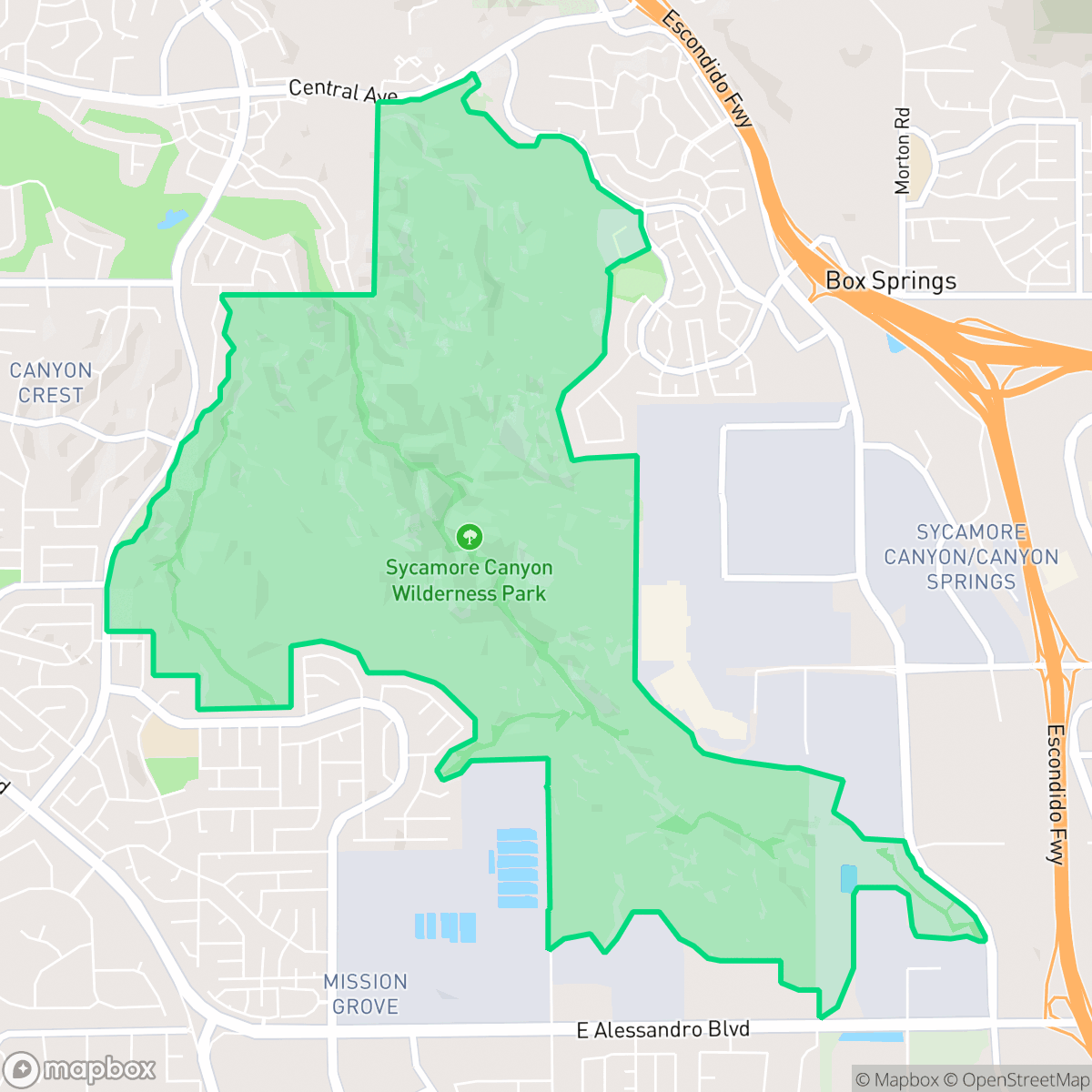
The Sycamore Canyon Park neighborhood in Riverside, California, is deeply defined by its proximity to the 1,500-acre Sycamore Canyon Wilderness Park, one of the largest municipal parks in the United States. Historically, the rugged, granitic landscape was utilized extensively by Native Californians for seed gathering and hunting, evidenced by ancient "grinding slicks" worn into flat rocks near the Barton Street trailhead. Today, the neighborhood is recognized for its commitment to environmental conservation, serving as one of eight protected core reserves for the federally endangered Stephens' kangaroo rat and nearly 100 other sensitive species. The community features the Ameal Moore Nature Center, established in 2014 to promote citizen science and local ecological education.
The neighborhood functions as a transition zone between rugged natural terrain and active commercial infrastructure. While the proximity to the wilderness park provides a serene, rural feel with vast open spaces, the area is also home to large-scale logistics facilities, which contribute to a unique industrial-suburban aesthetic. According to iHuus data, the area maintains a high level of walkability for a region of its density, supported by local dining options and accessible social hubs that provide a steady rhythm of daily services.
Prospective residents should weigh the benefits of quiet streets and clean air against specific livability challenges. The area faces significant risks regarding fire and flood safety, and local school options are split between two districts that currently manage varying levels of academic and fiscal instability. While the neighborhood offers a peaceful environment away from heavy urban congestion, the presence of major logistics centers means that residents should expect some daytime commercial traffic and a landscape dominated by warehouse development in certain sectors.
Neighborhood Scores Across 15 Qualities
Residential spacing varies across the area, with some sections featuring tightly packed homes and shared walls that offer less seclusion than the Riverside average. According to iHuus data, certain pockets contain high density layouts with minimal setbacks between neighbors.
Residential areas feature well-defined sidewalk networks and dedicated paths through greenbelt zones. According to iHuus data, pedestrian accessibility in this area is slightly above the Riverside average, though a major arterial road separates the neighborhood from northern industrial zones.
Upscale amenities and large residential properties contribute to a visual environment that is more aesthetically pleasing than the Riverside average. According to iHuus data, the area features spacious driveways and well-maintained landscapes.
Large public parks and connected trails provide excellent exercise opportunities for pets, making this area significantly more dog friendly than the Riverside average. While some residential streets have limited sidewalk space, the presence of expansive green space in the northwest corner offers ample room for activity.
Open land and scattered homes characterize this area, providing a more spacious feel than the typical Riverside landscape. According to iHuus data, the neighborhood features more undeveloped acreage and woodland than the city average.
Low density development and vast open spaces create a serene environment, though the area lacks the social energy and commercial density found elsewhere in Riverside. Most daily needs require a car due to the sparse number of walkable businesses and the presence of industrial corridors.
Acoustic levels remain low with only occasional sounds from distant traffic or trains. According to iHuus data, this area is significantly quieter than the Riverside average.
Air quality in this area is consistently high with minimal health concerns. According to iHuus data, the air remains significantly cleaner than the Riverside city average.
Active logistics hubs and a large wastewater treatment plant sit near residential zones, resulting in lower industrial proximity than the Riverside average. Residents may experience increased daytime traffic and noise from semi-trucks and commercial infrastructure.
Health insurance enrollment among residents is slightly above the Riverside average, according to iHuus data. Most members of the community have access to medical coverage.
Political views in this area are evenly split between conservative and liberal leanings, representing a more moderate landscape than the more strongly partisan Riverside average.
A varied demographic of young adults, families, and seniors resides here, representing a less concentrated age distribution than the Riverside average according to iHuus data.
Flood risk in this area is significantly higher than the Riverside average. According to iHuus data, properties are situated in a high-hazard zone, which may lead to elevated or prohibitive insurance costs.
Wildfire hazards in this area are exceptionally high, significantly exceeding the average risk levels found across Riverside. Residents should prioritize extreme fire protection measures and be prepared for high-intensity seasonal threats according to iHuus data.
Address-Level Insights for Sycamore Canyon Park


iHuus Neighborhood Intelligence Insights
Get address-level neighborhood insights for Sycamore Canyon Park
- Street-level scores — see how individual blocks compare, not just neighborhood averages
- Micro-zone boundaries — identify quiet pockets, flood boundaries, and walkable clusters before you visit
- 15 dimensions in full — walkability, noise, air quality, school quality, insurance coverage, population age profile, urban/rural index, and more
- Boundary risk alerts — know if your address sits near a block boundary where scores drop, the kind of detail no listing will ever mention
- School insights — individual school ratings and insights, not just district-level data
- Compare before you commit — side-by-side data across neighborhoods, down to block precision
No credit card required
Compare with Any Neighborhood
| Dimension | Sycamore Canyon Park | Airport |
|---|---|---|
| 🚶 Walkabilityavg 7.91 | ||
| 🔊 Acoustic Comfortavg 4.28 | ||
| 🤫 Privacy Indexavg 5.41 | ||
| 🎨 Visual Appealavg 6.73 | ||
| 🐕 Dog Friendlinessavg 6.29 | ||
| 🗺️ Urban-Rural Indexavg 7.07 | ||
| ✨ Neighborhood Vibeavg 4.37 | ||
| 🏥 Health Insurance Coverageavg 6.35 | ||
| 🌿 Air Qualityavg 8.25 | ||
| 🏭 Industrial Proximityavg 8.09 | ||
| 🌊 Flood Safetyavg 1.24 | ||
| 🗳️ Ideological Leanavg 7.01 | ||
| 👥 Population Age Profileavg 4.57 | ||
| 🔥 Fire Safetyavg 0.35 | ||
| 🏫 School Quality |
Sycamore Canyon Park Rankings
School Districts Serving Sycamore Canyon Park
School Insights for Sycamore Canyon Park
Below average outcomes; significant attendance and academic challenges.
School Insights
See what's really behind every school rating near Sycamore Canyon Park
- Individual school ratings — each school's own score with outcome context, not just a district average
- Enrollment & class size data — student-to-teacher ratio and how it compares to the state average
- Full demographics breakdown — ethnicity and gender composition for every school in the enrollment zone
- Every school in the district — all schools within the enrollment boundary ranked by rating, not just the closest one
- Grade levels & benchmarks — elementary through high school, with below/above state-average flags
No credit card required