Irby Ranch, Pleasanton
Updated · 164 residents
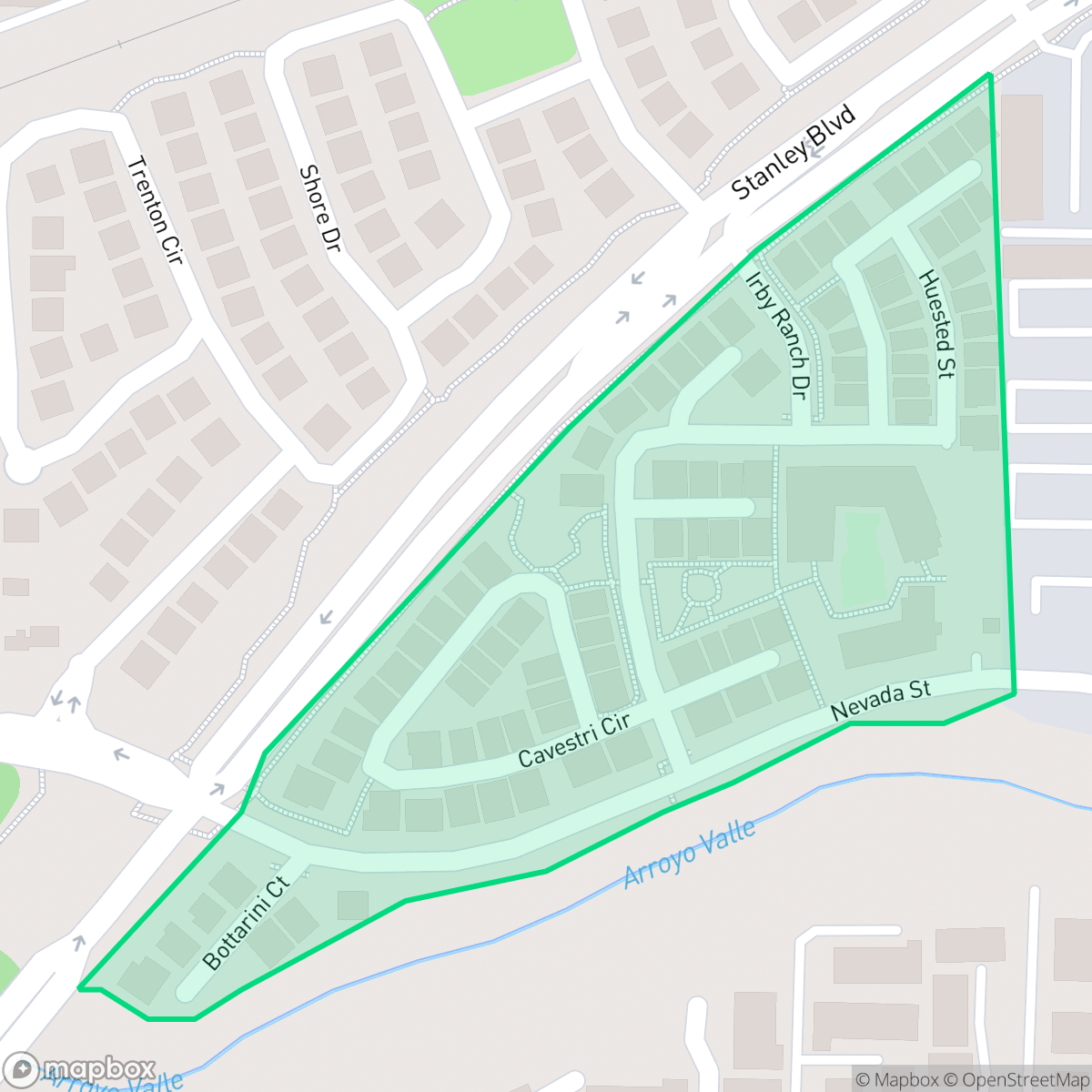
Irby Ranch is a master-planned community in Pleasanton that blends agrarian history with modern residential design. Residents benefit from exceptional walkability and proximity to local parks and eateries, though the area experiences high levels of ambient road noise.
Key Highlights
About Irby Ranch
Irby Ranch in Pleasanton, California, originated as a 10-acre farm homesteaded in the 1800s. In 1942, Jeanette and Richard Irby began operating the site as a working farm, raising chickens, growing walnuts, and running a dairy and milk store. In the late 2010s, the land was transformed into a 14-acre residential development, "The Homestead at Irby Ranch". This master-planned neighborhood is notable for integrating "Sunflower Hill at Irby Ranch," completed in 2020 as the Tri-Valley area's first independent, affordable residential community for adults with intellectual and developmental disabilities. Designed by the Dahlin Group, the neighborhood's architecture reflects its agrarian heritage, incorporating traditional farmhouse forms and materials while preserving historic landmarks, including two original barns, the Zia House, and an old tank house.
The neighborhood is defined by its synthesis of historic farm structures and contemporary housing. It serves as a hub for inclusive living, notably through the Sunflower Hill project, while maintaining a dense suburban layout that includes single-family homes and multi-story apartments. According to iHuus data, the area features high-quality pedestrian infrastructure, making it one of the most walkable sections of Pleasanton for daily errands and local recreation.
Prospective residents should weigh the neighborhood's accessibility against significant environmental trade-offs. The area is notably loud due to consistent road traffic, and iHuus data indicates significant concerns regarding fire and flood safety. While it offers a lively atmosphere with convenient access to commercial hubs and transit, it is best suited for those who prioritize pedestrian connectivity and community-focused living over absolute acoustic tranquility.
Neighborhood Scores Across 15 Qualities
Residential spacing is varied, featuring a mix of detached homes with moderate buffers and some higher density apartment complexes. This level of privacy is slightly higher than the Pleasanton average according to iHuus data.
Sidewalk networks are extensive and well-maintained on both sides of most streets. According to iHuus data, the area features more pedestrian-priority infrastructure and visible crossings than the Pleasanton average.
Manicured lawns, private pools, and large multi-car driveways characterize the area. This level of visual upkeep and property scale is slightly above the Pleasanton average according to iHuus data.
Wide paths and central park areas with green buffers from traffic make this area suitable for walking dogs. According to iHuus data, the neighborhood offers slightly less access to connected green spaces than the Pleasanton average.
Frequent open land and scattered homes provide a more tranquil, semi-rural setting than the more densely developed parts of Pleasanton. According to iHuus data, the area features a mix of single-family homes and woodland interspersed with suburban clusters.
Local amenities and dining options provide more activity than the typical Pleasanton residential area. According to iHuus data, the neighborhood features a mix of green spaces and accessible community spots near the railway corridor.
Significant aircraft noise from nearby airport runways is a primary feature of this area, resulting in much lower acoustic comfort than the Pleasanton average.
Air quality remains consistently high with rare instances of elevated readings, staying slightly above the Pleasanton average according to iHuus data.
Light industrial warehouses and large-scale commercial buildings are located near some residential areas, representing a higher level of industrial proximity than is typically found across Pleasanton.
Health insurance access is widespread among residents, though slightly lower than the Pleasanton average according to iHuus data.
Voting patterns and census indicators show a strong liberal leaning, which is slightly more pronounced than the Pleasanton city average according to iHuus data.
Residents live alongside a varied mix of young adults, families, and seniors. According to iHuus data, this demographic distribution is slightly more concentrated toward younger and middle-aged populations than the Pleasanton average.
Flood risk in this area is difficult to assess because FEMA has not yet completed a detailed study for the neighborhood. According to iHuus data, the level of uncertainty here is slightly higher than the average for Pleasanton.
Address-Level Insights for Irby Ranch


iHuus Neighborhood Intelligence Insights
Get address-level neighborhood insights for Irby Ranch
- Street-level scores — see how individual blocks compare, not just neighborhood averages
- Micro-zone boundaries — identify quiet pockets, flood boundaries, and walkable clusters before you visit
- 15 dimensions in full — walkability, noise, air quality, school quality, insurance coverage, population age profile, urban/rural index, and more
- Boundary risk alerts — know if your address sits near a block boundary where scores drop, the kind of detail no listing will ever mention
- School insights — individual school ratings and insights, not just district-level data
- Compare before you commit — side-by-side data across neighborhoods, down to block precision
No credit card required
Irby Ranch Rankings
School Districts Serving Irby Ranch
School Insights for Irby Ranch
Below average outcomes; significant attendance and academic challenges.
School Insights
See what's really behind every school rating near Irby Ranch
- Individual school ratings — each school's own score with outcome context, not just a district average
- Enrollment & class size data — student-to-teacher ratio and how it compares to the state average
- Full demographics breakdown — ethnicity and gender composition for every school in the enrollment zone
- Every school in the district — all schools within the enrollment boundary ranked by rating, not just the closest one
- Grade levels & benchmarks — elementary through high school, with below/above state-average flags
No credit card required