North Arroyo, Pasadena
Updated · 11,992 residents
North Arroyo is a quiet, affluent enclave in Pasadena defined by its diverse historic architecture and immediate access to the Arroyo Seco canyon. While the area offers exceptional air quality and dog-friendly spaces, residents rely heavily on vehicles for daily errands due to its secluded, low-density character.
Key Highlights
About North Arroyo
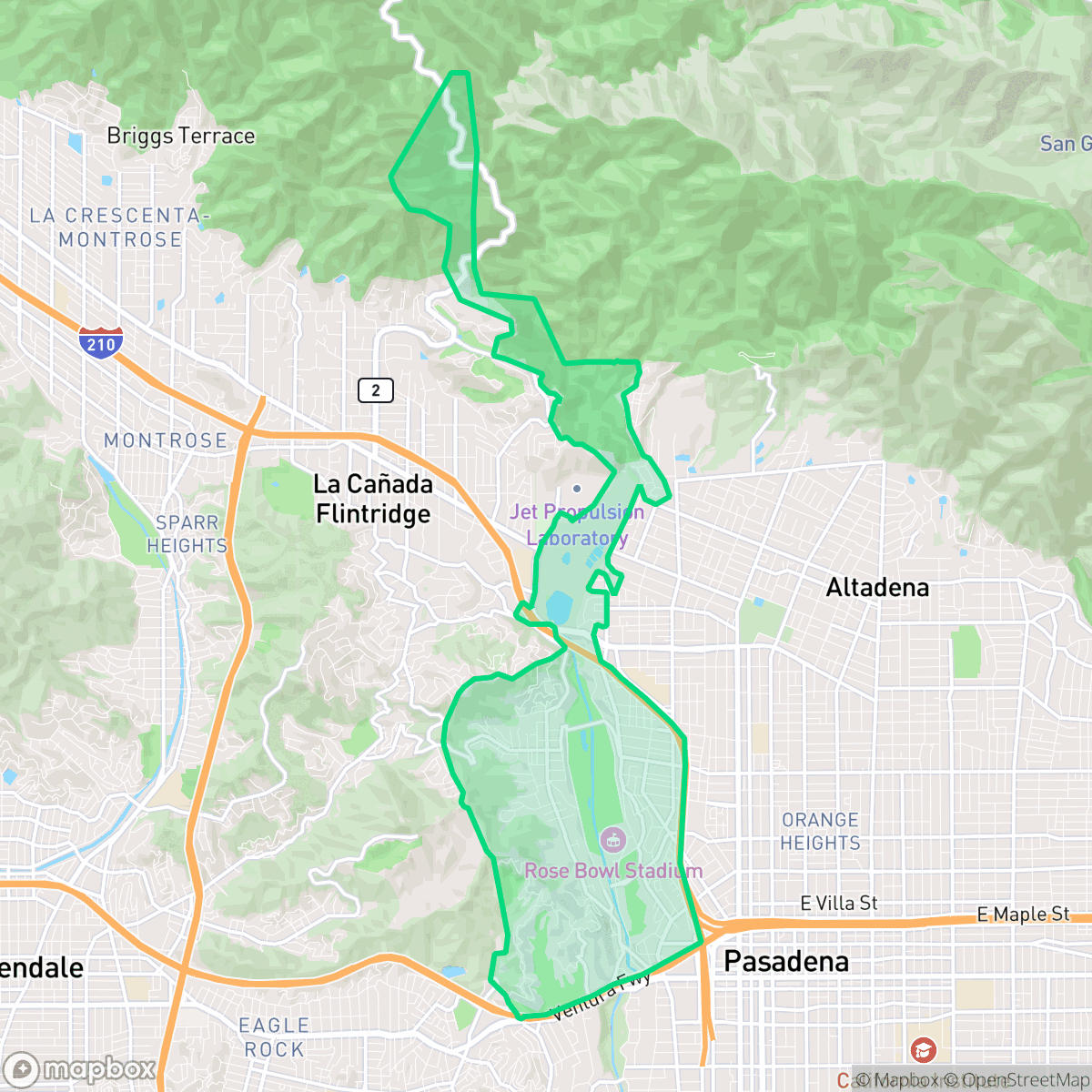
Situated along the northern portion of Pasadena’s Arroyo Seco canyon, the North Arroyo neighborhood (historically known as Upper Arroyo) is deeply rooted in the region's natural and cultural history. Originally inhabited by the Hahamogna band of the Tongva people, the canyon transitioned from a challenging natural barrier to a highly sought-after residential enclave following the construction of early crossings like the curved, reinforced-concrete Prospect Boulevard Bridge. Developed primarily between the 1920s and mid-20th century, the neighborhood is renowned for its diverse architectural styles, including classic California Craftsman, Colonial Revival, and Spanish/Mediterranean estates. North Arroyo is anchored by major local landmarks, most notably the historic Rose Bowl Stadium (opened in 1922), Brookside Park, and the Brookside Golf Course, blending scenic natural beauty with deep cultural significance.
The neighborhood functions as a rural-fringe environment, characterized by its low-density residential layout and proximity to significant open spaces. Residents benefit from high visual appeal and pristine air quality, making it a serene retreat from the urban core. According to iHuus data, the area maintains a distinct suburban feel, with well-manicured properties and detached homes that prioritize privacy over commercial accessibility. The landscape is dominated by steep canyons and undeveloped land, which creates a quiet atmosphere far removed from the bustle of city centers.
Living here requires an acceptance of car-dependency, as local services are limited and the neighborhood lacks a dense commercial footprint. While the environment is peaceful, prospective residents should be aware of the elevated fire risk typical of canyon-adjacent living and the moderate noise levels from nearby road traffic. It is an ideal setting for those who prioritize outdoor recreation and architectural beauty over walkability to shops or nightlife.
Neighborhood Scores Across 15 Qualities
Residential spacing provides a modest buffer between homes, though density is slightly higher than the Pasadena average. While most houses are detached, some areas feature closely spaced structures with limited private setbacks.
Residential streets feature sidewalks and safe crossings, though high traffic on nearby major arterials and a large freeway divide the area. Pedestrian connectivity is lower than the Pasadena average due to these heavy transit corridors.
Large homes with well-maintained landscaping and private backyard pools characterize the area. According to iHuus data, the visual quality of properties in this neighborhood is notably higher than the Pasadena average.
Proximity to large natural wash areas and abundant residential greenery provides ample walking space. According to iHuus data, the area offers more accessible greenery for pets than the Pasadena average, though public park space is limited compared to private yards.
Large expanses of undeveloped canyon terrain and hilly open space create a more rural atmosphere than the typical Pasadena suburban landscape. According to iHuus data, the area features a significant amount of natural greenery and low-density residential estates.
Primarily a low-density residential and light industrial landscape, this area lacks the commercial energy found in much of Pasadena. Residents will find a much more tranquil and remote atmosphere here than the city average, as most destinations require a car for access.
Frequent acoustic disturbances from nearby freeway and railroad traffic characterize this area. This level of noise is higher than the typical experience found elsewhere in Pasadena, according to iHuus data.
Air quality remains consistently high with minimal health concerns for residents. This level of cleanliness is slightly better than the Pasadena average, according to iHuus data.
While primarily residential, this area has a higher concentration of industrial and utility features than the rest of Pasadena. Residents may encounter noise and dust from nearby quarry-like operations, large commercial warehouses, and an EPA Superfund site that presents potential environmental risks.
Health insurance access is widespread among residents, though it sits slightly below the Pasadena average according to iHuus data.
Voting patterns and census indicators reflect a highly progressive political landscape that is very similar to the broader Pasadena area, according to iHuus data.
Residents live among a diverse mix of young adults, families, and older individuals. This age distribution is largely consistent with the broader Pasadena area according to iHuus data.
Properties in this area are situated within a designated floodplain, which may necessitate flood insurance. This level of risk is notably higher than the Pasadena city average, according to iHuus data.
High fire hazard levels necessitate extreme protection measures, with risk levels slightly higher than the Pasadena average according to iHuus data.
Address-Level Insights for North Arroyo


iHuus Neighborhood Intelligence Insights
Get address-level neighborhood insights for North Arroyo
- Street-level scores — see how individual blocks compare, not just neighborhood averages
- Micro-zone boundaries — identify quiet pockets, flood boundaries, and walkable clusters before you visit
- 15 dimensions in full — walkability, noise, air quality, school quality, insurance coverage, population age profile, urban/rural index, and more
- Boundary risk alerts — know if your address sits near a block boundary where scores drop, the kind of detail no listing will ever mention
- School insights — individual school ratings and insights, not just district-level data
- Compare before you commit — side-by-side data across neighborhoods, down to block precision
No credit card required
Compare with Any Neighborhood
| Dimension | North Arroyo | East Central |
|---|---|---|
| 🚶 Walkabilityavg 9.09 | ||
| 🔊 Acoustic Comfortavg 4.22 | ||
| 🤫 Privacy Indexavg 5.22 | ||
| 🎨 Visual Appealavg 7.32 | ||
| 🐕 Dog Friendlinessavg 6.14 | ||
| 🗺️ Urban-Rural Indexavg 6.51 | ||
| ✨ Neighborhood Vibeavg 5.09 | ||
| 🏥 Health Insurance Coverageavg 8.22 | ||
| 🌿 Air Qualityavg 9.38 | ||
| 🏭 Industrial Proximityavg 9.06 | ||
| 🌊 Flood Safetyavg 3.86 | ||
| 🗳️ Ideological Leanavg 9.52 | ||
| 👥 Population Age Profileavg 5.18 | ||
| 🔥 Fire Safetyavg 0.14 | ||
| 🏫 School Quality |
North Arroyo Rankings
School Districts Serving North Arroyo
School Insights for North Arroyo
Below average outcomes; significant attendance and academic challenges.
School Insights
See what's really behind every school rating near North Arroyo
- Individual school ratings — each school's own score with outcome context, not just a district average
- Enrollment & class size data — student-to-teacher ratio and how it compares to the state average
- Full demographics breakdown — ethnicity and gender composition for every school in the enrollment zone
- Every school in the district — all schools within the enrollment boundary ranked by rating, not just the closest one
- Grade levels & benchmarks — elementary through high school, with below/above state-average flags
No credit card required