East Central, Pasadena
Updated · 21,921 residents
East Central is a historic Pasadena neighborhood defined by its dense collection of early 20th-century Craftsman and California Bungalow homes. The area offers exceptional walkability and a quiet, tree-lined residential atmosphere, though residents should expect close proximity to neighbors and moderate road noise.
Key Highlights
About East Central
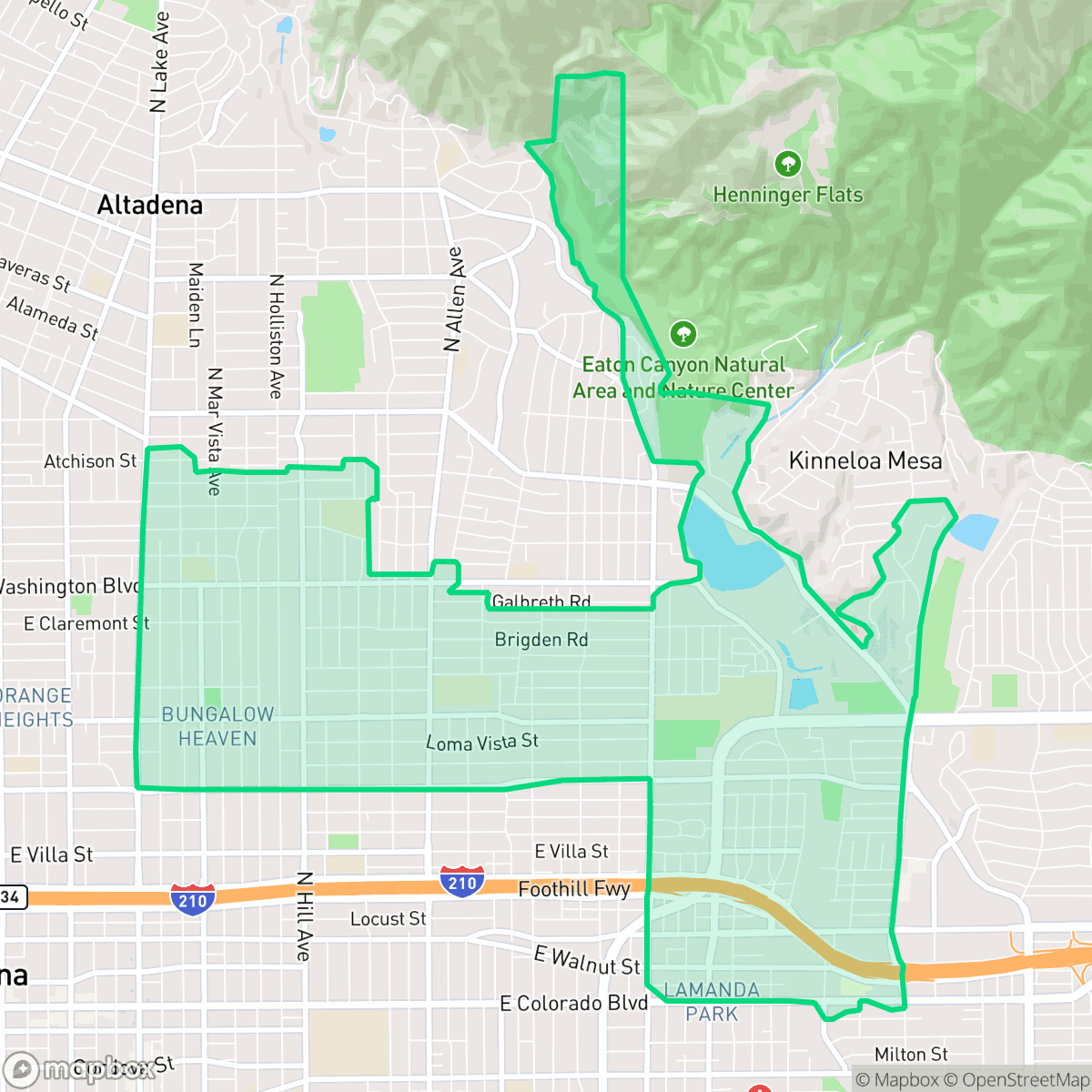
Pasadena's East Central neighborhood is highly defined by the historic Bungalow Heaven district, which was subdivided during the real estate boom of the 1880s and remained largely agricultural until the early 20th century. The neighborhood rapidly developed between 1900 and 1920 as trolley lines expanded along Lake Avenue and Orange Grove Boulevard. Today, East Central is celebrated for its dense collection of early 20th-century California Bungalow and Craftsman-style homes built before the Great Depression. Characterized by leafy, walkable streets, shady sidewalks, and vintage cement street lamps, the area also features diverse architectural styles including Mission Revival and Edwardian manors. Landmark local institutions include Marshall Fundamental Secondary School, established in the neighborhood to serve local families.
The neighborhood functions as a highly walkable residential enclave, characterized by a grid-based street layout that connects local families to nearby schools and small commercial corridors. Residents benefit from excellent air quality and a lack of industrial hazards, maintaining a consistent suburban feel despite the high density of housing. The area balances its historic charm with modern accessibility, providing a stable environment for those who prioritize pedestrian-friendly streets and proximity to community institutions.
Prospective residents should note that the high density results in limited privacy, as homes are often situated in close proximity with small side yards. While the area is generally calm, the 58 dB average noise level from road traffic is a factor for those sensitive to sound. Families looking to relocate here will find themselves within the Pasadena Unified School District, which offers a variety of specialized magnet programs alongside standard neighborhood schools.
Neighborhood Scores Across 15 Qualities
Residential structures are generally detached with moderate spacing, providing slightly more separation between neighbors than the Pasadena average. According to iHuus data, many properties feature consistent buffers and private backyards, though some denser pockets exist where houses are positioned closely together.
Continuous sidewalks and clear pedestrian crossings exist on nearly every street, offering a level of walkability that is slightly above the Pasadena average. The consistent grid system facilitates easy movement through both residential and commercial areas, according to iHuus data.
Manicured lots with large homes and frequent private backyard pools characterize this area. According to iHuus data, the visual quality of the neighborhood is slightly above the Pasadena average.
Wide green verges between sidewalks and roads, along with access to local parks like Villa Park, provide reliable walking routes for pets. This level of accessibility is slightly above the Pasadena average according to iHuus data.
Residential streets feature a classic suburban layout with significant tree canopy and detached single-family homes. This area offers a slightly more open, semi-rural feel compared to the Pasadena average.
A mix of quiet residential blocks and lively pockets exists here, offering slightly more activity and dining variety than the Pasadena average. While some areas feature dense urban movement and diverse eateries, other sections remain serene and suburban with limited local businesses nearby.
Steady traffic sounds from nearby busy streets are common in this area. This level of acoustic activity is slightly higher than the average for Pasadena.
Air quality remains consistently high with minimal health concerns, performing even better than the Pasadena average according to iHuus data.
Land use in this area is strictly residential and light commercial, with no detectable warehouses, factories, or heavy industrial hazards. This lack of industrial presence is even more pronounced than the city average, offering a landscape free from large-scale manufacturing or industrial-related traffic.
Health insurance access is widespread among residents, appearing slightly higher than the average for Pasadena. According to iHuus data, most people living in this area are covered by a health plan.
Voting patterns and census indicators show a highly liberal political leaning that is consistent with the broader Pasadena area.
Residents live alongside a balanced demographic of young adults, families, and seniors. According to iHuus data, this age distribution is very similar to the broader Pasadena area.
Flood risk in this area is moderate, though official FEMA studies for this specific location remain incomplete. This level of risk is roughly in line with the average found throughout Pasadena.
Fire hazards in this area are severe; according to iHuus data, the level of risk is consistent with the rest of the city.
Address-Level Insights for East Central


iHuus Neighborhood Intelligence Insights
Get address-level neighborhood insights for East Central
- Street-level scores — see how individual blocks compare, not just neighborhood averages
- Micro-zone boundaries — identify quiet pockets, flood boundaries, and walkable clusters before you visit
- 15 dimensions in full — walkability, noise, air quality, school quality, insurance coverage, population age profile, urban/rural index, and more
- Boundary risk alerts — know if your address sits near a block boundary where scores drop, the kind of detail no listing will ever mention
- School insights — individual school ratings and insights, not just district-level data
- Compare before you commit — side-by-side data across neighborhoods, down to block precision
No credit card required
Compare with Any Neighborhood
| Dimension | East Central | Mid Central |
|---|---|---|
| 🚶 Walkabilityavg 9.09 | ||
| 🔊 Acoustic Comfortavg 4.22 | ||
| 🤫 Privacy Indexavg 5.22 | ||
| 🎨 Visual Appealavg 7.32 | ||
| 🐕 Dog Friendlinessavg 6.14 | ||
| 🗺️ Urban-Rural Indexavg 6.51 | ||
| ✨ Neighborhood Vibeavg 5.09 | ||
| 🏥 Health Insurance Coverageavg 8.22 | ||
| 🌿 Air Qualityavg 9.38 | ||
| 🏭 Industrial Proximityavg 9.06 | ||
| 🌊 Flood Safetyavg 3.86 | ||
| 🗳️ Ideological Leanavg 9.52 | ||
| 👥 Population Age Profileavg 5.18 | ||
| 🔥 Fire Safetyavg 0.14 | ||
| 🏫 School Quality |
East Central Rankings
School Districts Serving East Central
School Insights for East Central
Below average outcomes; significant attendance and academic challenges.
School Insights
See what's really behind every school rating near East Central
- Individual school ratings — each school's own score with outcome context, not just a district average
- Enrollment & class size data — student-to-teacher ratio and how it compares to the state average
- Full demographics breakdown — ethnicity and gender composition for every school in the enrollment zone
- Every school in the district — all schools within the enrollment boundary ranked by rating, not just the closest one
- Grade levels & benchmarks — elementary through high school, with below/above state-average flags
No credit card required