Melody Ranch, Palm Springs
Updated · 718 residents
Melody Ranch is a residential enclave defined by its midcentury modern architecture and lush desert landscaping. While the area provides a quiet, suburban atmosphere with high dog friendliness, residents should note that the neighborhood experiences elevated noise levels from nearby road traffic.
Key Highlights
About Melody Ranch
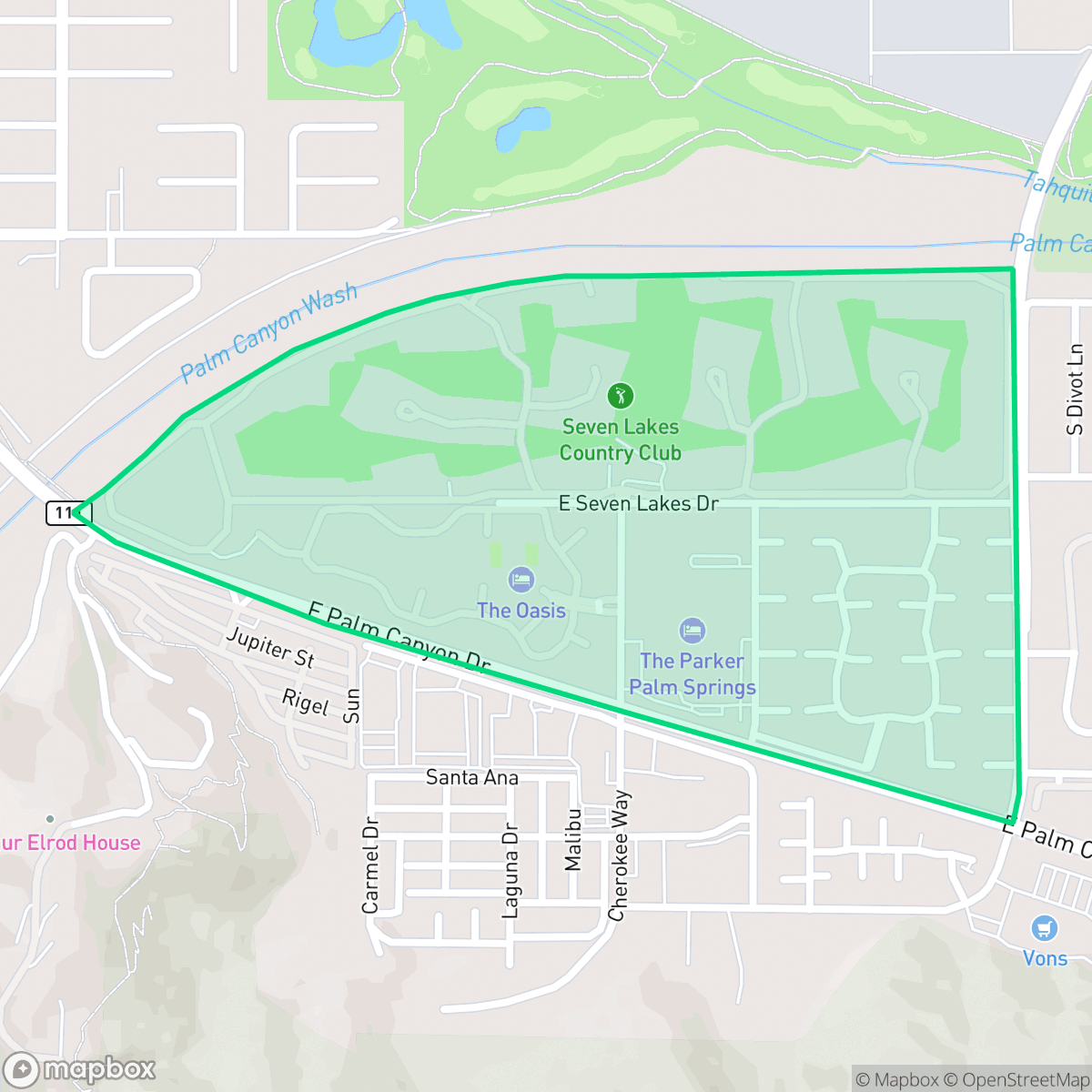
The Melody Ranch neighborhood in Palm Springs, CA, is a residential enclave steeped in midcentury design and celebrity history. The neighborhood takes its name from the "Melody Ranch" estate purchased in 1961 by singing cowboy Gene Autry. Autry used the property as a personal residence and as a housing facility for his baseball team, the California Angels, during spring training. Today, that original estate has evolved into the iconic Parker Palm Springs hotel. The surrounding neighborhood has grown to encompass several resort-style residential developments, including the Seven Lakes Homeowners Association, the Oasis Resort, and the Canyon Sands Homeowners Association. Melody Ranch remains celebrated for its classic midcentury modern architecture, lush desert landscaping, and its enduring association with Old Hollywood glamour.
This neighborhood serves as a residential hub characterized by its classic aesthetic and proximity to cultural landmarks like the Backstreet Art District. It encompasses various developments, including Seven Lakes and the Oasis Resort, which contribute to the area's distinct visual appeal. The community maintains a steady, suburban rhythm that prioritizes green spaces and a relaxed, desert-inspired pace of life.
Prospective residents should consider specific livability factors, such as the acoustic environment, where road traffic noise is a notable presence. According to iHuus data, the area is highly accessible for pet owners but remains less walkable for daily errands, often requiring a vehicle for routine tasks. While the community offers a strong sense of place, it is important to note the local fire safety profile and the varying performance metrics within the Palm Springs Unified School District. It is best suited for those who value architectural heritage and a quiet, pet-friendly environment over high-density commercial walkability.
Neighborhood Scores Across 15 Qualities
Residential spacing offers a balanced level of seclusion with some buffer between properties. This degree of privacy is consistent with the typical density found across Palm Springs.
Sidewalks are available on one side of the street with safe crossings provided. This level of pedestrian accessibility is slightly lower than the average for Palm Springs.
Large residential properties and frequent upscale amenities create an aesthetic that is slightly more visually appealing than the Palm Springs average, according to iHuus data.
Interconnected green spaces and wide paths offer ample room for walking pets away from traffic. According to iHuus data, this area provides significantly more opportunities for canine exercise than the Palm Springs average.
Low-density residential clusters are separated by vast stretches of golf courses and desert landscape. This layout is largely consistent with the broader Palm Springs area, offering a mix of significant grey infrastructure and artificial green space.
Primarily a serene and low-activity area, this neighborhood lacks the social energy and density found elsewhere in Palm Springs. While some quiet residential pockets and local services exist, the landscape is largely remote and requires a vehicle for most errands.
Frequent disturbances from nearby railroad tracks and major freeway traffic are characteristic of this area. According to iHuus data, the acoustic environment is comparable to the city average for Palm Springs.
Air quality remains mostly clean with infrequent periods of elevated readings. This level of air purity is largely consistent with the average found across Palm Springs.
Residential streets and open green spaces dominate the area, though a wastewater treatment plant with heavy concrete infrastructure is located in the northwest quadrant. This neighborhood maintains a slightly higher presence of light commercial utility than the Palm Springs average, according to iHuus data.
Health insurance accessibility is lower in this area than the Palm Springs average, according to iHuus data.
Voting patterns and census indicators show a very high concentration of liberal-leaning residents, which is slightly more pronounced than the average found throughout Palm Springs.
Older adults make up the majority of the population here, representing a slightly more mature age profile than the Palm Springs average. This demographic trend, noted in iHuus data, suggests a quieter residential environment with a smaller presence of younger residents.
Residual flood risks exist due to the area's location within a 500-year floodplain; however, safety levels are higher than the Palm Springs average according to iHuus data.
Address-Level Insights for Melody Ranch


iHuus Neighborhood Intelligence Insights
Get address-level neighborhood insights for Melody Ranch
- Street-level scores — see how individual blocks compare, not just neighborhood averages
- Micro-zone boundaries — identify quiet pockets, flood boundaries, and walkable clusters before you visit
- 15 dimensions in full — walkability, noise, air quality, school quality, insurance coverage, population age profile, urban/rural index, and more
- Boundary risk alerts — know if your address sits near a block boundary where scores drop, the kind of detail no listing will ever mention
- School insights — individual school ratings and insights, not just district-level data
- Compare before you commit — side-by-side data across neighborhoods, down to block precision
No credit card required
Compare with Any Neighborhood
| Dimension | Melody Ranch | Andreas Hills |
|---|---|---|
| 🚶 Walkabilityavg 8.06 | ||
| 🔊 Acoustic Comfortavg 3.6 | ||
| 🤫 Privacy Indexavg 6 | ||
| 🎨 Visual Appealavg 7.66 | ||
| 🐕 Dog Friendlinessavg 6.14 | ||
| 🗺️ Urban-Rural Indexavg 7.27 | ||
| ✨ Neighborhood Vibeavg 4.76 | ||
| 🏥 Health Insurance Coverageavg 7.38 | ||
| 🌿 Air Qualityavg 8.11 | ||
| 🏭 Industrial Proximityavg 9.12 | ||
| 🌊 Flood Safetyavg 5.92 | ||
| 🗳️ Ideological Leanavg 9.69 | ||
| 👥 Population Age Profileavg 6.29 | ||
| 🔥 Fire Safetyavg 0.39 | ||
| 🏫 School Quality |
Melody Ranch Rankings
School Districts Serving Melody Ranch
School Insights for Melody Ranch
Below average outcomes; significant attendance and academic challenges.
School Insights
See what's really behind every school rating near Melody Ranch
- Individual school ratings — each school's own score with outcome context, not just a district average
- Enrollment & class size data — student-to-teacher ratio and how it compares to the state average
- Full demographics breakdown — ethnicity and gender composition for every school in the enrollment zone
- Every school in the district — all schools within the enrollment boundary ranked by rating, not just the closest one
- Grade levels & benchmarks — elementary through high school, with below/above state-average flags
No credit card required