Asilomar Dunes, Pacific Grove
Updated · 280 residents
Asilomar Dunes is a serene, low-density coastal enclave defined by its exceptional visual appeal and proximity to protected dune landscapes. Residents enjoy a quiet, rural atmosphere with high acoustic comfort, though the area offers limited local services and lower levels of daily activity. According to iHuus data, this neighborhood serves as a peaceful retreat for those prioritizing natural beauty and a connection to the environment.
Key Highlights
About Asilomar Dunes
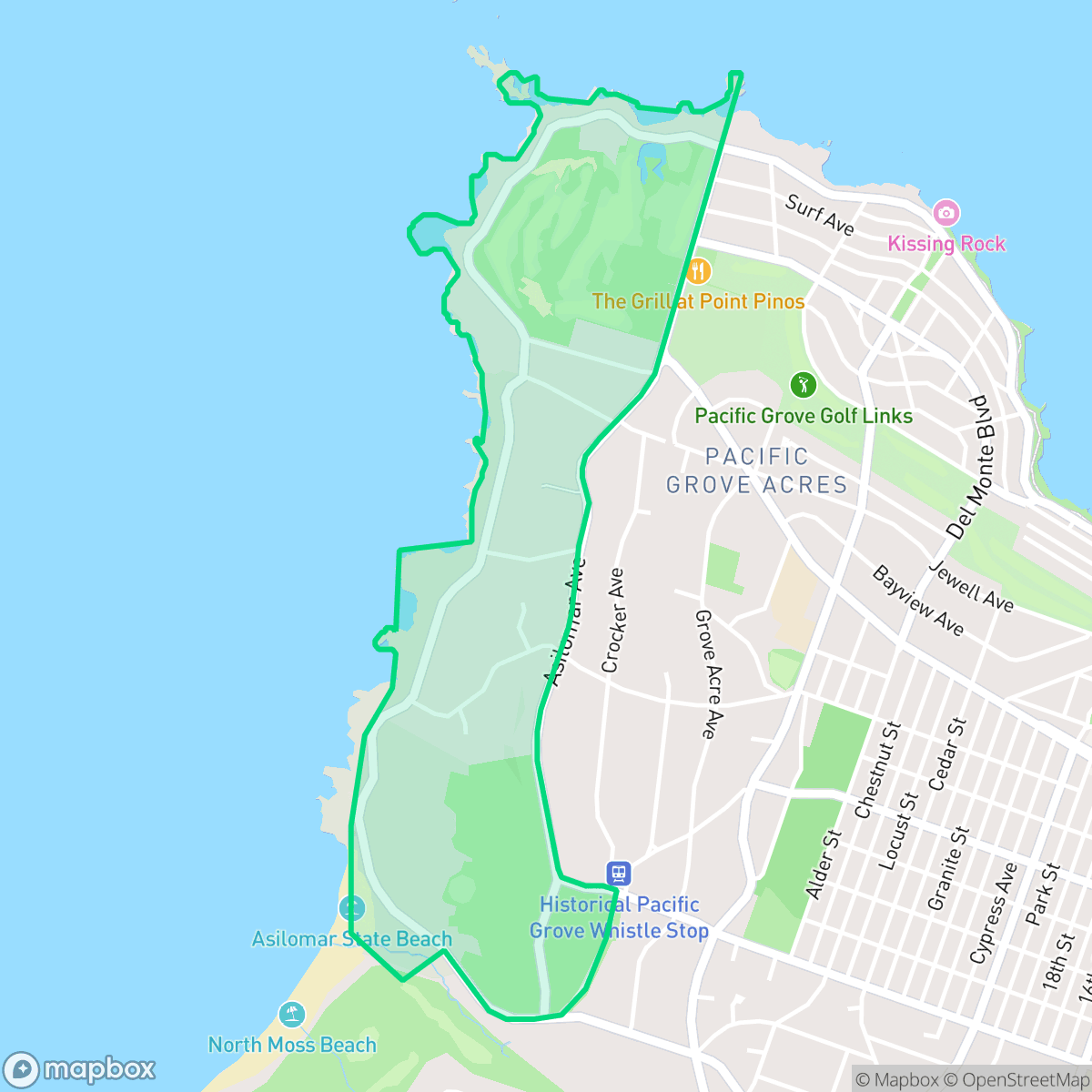
The Asilomar Dunes neighborhood in Pacific Grove, California, is a distinctive coastal residential area characterized by large single-family homes situated on open, fragile sand dunes and wooded sites. Historically, the area's development dates back to the early 20th century, featuring rustic, single-wall board-and-batten cottages from the 1920s. The neighborhood's identity is deeply intertwined with the adjacent Asilomar Conference Grounds, established in 1913 as a YWCA camp and designed by pioneering architect Julia Morgan in the Arts & Crafts style. Today, the neighborhood exists in a delicate balance with its surrounding environment; ninety percent of its lots are a half-acre or larger, and residential properties are strictly regulated by the California Coastal Commission to protect the sensitive dune habitat, which is home to endangered species like the Menzies' wallflower and the black legless lizard.
The neighborhood stands out for its unique aesthetic, characterized by expansive lots and a landscape that integrates seamlessly with the surrounding coastal environment. With its high visual appeal, the area offers a tranquil living experience that feels removed from the density of more urbanized parts of Pacific Grove. It is best suited for individuals who value solitude and nature over high-density walkability or a bustling social scene. While the setting is undeniably scenic, prospective residents should note the trade-off in overall liveliness, as essential services are not immediately accessible within the immediate vicinity and require travel to neighboring areas. However, families are well-served by the Pacific Grove Unified School District, which provides top-tier educational opportunities. The area remains a quiet, low-traffic environment that prioritizes privacy and environmental preservation, making it a distinct choice for those seeking a slower pace of life.
Neighborhood Scores Across 15 Qualities
Residential spacing provides a moderate level of separation between neighbors, which is slightly higher than the average for Pacific Grove. According to iHuus data, the area features a mix of building densities with some natural buffers between properties.
Sidewalks and safe crossings are available for pedestrians, though the area is slightly less walkable than the Pacific Grove average according to iHuus data.
Large residential properties and premium amenities contribute to a highly aesthetic environment. This level of visual quality sits well above the Pacific Grove average according to iHuus data.
Extensive trails and large open spaces provide exceptional opportunities for pet exercise. This area offers significantly more access to natural recreation areas for dogs than the rest of Pacific Grove.
Open lands and scattered homes define this area, offering a landscape that is very similar to the typical density found across Pacific Grove.
Low-density residential life and significant open space create a serene atmosphere that is notably calmer than the city average. Access to local services and shops is limited, as the area primarily consists of remote coastline and scattered housing.
Steady noise from nearby busy streets is more noticeable here than in the rest of Pacific Grove. According to iHuus data, this area experiences more consistent traffic sounds than the city average.
Industrial facilities and warehouses are entirely absent from this area. Residents can expect a landscape of quiet streets and open green spaces, consistent with the broader Pacific Grove area.
Health insurance coverage among residents is lower than the average for Pacific Grove, according to iHuus data.
Voting patterns and census indicators reflect a predominantly liberal political leaning, consistent with the broader Pacific Grove area according to iHuus data.
Residents live in a community with a varied age distribution, featuring a mix of young adults, families, and seniors that is largely consistent with the broader Pacific Grove area.
Residual flood risk exists due to being within a 500-year floodplain, though safety levels remain slightly above the Pacific Grove average according to iHuus data.
Address-Level Insights for Asilomar Dunes


iHuus Neighborhood Intelligence Insights
Get address-level neighborhood insights for Asilomar Dunes
- Street-level scores — see how individual blocks compare, not just neighborhood averages
- Micro-zone boundaries — identify quiet pockets, flood boundaries, and walkable clusters before you visit
- 15 dimensions in full — walkability, noise, air quality, school quality, insurance coverage, population age profile, urban/rural index, and more
- Boundary risk alerts — know if your address sits near a block boundary where scores drop, the kind of detail no listing will ever mention
- School insights — individual school ratings and insights, not just district-level data
- Compare before you commit — side-by-side data across neighborhoods, down to block precision
No credit card required
Compare with Any Neighborhood
| Dimension | Asilomar Dunes | Beach Tract/Fairway Homes |
|---|---|---|
| 🚶 Walkabilityavg 8.68 | ||
| 🔊 Acoustic Comfortavg 4.49 | ||
| 🤫 Privacy Indexavg 5.57 | ||
| 🎨 Visual Appealavg 7.37 | ||
| 🐕 Dog Friendlinessavg 8.15 | ||
| 🗺️ Urban-Rural Indexavg 7.2 | ||
| ✨ Neighborhood Vibeavg 5.27 | ||
| 🏥 Health Insurance Coverageavg 8.4 | ||
| 🌿 Air Quality | ||
| 🏭 Industrial Proximityavg 10 | ||
| 🌊 Flood Safetyavg 7.03 | ||
| 🗳️ Ideological Leanavg 9.43 | ||
| 👥 Population Age Profileavg 5.6 | ||
| 🔥 Fire Safetyavg 1.51 | ||
| 🏫 School Quality |
Asilomar Dunes Rankings
School Districts Serving Asilomar Dunes
School Insights for Asilomar Dunes
Below average outcomes; significant attendance and academic challenges.
School Insights
See what's really behind every school rating near Asilomar Dunes
- Individual school ratings — each school's own score with outcome context, not just a district average
- Enrollment & class size data — student-to-teacher ratio and how it compares to the state average
- Full demographics breakdown — ethnicity and gender composition for every school in the enrollment zone
- Every school in the district — all schools within the enrollment boundary ranked by rating, not just the closest one
- Grade levels & benchmarks — elementary through high school, with below/above state-average flags
No credit card required