Oxnard Dunes, Oxnard
Updated · 346 residents
Oxnard Dunes is a quiet, rural-feeling coastal enclave defined by its seclusion and proximity to open space. Residents experience a peaceful environment with high air quality, though the area is characterized by low walkability and limited local business access.
Key Highlights
About Oxnard Dunes
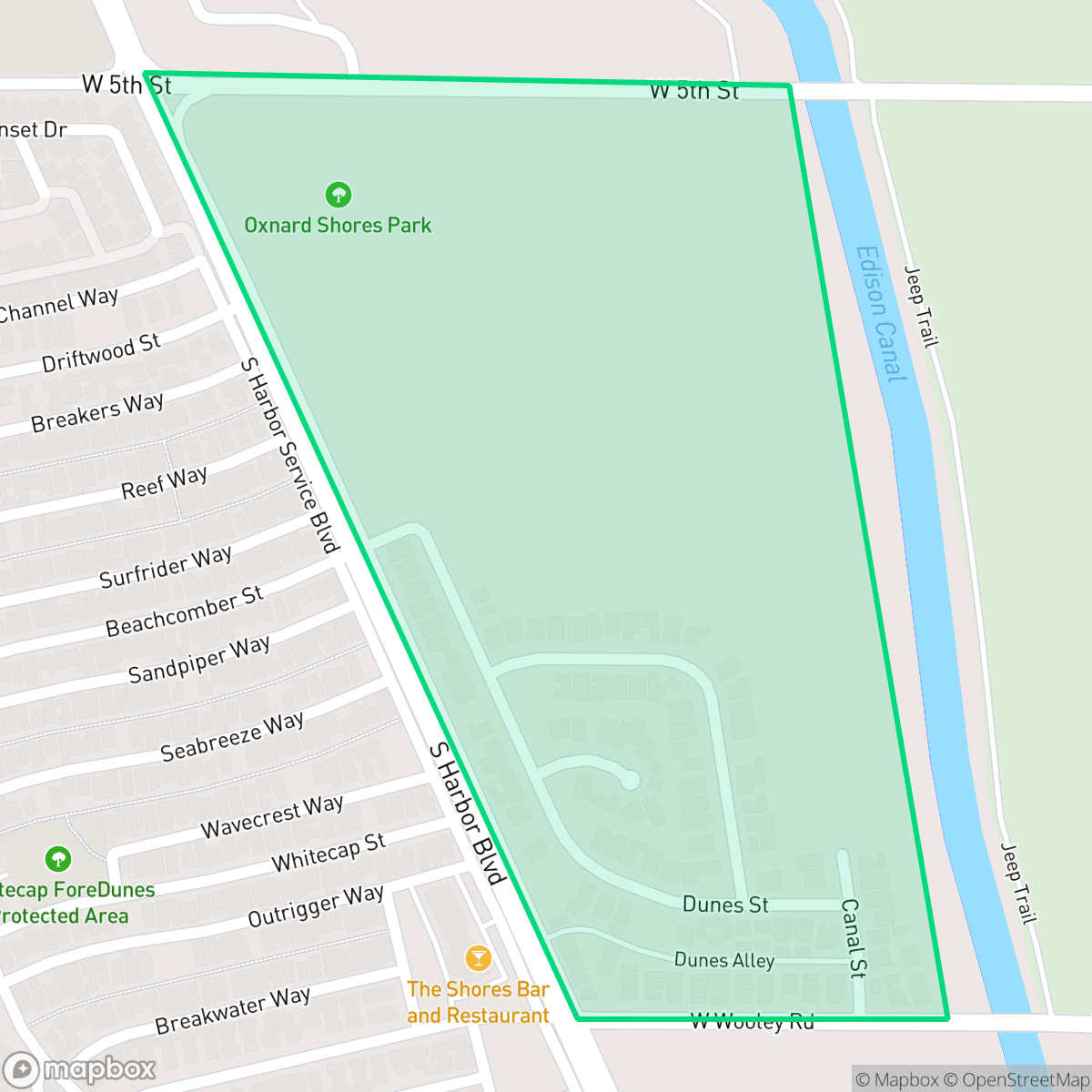
The Oxnard Dunes neighborhood in Oxnard, California, has a unique history tied to mid-century industrial use and subsequent coastal residential development. During the 1950s, before the area was subdivided, the beachfront site was used under county permits as a disposal ground for oil-field drilling mud and waste. In 1959, the Oxnard Shores Company purchased the land, and developers began selling residential lots in 1964. Most of the neighborhood's homes, consisting of an eclectic mix of single-family residences and duplexes, were constructed during the late 1970s and early 1980s. The neighborhood became the center of a major legal battle in 1987 when 175 residents filed a massive lawsuit against developers and the city for failing to disclose the underlying oil waste dump. State health officials ultimately cleared the site of health hazards in 1990.
The area maintains a distinct character marked by its rural landscape and lack of dense commercial development. With an urban-rural index score of 10.0, it offers a departure from the typical suburban sprawl found in surrounding parts of Oxnard, providing residents with vast open spaces and a slower pace of life. While the neighborhood is relatively quiet, it is situated within a mixed-use environment where residents may encounter daytime traffic noise. The physical layout prioritizes privacy over convenience, as indicated by a privacy index that exceeds the city average, though this comes at the cost of limited walkability and few amenities within immediate reach.
Living in this neighborhood requires a reliance on personal vehicles, as the infrastructure is not designed for pedestrians. Prospective residents should note that while the air quality is excellent, the area lacks the high-density social vibrancy or dog-friendly amenities found in neighboring coastal communities. It is best suited for individuals who prioritize a quiet, low-density living environment over proximity to retail, dining, or walkable transit hubs. The local school districts serving the area provide stable infrastructure and specialized programs, though families should be aware of the academic achievement gaps present across the broader regional school system.
Neighborhood Scores Across 15 Qualities
Residential lots feature closely spaced detached homes with minimal separation between structures. This density is notably higher than the Oxnard average, according to iHuus data.
Pedestrian infrastructure is exceptionally well-developed, featuring wide sidewalks and frequent crossings. According to iHuus data, the area offers superior walkability compared to the rest of Oxnard.
Large residential properties and frequent high-end amenities create an aesthetically pleasing environment that is notably more polished than the Oxnard average. According to iHuus data, the area features spacious driveways and well-maintained landscapes.
Extensive access to large parks, trails, and open spaces makes this area significantly more dog friendly than the Oxnard average, according to iHuus data.
Open landscapes and scattered homes define this area, offering a setting very similar to the broader Oxnard average.
Low business density and vast open spaces create a tranquil, suburban atmosphere that is significantly calmer than the Oxnard average. Local amenities are limited, meaning most dining and retail options require a car to access.
Frequent noise from nearby railroad tracks and major freeways characterizes the area. According to iHuus data, acoustic comfort levels here are higher than the Oxnard city average, though intermittent disturbances remain present.
Air quality remains consistently high with minimal health concerns. This level of cleanliness is on par with the Oxnard average according to iHuus data.
Industrial presence is non-existent in this area, offering a landscape free from warehouses or manufacturing facilities. This lack of industrial zoning makes the neighborhood significantly quieter and cleaner than the Oxnard average, according to iHuus data.
Health insurance accessibility is notably higher in this area than the Oxnard average, according to iHuus data.
Political leanings in this area lean liberal, though the community is notably less progressive than the broader Oxnard average according to iHuus data.
Residents live among a diverse mix of young professionals, families, and seniors. This population spread is notably more balanced than the broader Oxnard area according to iHuus data.
Flood risk in this area is higher than the Oxnard average; however, FEMA has not yet completed a detailed study to confirm precise levels of vulnerability. According to iHuus data, the area remains under a moderate level of uncertainty regarding flood safety.
Address-Level Insights for Oxnard Dunes


iHuus Neighborhood Intelligence Insights
Get address-level neighborhood insights for Oxnard Dunes
- Street-level scores — see how individual blocks compare, not just neighborhood averages
- Micro-zone boundaries — identify quiet pockets, flood boundaries, and walkable clusters before you visit
- 15 dimensions in full — walkability, noise, air quality, school quality, insurance coverage, population age profile, urban/rural index, and more
- Boundary risk alerts — know if your address sits near a block boundary where scores drop, the kind of detail no listing will ever mention
- School insights — individual school ratings and insights, not just district-level data
- Compare before you commit — side-by-side data across neighborhoods, down to block precision
No credit card required
Compare with Any Neighborhood
| Dimension | Oxnard Dunes | Bartolo Square North |
|---|---|---|
| 🚶 Walkabilityavg 9.13 | ||
| 🔊 Acoustic Comfortavg 2.93 | ||
| 🤫 Privacy Indexavg 4.06 | ||
| 🎨 Visual Appealavg 6.08 | ||
| 🐕 Dog Friendlinessavg 6.46 | ||
| 🗺️ Urban-Rural Indexavg 6.67 | ||
| ✨ Neighborhood Vibeavg 4.7 | ||
| 🏥 Health Insurance Coverageavg 4.66 | ||
| 🌿 Air Qualityavg 9.99 | ||
| 🏭 Industrial Proximityavg 7.45 | ||
| 🌊 Flood Safetyavg 3.91 | ||
| 🗳️ Ideological Leanavg 9.3 | ||
| 👥 Population Age Profileavg 4.59 | ||
| 🔥 Fire Safetyavg 0.04 | ||
| 🏫 School Quality |
Oxnard Dunes Rankings
School Districts Serving Oxnard Dunes
School Insights for Oxnard Dunes
Below average outcomes; significant attendance and academic challenges.
School Insights
See what's really behind every school rating near Oxnard Dunes
- Individual school ratings — each school's own score with outcome context, not just a district average
- Enrollment & class size data — student-to-teacher ratio and how it compares to the state average
- Full demographics breakdown — ethnicity and gender composition for every school in the enrollment zone
- Every school in the district — all schools within the enrollment boundary ranked by rating, not just the closest one
- Grade levels & benchmarks — elementary through high school, with below/above state-average flags
No credit card required