El Rio West, Oxnard
Updated · 1,120 residents
El Rio West features a dense, modern landscape of townhomes and row houses that offers exceptional walkability to local parks and diverse dining options. While residents benefit from high air quality and a lack of industrial hazards, the area experiences significant ambient noise from nearby road traffic.
Key Highlights
About El Rio West
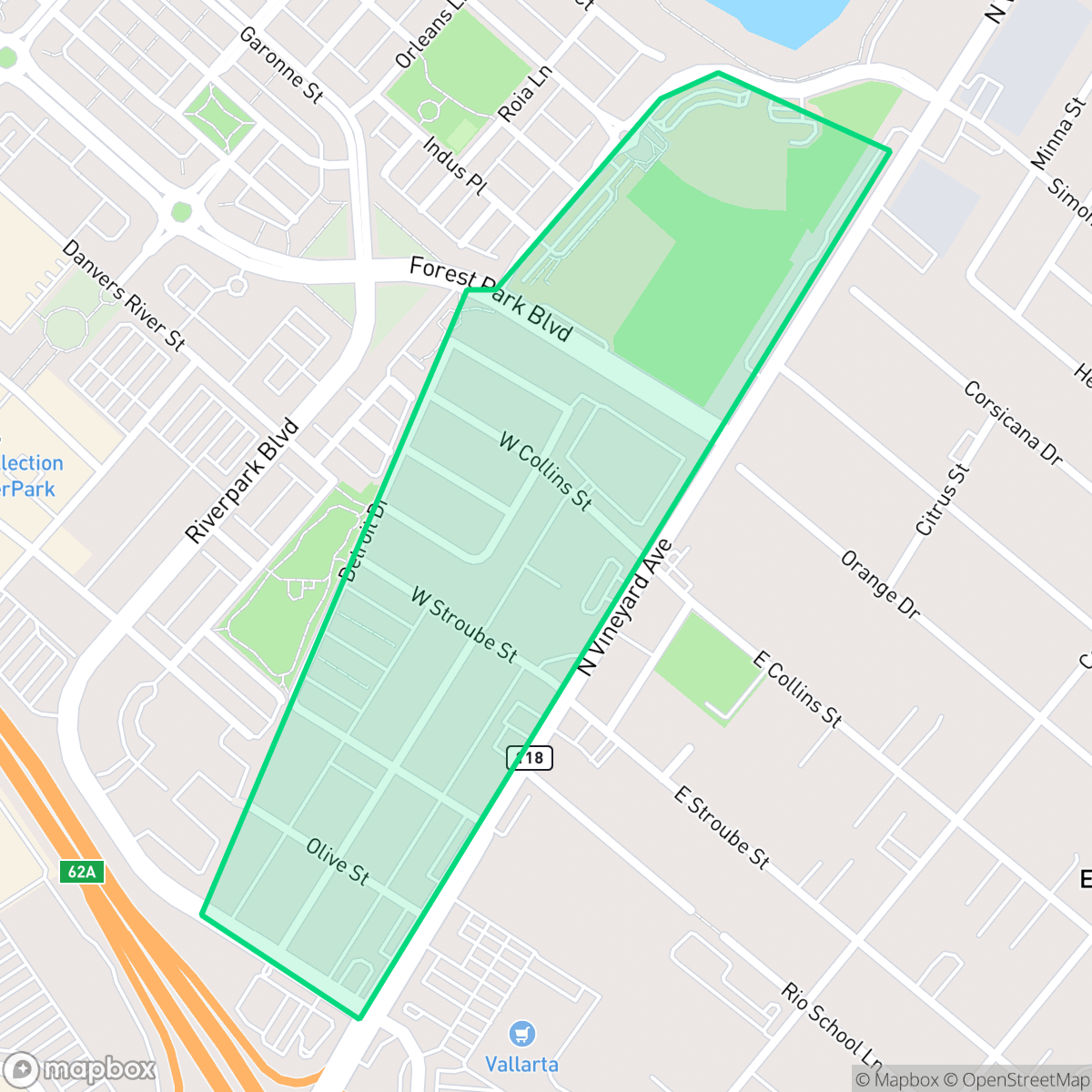
El Rio West, originally a historical portion of the unincorporated town of El Rio (founded in 1875 as New Jerusalem by Jewish merchant Simon Cohn), was officially annexed by the City of Oxnard in the early 2000s. The 23.5-acre annexation area, located near Vineyard Avenue and the 101 Freeway, transitioned from regional commercial and agricultural uses to residential development. Today, the neighborhood is closely integrated with the adjacent Riverpark master-planned community. It is characterized by a high concentration of modern attached townhomes and row houses built after 1999, representing a major physical transformation from the area's rural, agricultural roots near the Santa Clara River.
The area functions as a highly accessible, pedestrian-friendly enclave characterized by its contemporary residential architecture and active community life. Residents enjoy convenient access to local green spaces like East Park and a variety of neighborhood dining establishments, including La Huerta Juice Bar and La Mancha. The layout prioritizes connectivity, ensuring that daily errands and recreational outings are easily achievable on foot within this dense suburban environment.
Prospective residents should consider the trade-offs inherent in this high-density setting, which includes limited acoustic privacy due to proximity to major road traffic. While the neighborhood boasts excellent air quality and a complete lack of industrial interference, families should note the challenges within the local school districts, which currently face performance and consistency hurdles. It is well-suited for those who prioritize a walkable lifestyle with modern housing and immediate access to local amenities.
Neighborhood Scores Across 15 Qualities
Residential spacing is typical for the area, though some high-density pockets feature buildings located very close to one another. According to iHuus data, the level of separation between neighbors is roughly equal to the Oxnard average.
Pedestrian infrastructure includes sidewalks and safe crossings throughout residential blocks, though the network is less comprehensive than the Oxnard average. Many streets feature a grid layout that lacks dedicated verges on certain sections according to iHuus data.
Dense tract housing and large apartment complexes define the landscape, featuring consistent rooflines and shared community amenities. This visual character is largely in line with the broader Oxnard area.
Private backyards are common here, but street verges are narrow and public park access is below the Oxnard average. Some areas feature accessible green school fields, though overall pet-friendly amenities are less abundant than in other parts of the city.
Residential grids transition abruptly into large agricultural fields and irrigation ponds. This landscape provides a balance of suburban density and open land that is slightly less developed than the Oxnard average.
Frequent dining options and social spots provide more activity than the typical Oxnard neighborhood. While some blocks offer lively pockets of commerce near major roads, other areas remain quiet and residential with very few nearby businesses.
Frequent auditory disturbances from nearby railroad tracks and heavy freeway traffic characterize this area. According to iHuus data, acoustic comfort is notably lower than the Oxnard average.
Air quality remains consistently high with minimal health concerns. This level of cleanliness is consistent with the average found across Oxnard.
Residents benefit from an absence of warehouses, heavy machinery, or hazardous facilities within the area. This neighborhood maintains a significantly cleaner profile than the Oxnard average, featuring only residential and institutional spaces near agricultural lands.
Health insurance enrollment levels in this area are slightly higher than the Oxnard city average, according to iHuus data. While coverage is present, a significant portion of the population remains uninsured.
Voting patterns and census indicators reflect a predominantly liberal political leaning that is slightly more pronounced than the Oxnard city average.
Residents live alongside a balanced mix of young adults, families, and seniors. This demographic spread is slightly more concentrated in certain age brackets compared to the average across Oxnard, according to iHuus data.
Residual flood risk exists within this area due to its location in a floodplain, though safety levels are notably higher than the Oxnard city average according to iHuus data.
Address-Level Insights for El Rio West


iHuus Neighborhood Intelligence Insights
Get address-level neighborhood insights for El Rio West
- Street-level scores — see how individual blocks compare, not just neighborhood averages
- Micro-zone boundaries — identify quiet pockets, flood boundaries, and walkable clusters before you visit
- 15 dimensions in full — walkability, noise, air quality, school quality, insurance coverage, population age profile, urban/rural index, and more
- Boundary risk alerts — know if your address sits near a block boundary where scores drop, the kind of detail no listing will ever mention
- School insights — individual school ratings and insights, not just district-level data
- Compare before you commit — side-by-side data across neighborhoods, down to block precision
No credit card required
Compare with Any Neighborhood
| Dimension | El Rio West | Bartolo Square North |
|---|---|---|
| 🚶 Walkabilityavg 9.13 | ||
| 🔊 Acoustic Comfortavg 2.93 | ||
| 🤫 Privacy Indexavg 4.06 | ||
| 🎨 Visual Appealavg 6.08 | ||
| 🐕 Dog Friendlinessavg 6.46 | ||
| 🗺️ Urban-Rural Indexavg 6.67 | ||
| ✨ Neighborhood Vibeavg 4.7 | ||
| 🏥 Health Insurance Coverageavg 4.66 | ||
| 🌿 Air Qualityavg 9.99 | ||
| 🏭 Industrial Proximityavg 7.45 | ||
| 🌊 Flood Safetyavg 3.91 | ||
| 🗳️ Ideological Leanavg 9.3 | ||
| 👥 Population Age Profileavg 4.59 | ||
| 🔥 Fire Safetyavg 0.04 | ||
| 🏫 School Quality |
El Rio West Rankings
School Districts Serving El Rio West
School Insights for El Rio West
Below average outcomes; significant attendance and academic challenges.
School Insights
See what's really behind every school rating near El Rio West
- Individual school ratings — each school's own score with outcome context, not just a district average
- Enrollment & class size data — student-to-teacher ratio and how it compares to the state average
- Full demographics breakdown — ethnicity and gender composition for every school in the enrollment zone
- Every school in the district — all schools within the enrollment boundary ranked by rating, not just the closest one
- Grade levels & benchmarks — elementary through high school, with below/above state-average flags
No credit card required