McClymonds, Oakland
Updated · 3,032 residents
McClymonds is a dense, industrial-adjacent neighborhood in West Oakland characterized by a mix of historic residential architecture and large-scale warehouse facilities. Residents benefit from high rates of health insurance coverage and reliable flood safety, though the area faces challenges related to limited privacy and proximity to heavy industrial operations.
Key Highlights
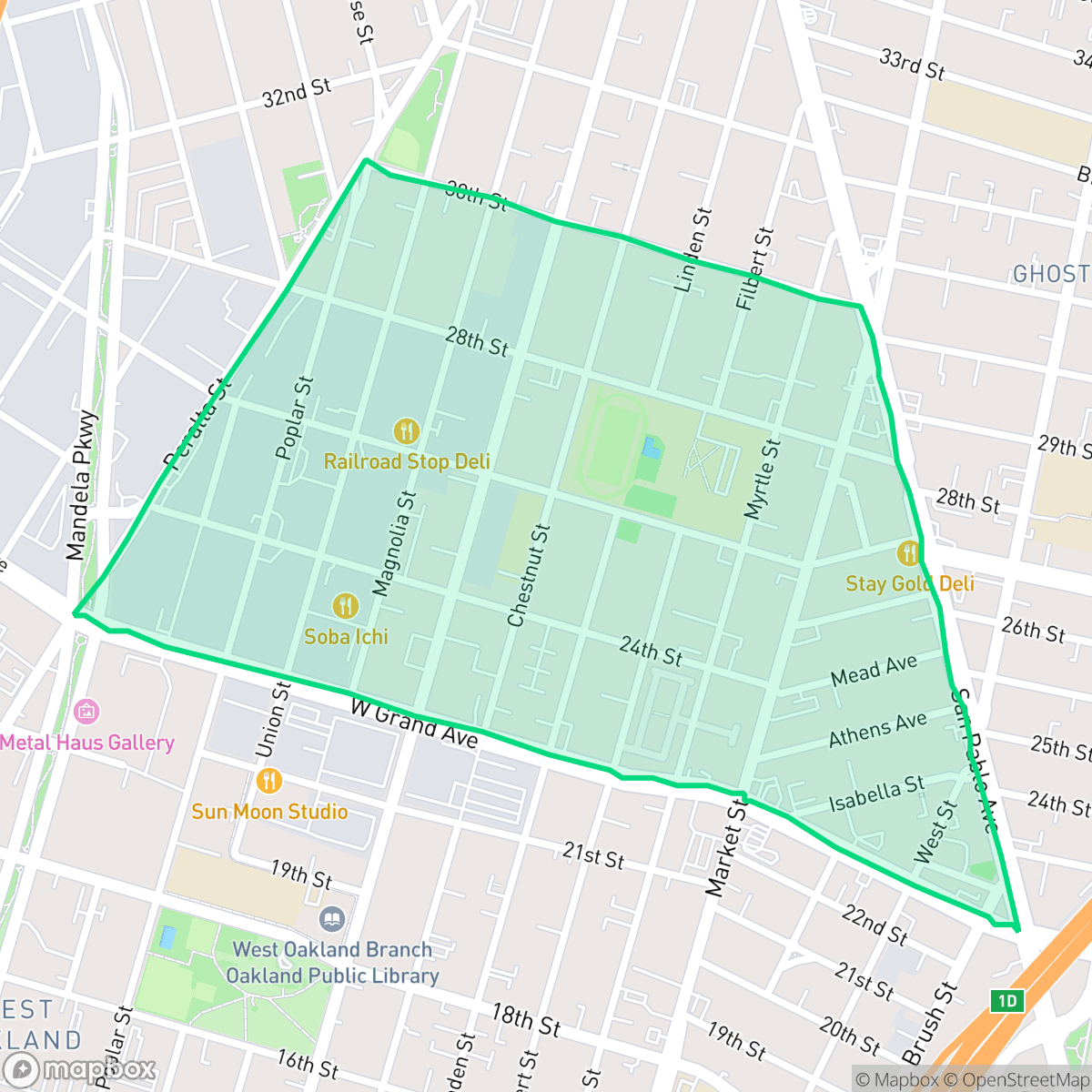
About McClymonds
Named after its historic high school (and early school superintendent John William McClymonds), the McClymonds neighborhood in West Oakland features a rich housing stock of Victorian and Craftsman-style homes. During the mid-20th century Great Migration, the neighborhood transitioned from predominantly white to a vibrant, predominantly Black community. It became a cultural and civil rights hub; in 1962, the high school hosted the "Mind of the Ghetto" conference, featuring a speech by Dr. Martin Luther King Jr. with Malcolm X and Huey P. Newton in attendance. Nicknamed the "School of Champions," the local high school also produced legendary athletic alumni, including NBA icon Bill Russell and baseball pioneer Curt Flood. In the post-WWII era, the neighborhood faced systemic challenges from heavy industrial zoning, redlining, and disruptive urban renewal projects, yet it remains a historic anchor of West Oakland's African American heritage.
The current character of the neighborhood is defined by a dense, low-rise urban environment where traditional Victorian and Craftsman homes sit alongside active industrial zones. This landscape creates a unique, calm aesthetic that features local landmarks such as Soba Ichi and Hannah Park. While the area maintains a distinct industrial identity, it serves as a functional hub for those who value proximity to regional transit and central Oakland amenities.
Living in this part of West Oakland involves navigating specific trade-offs. While the community enjoys high levels of health insurance coverage and good air quality, the proximity to heavy industrial facilities and freight traffic impacts the overall visual appeal and noise environment. The area is best suited for individuals who prioritize accessibility and historic charm over suburban aesthetics, provided they are comfortable with the inherent challenges of an industrial-adjacent setting.
Neighborhood Scores Across 15 Qualities
Residential structures are positioned closely together with minimal separation between properties. According to iHuus data, this lack of spacing results in privacy levels slightly below the Oakland average.
Pedestrians benefit from a complete grid of streets with sidewalks on both sides and frequent marked crossings. This level of accessibility is slightly higher than the Oakland average, though the nearby freeway interchange creates some disconnected corridors.
Standard residential architecture and industrial structures define the area, offering a functional landscape that is slightly less visually diverse than the Oakland average. Property features typically consist of modest yards and boxy rooflines without luxury amenities like private pools.
Public green space and park access are below the Oakland average. Most greenery in this area is contained within private fenced yards or small, localized sports fields.
Large warehouses and significant infrastructure create a more industrial atmosphere than the typical Oakland residential area. According to iHuus data, the landscape features a dense mix of residential blocks and commercial zones with limited green space compared to the city average.
A blend of industrial landscapes and suburban pockets creates a varied atmosphere, with some areas offering more activity than the Oakland average. While certain blocks feature diverse dining and movement near major highways, many residential streets remain quiet and lack nearby amenities.
Frequent noise from nearby railroad tracks and heavy freeway traffic is a persistent feature here. According to iHuus data, acoustic comfort is notably lower than the Oakland average.
Air quality is consistently high with minimal health concerns. This level of cleanliness is notably better than the Oakland average, according to iHuus data.
Residential areas are interspersed with light commercial units and heavy industrial zones characterized by freight traffic. Residents should be aware of the proximity to an EPA Superfund site, a feature that makes industrial density noticeably higher than the Oakland average.
Health insurance access is lower in McClymonds compared to the Oakland average. According to iHuus data, a significant portion of the resident population lacks medical coverage.
Voting patterns and census indicators reflect a deeply liberal political landscape that is slightly more pronounced than the Oakland city average, according to iHuus data.
Residents live alongside a balanced mix of young adults, families, and older individuals. This demographic distribution is largely consistent with the average profile found across Oakland.
Flood risk in this area is elevated as it sits within a designated floodplain. According to iHuus data, this level of risk is consistent with the average across Oakland.
Address-Level Insights for McClymonds


iHuus Neighborhood Intelligence Insights
Get address-level neighborhood insights for McClymonds
- Street-level scores — see how individual blocks compare, not just neighborhood averages
- Micro-zone boundaries — identify quiet pockets, flood boundaries, and walkable clusters before you visit
- 15 dimensions in full — walkability, noise, air quality, school quality, insurance coverage, population age profile, urban/rural index, and more
- Boundary risk alerts — know if your address sits near a block boundary where scores drop, the kind of detail no listing will ever mention
- School insights — individual school ratings and insights, not just district-level data
- Compare before you commit — side-by-side data across neighborhoods, down to block precision
No credit card required
Compare with Any Neighborhood
| Dimension | McClymonds | Acorn |
|---|---|---|
| 🚶 Walkabilityavg 8.99 | ||
| 🔊 Acoustic Comfortavg 3.24 | ||
| 🤫 Privacy Indexavg 3.74 | ||
| 🎨 Visual Appealavg 6.28 | ||
| 🐕 Dog Friendlinessavg 5.74 | ||
| 🗺️ Urban-Rural Indexavg 6.02 | ||
| ✨ Neighborhood Vibeavg 5.22 | ||
| 🏥 Health Insurance Coverageavg 7.4 | ||
| 🌿 Air Qualityavg 8.06 | ||
| 🏭 Industrial Proximityavg 8.37 | ||
| 🌊 Flood Safetyavg 2.61 | ||
| 🗳️ Ideological Leanavg 9.95 | ||
| 👥 Population Age Profileavg 4.92 | ||
| 🔥 Fire Safetyavg 0.17 | ||
| 🏫 School Quality |
McClymonds Rankings
School Districts Serving McClymonds
School Insights for McClymonds
Below average outcomes; significant attendance and academic challenges.
School Insights
See what's really behind every school rating near McClymonds
- Individual school ratings — each school's own score with outcome context, not just a district average
- Enrollment & class size data — student-to-teacher ratio and how it compares to the state average
- Full demographics breakdown — ethnicity and gender composition for every school in the enrollment zone
- Every school in the district — all schools within the enrollment boundary ranked by rating, not just the closest one
- Grade levels & benchmarks — elementary through high school, with below/above state-average flags
No credit card required