Forestland, Oakland
Updated · 1,271 residents
Forestland is a quiet, low-density residential enclave in the Oakland hills, defined by its dense canopy of mature trees and rural aesthetic. The area offers high visual appeal and exceptional dog friendliness, though residents rely on vehicles for daily errands due to a lack of local commercial businesses.
Key Highlights
About Forestland
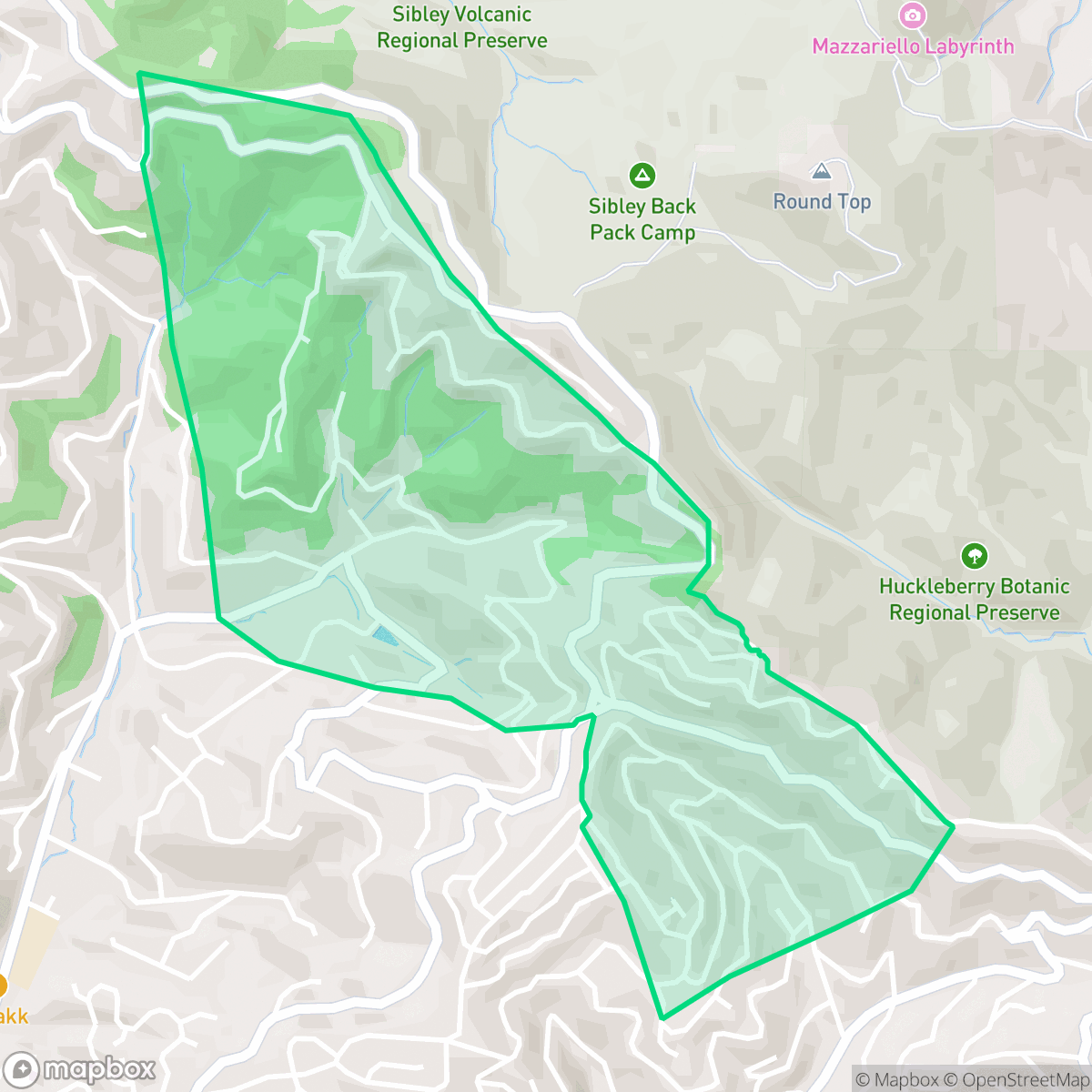
Nestled on the mountain slopes of Oakland's Montclair district, the Forestland neighborhood grew out of the historic 1924 Forest Park and Pinehaven subdivisions developed by Wickham Havens, Inc. The area’s signature dense canopy of pine, cypress, and eucalyptus trees was planted in the early 1900s by developer Frank C. Havens, who sought to transform the once-barren hills into timbered homesites. Notable neighborhood landmarks include the historic "Castle" (Forest Park Mansion) at 6708 Thornhill Drive, a prominent local residence built in the early 1930s. Additionally, the Montclair Swim Club on Thornhill Drive originated in 1924 as the spring-fed Forest Park Pool, which was constructed specifically as a private amenity for the tract's early residents.
This neighborhood functions as a tranquil retreat, characterized by its high urban-rural index and significant open space. The landscape is marked by a lush, forested environment and scattered residential development, providing a higher degree of privacy than the Oakland city average. It is a destination for those who prioritize a peaceful atmosphere and natural surroundings over proximity to urban activity or public transit.
Daily life here is car-dependent, as walkability is limited and essential services are not located within the immediate vicinity. Prospective residents should be aware of the significant fire risk in the area, which is notably higher than the city average. According to iHuus data, the community benefits from strong health insurance coverage and a consistent ideological lean, making it well-suited for individuals who prefer a remote, nature-oriented lifestyle.
Neighborhood Scores Across 15 Qualities
Residential spacing provides a degree of separation between neighbors that is notably higher than the Oakland average. According to iHuus data, the area features mixed density with some buffer between adjacent properties.
Low traffic volume makes for pleasant strolls, though the lack of sidewalks makes walking less convenient than in many other parts of Oakland. According to iHuus data, the neighborhood is significantly less walkable than the city average.
Large residences and frequent high-end amenities contribute to a landscape that is significantly more visually polished than the Oakland average. According to iHuus data, the area features spacious driveways and well-maintained properties.
Abundant connected green spaces and wide, traffic-safe paths make this area significantly more pet-friendly than the Oakland average. According to iHuus data, the landscape provides ample opportunities for safe, uninterrupted walking.
Frequent open land and scattered homes among woodland areas create a semi-rural atmosphere that is significantly more expansive than the Oakland average, according to iHuus data.
Low-density residential blocks and vast open spaces create a serene landscape with very little commercial activity. This area lacks the vibrant social energy found in other parts of Oakland, as most streets are focused on quiet, car-oriented convenience rather than local business hubs.
Steady sound from nearby busy streets creates a consistent ambient hum, though this level of acoustic activity is notably higher than the Oakland average.
Air quality remains mostly clean with rare instances of elevated readings. This level of air purity is largely consistent with the average found across Oakland.
Residential tranquility defines this area, as there are no detected warehouses, industrial facilities, or hazard sites. According to iHuus data, this lack of industrial proximity is notably higher than the Oakland average.
Health insurance accessibility is exceptionally high among Forestland residents, significantly surpassing the average coverage rates seen throughout Oakland. According to iHuus data, most inhabitants have access to comprehensive medical coverage.
Voting patterns and census indicators show a very strong liberal leaning that is slightly more pronounced than the Oakland average, according to iHuus data.
Residents live alongside a balanced mix of young adults, families, and older individuals. According to iHuus data, the age distribution in Forestland is slightly more varied than the Oakland average.
Flood risk levels in this area remain undetermined due to a lack of detailed federal studies. According to iHuus data, the potential for flooding in Forestland is higher than the typical risk found across Oakland.
Significant fire hazards exist within this area, representing a much higher risk level than the average Oakland neighborhood. Residents should prioritize enhanced fire mitigation and preparedness measures according to iHuus data.
Address-Level Insights for Forestland


iHuus Neighborhood Intelligence Insights
Get address-level neighborhood insights for Forestland
- Street-level scores — see how individual blocks compare, not just neighborhood averages
- Micro-zone boundaries — identify quiet pockets, flood boundaries, and walkable clusters before you visit
- 15 dimensions in full — walkability, noise, air quality, school quality, insurance coverage, population age profile, urban/rural index, and more
- Boundary risk alerts — know if your address sits near a block boundary where scores drop, the kind of detail no listing will ever mention
- School insights — individual school ratings and insights, not just district-level data
- Compare before you commit — side-by-side data across neighborhoods, down to block precision
No credit card required
Compare with Any Neighborhood
| Dimension | Forestland | Acorn |
|---|---|---|
| 🚶 Walkabilityavg 8.99 | ||
| 🔊 Acoustic Comfortavg 3.24 | ||
| 🤫 Privacy Indexavg 3.74 | ||
| 🎨 Visual Appealavg 6.28 | ||
| 🐕 Dog Friendlinessavg 5.74 | ||
| 🗺️ Urban-Rural Indexavg 6.02 | ||
| ✨ Neighborhood Vibeavg 5.22 | ||
| 🏥 Health Insurance Coverageavg 7.4 | ||
| 🌿 Air Qualityavg 8.06 | ||
| 🏭 Industrial Proximityavg 8.37 | ||
| 🌊 Flood Safetyavg 2.61 | ||
| 🗳️ Ideological Leanavg 9.95 | ||
| 👥 Population Age Profileavg 4.92 | ||
| 🔥 Fire Safetyavg 0.17 | ||
| 🏫 School Quality |
Forestland Rankings
School Districts Serving Forestland
School Insights for Forestland
Below average outcomes; significant attendance and academic challenges.
School Insights
See what's really behind every school rating near Forestland
- Individual school ratings — each school's own score with outcome context, not just a district average
- Enrollment & class size data — student-to-teacher ratio and how it compares to the state average
- Full demographics breakdown — ethnicity and gender composition for every school in the enrollment zone
- Every school in the district — all schools within the enrollment boundary ranked by rating, not just the closest one
- Grade levels & benchmarks — elementary through high school, with below/above state-average flags
No credit card required