Crocker Highland, Oakland
Updated · 1,379 residents
Known for its winding, tree-lined streets and architectural diversity, this neighborhood offers a quiet, residential atmosphere with high visual appeal. Residents enjoy a walkable environment with convenient access to local dining and green spaces, while benefiting from strong community health and safety standards.
Key Highlights
About Crocker Highland
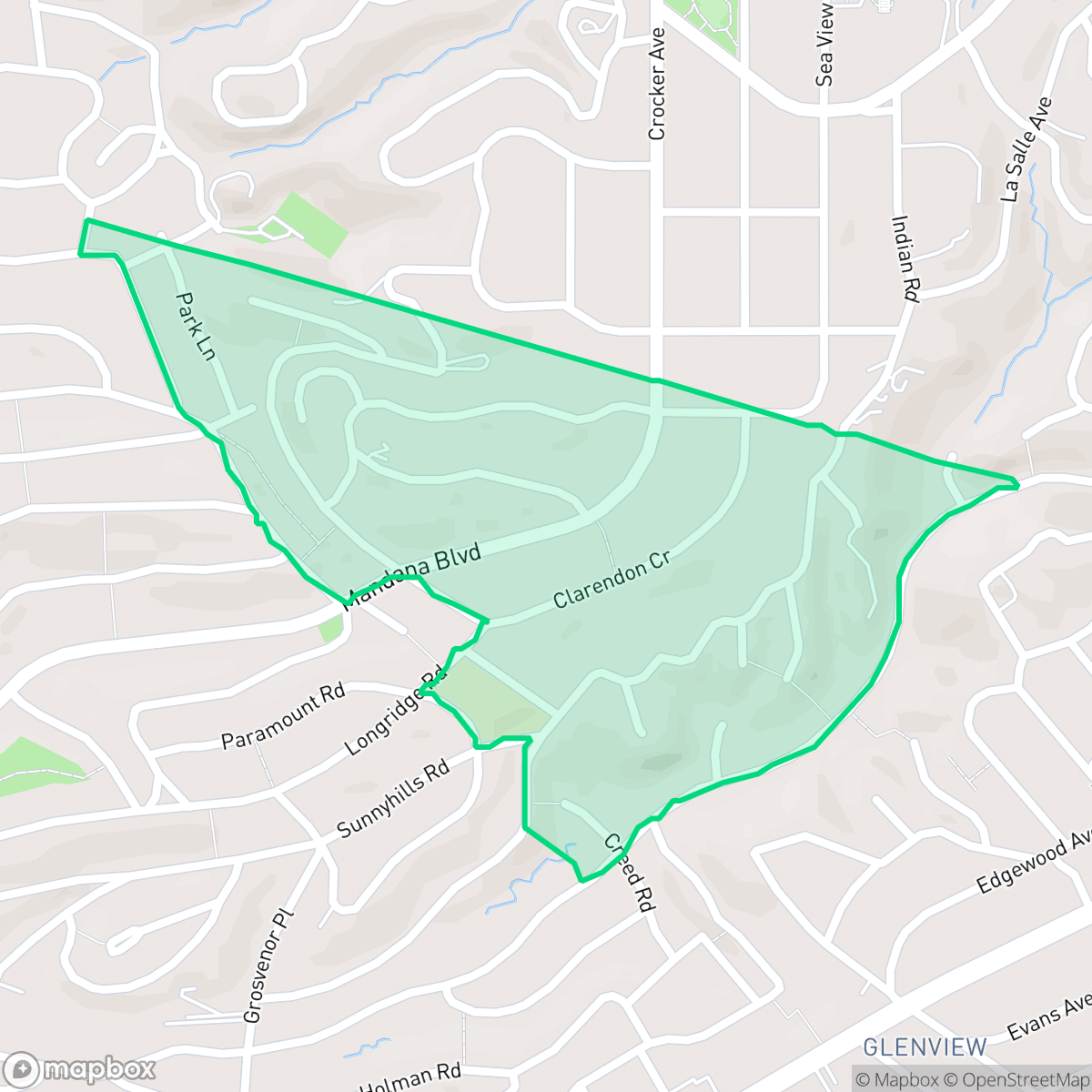
Developed starting in 1911 by Wickham Havens on the former Sather Estate, Oakland’s Crocker Highlands neighborhood was designed in 1917 by the renowned Olmsted Brothers. Embracing the English garden city and "City Beautiful" movements, the plan featured winding, tree-lined streets that preserved the area's natural hilly topography. The neighborhood’s name was selected to evoke the prestige of the adjacent Crocker family tracts. Development boomed in the 1920s, resulting in a rich stock of Tudor Revival, Spanish Mediterranean, Craftsman, and Beaux-Arts homes, including designs by legendary architects Julia Morgan and Bernard Maybeck. Today, the neighborhood is defined by its architectural integrity, the historic Crocker Highlands Elementary School (established in 1925), and its association with the Lakeshore Homes Association—the second-oldest homeowners association west of the Mississippi.
The area is defined by its mature landscaping and well-maintained single-family homes, which offer a sense of privacy amidst a dense suburban setting. It maintains a distinct identity through its hilly topography and proximity to local commercial hubs along Park Boulevard, where residents frequent spots such as Bellanico Restaurant and Park Burger. The neighborhood benefits from a high level of health insurance coverage and clean air, contributing to its status as a stable and desirable residential enclave in Oakland.
While the area is highly regarded for its aesthetic character and safety, prospective residents should note that it experiences moderate road noise levels. It is particularly well-suited for families and professionals seeking a quiet, established community with excellent access to educational resources, including the highly-rated Crocker Highlands Elementary. The lack of industrial activity ensures a peaceful environment, though the hilly terrain and suburban layout mean that daily errands often require a mix of walking and short drives.
Neighborhood Scores Across 15 Qualities
Residential spacing offers more separation than the Oakland average due to detached homes and mature trees that provide visual screening. Some properties maintain close proximity to neighbors, but significant greenery buffers are common throughout the area.
Wide, tree-shaded sidewalks and low-traffic residential streets provide a safe environment for walking. While the sidewalk network is continuous on most roads, the overall walkability is slightly below the Oakland average.
Large lots featuring custom architecture, private pools, and significant greenery provide a highly scenic environment. This level of visual landscape quality is notably higher than the Oakland average, according to iHuus data.
Abundant public parks and nearby wooded greenbelts provide ample space for exercise. According to iHuus data, the area offers significantly more accessible green space and safer walking paths than the Oakland average.
Mature tree canopies and significant greenery define this area, offering a more open and natural feel than the Oakland average. Residential pockets consist of single-family homes integrated with dense, established landscaping.
Local dining and social spots provide a noticeable level of activity that is higher than the Oakland average. Residents can enjoy a balance of quiet streets and accessible community hubs, including various cafes and restaurants, according to iHuus data.
Steady traffic sounds from nearby busy streets are present, though the level of acoustic disturbance remains significantly lower than the Oakland average according to iHuus data.
Air quality in this area remains mostly clean with only rare instances of elevated readings. This level of air purity is largely consistent with the average found across Oakland.
Industrial activity and warehouses are entirely absent from this area, providing a cleaner environment than the Oakland average. According to iHuus data, the neighborhood consists strictly of residential and light commercial zones with no detected hazard sites.
Nearly all residents in this area have access to health insurance, which is significantly higher than the Oakland average according to iHuus data.
Voting patterns and census indicators show a highly liberal political leaning that is consistent with the city average.
Residents experience a balanced distribution of age groups, ranging from young professionals to older adults and families. This demographic spread is slightly more diverse than the typical age profile found across Oakland, according to iHuus data.
Flood risk is notably lower than the Oakland average, though some residual risk remains as parts of the area are located within the 500-year floodplain according to iHuus data.
Address-Level Insights for Crocker Highland


iHuus Neighborhood Intelligence Insights
Get address-level neighborhood insights for Crocker Highland
- Street-level scores — see how individual blocks compare, not just neighborhood averages
- Micro-zone boundaries — identify quiet pockets, flood boundaries, and walkable clusters before you visit
- 15 dimensions in full — walkability, noise, air quality, school quality, insurance coverage, population age profile, urban/rural index, and more
- Boundary risk alerts — know if your address sits near a block boundary where scores drop, the kind of detail no listing will ever mention
- School insights — individual school ratings and insights, not just district-level data
- Compare before you commit — side-by-side data across neighborhoods, down to block precision
No credit card required
Compare with Any Neighborhood
| Dimension | Crocker Highland | Acorn |
|---|---|---|
| 🚶 Walkabilityavg 8.99 | ||
| 🔊 Acoustic Comfortavg 3.24 | ||
| 🤫 Privacy Indexavg 3.74 | ||
| 🎨 Visual Appealavg 6.28 | ||
| 🐕 Dog Friendlinessavg 5.74 | ||
| 🗺️ Urban-Rural Indexavg 6.02 | ||
| ✨ Neighborhood Vibeavg 5.22 | ||
| 🏥 Health Insurance Coverageavg 7.4 | ||
| 🌿 Air Qualityavg 8.06 | ||
| 🏭 Industrial Proximityavg 8.37 | ||
| 🌊 Flood Safetyavg 2.61 | ||
| 🗳️ Ideological Leanavg 9.95 | ||
| 👥 Population Age Profileavg 4.92 | ||
| 🔥 Fire Safetyavg 0.17 | ||
| 🏫 School Quality |
Crocker Highland Rankings
School Districts Serving Crocker Highland
School Insights for Crocker Highland
Below average outcomes; significant attendance and academic challenges.
School Insights
See what's really behind every school rating near Crocker Highland
- Individual school ratings — each school's own score with outcome context, not just a district average
- Enrollment & class size data — student-to-teacher ratio and how it compares to the state average
- Full demographics breakdown — ethnicity and gender composition for every school in the enrollment zone
- Every school in the district — all schools within the enrollment boundary ranked by rating, not just the closest one
- Grade levels & benchmarks — elementary through high school, with below/above state-average flags
No credit card required