Crestmont, Oakland
Updated · 1,188 residents
Crestmont is a scenic Oakland Hills neighborhood defined by its mid-century architecture and immediate proximity to Redwood Regional Park. While it offers residents high visual appeal and access to extensive green space, the area experiences significant noise from nearby road traffic.
Key Highlights
About Crestmont
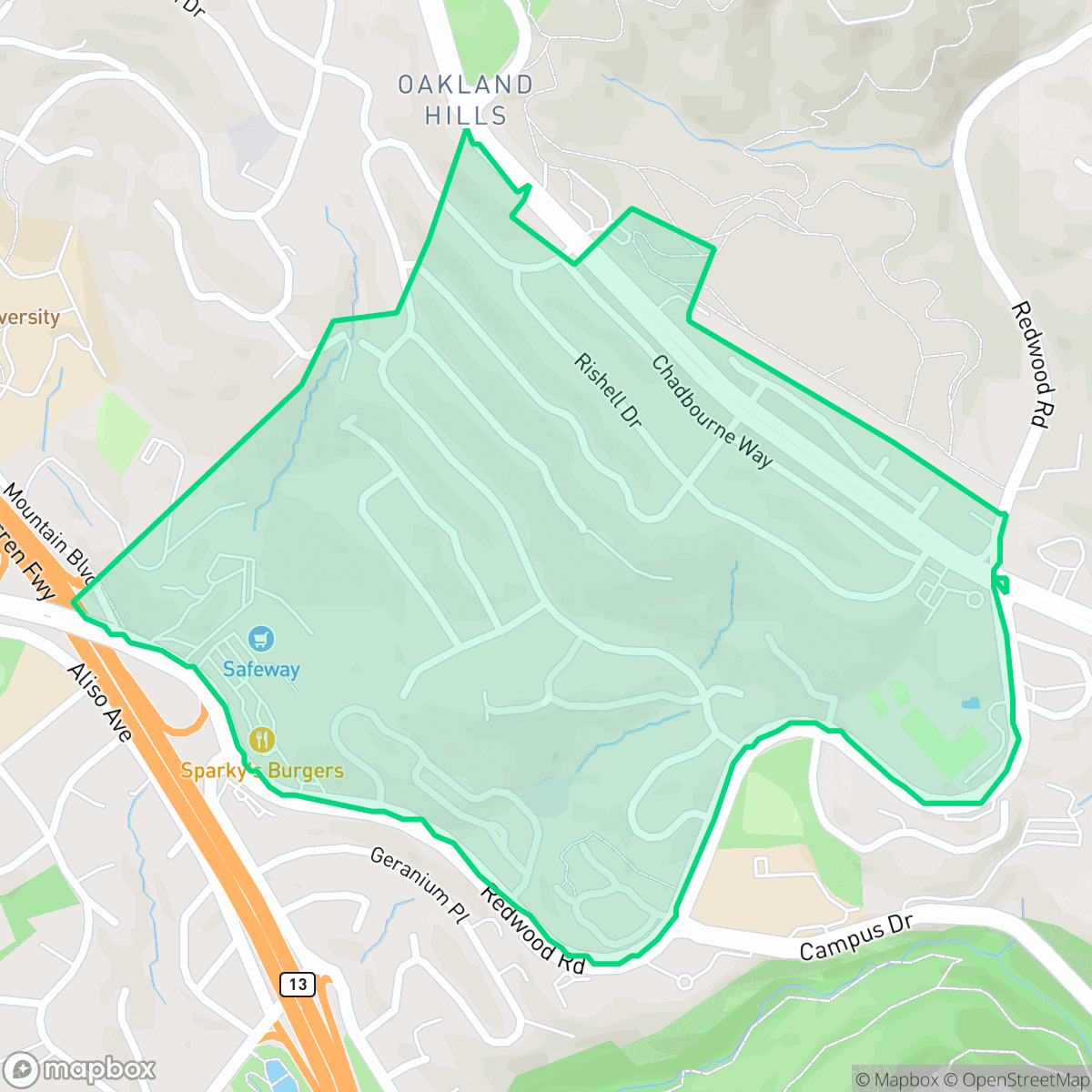
Crestmont is a hillside residential neighborhood in the Oakland Hills, developed primarily as a subdivision (Tract 1614) in the mid-1950s. The neighborhood is characterized by mid-century modern and contemporary single-family homes designed to capture panoramic views of the San Francisco Bay. A distinctive aspect of Crestmont's layout is its integration with Oakland's "Gold Star Streets" program; streets like Colgett Drive were named to honor local servicemen who died in military service, such as Pfc. Donald R. Colgett, a Marine killed in the Korean War. Additionally, Rishell Drive was named in honor of Clifford E. Rishell, the 42nd Mayor of Oakland, who moved to the neighborhood in 1957. Crestmont remains a quiet, scenic enclave closely bordered by Redwood Regional Park.
The area is characterized by its residential focus and integration with the natural landscape of the Oakland Hills. Residents benefit from high air quality and a strong sense of community, supported by high rates of health insurance coverage among the local population. The neighborhood maintains a balanced urban-rural feel, providing a retreat that remains connected to the broader city through accessible transit corridors.
Prospective residents should consider the trade-offs associated with the location, particularly the notable noise from nearby arterial roads. While the neighborhood is relatively walkable for a hillside community, it is best suited for those who prioritize aesthetic surroundings and outdoor access over a quiet, low-decibel environment. Families should note that school quality varies significantly, as the area is served by both the high-performing Castro Valley Unified School District and the more challenged Oakland Unified School District.
Neighborhood Scores Across 15 Qualities
Large residential lots with significant separation between homes provide a level of privacy that is much higher than the Oakland average. According to iHuus data, this spacing offers more seclusion than most other areas in the city.
Pedestrian access is supported by safe crossings and sidewalks on one side of the street, though the area is less walkable than the Oakland average. Most local movement involves navigating streets that lack continuous sidewalk coverage on both sides.
Large residential properties and frequent upscale amenities define the area's landscape. According to iHuus data, the visual quality of this neighborhood is notably higher than the Oakland average.
Abundant large parks and accessible trails provide ample room for outdoor activity. This availability of open space and greenery is significantly higher than the Oakland average, according to iHuus data.
Frequent open land and scattered homes amid woodland provide a more semi-rural setting than much of Oakland. According to iHuus data, this area features significantly more open space and natural landscapes than the city average.
Residential life here follows a calm, low-density rhythm that is notably more subdued than the Oakland average. While some blocks offer access to local dining and trails, the landscape is characterized by significant open space and minimal urban density according to iHuus data.
Frequent noise from nearby freeway and railroad corridors characterizes the area. According to iHuus data, acoustic comfort levels are slightly lower than the Oakland average.
Air quality in this area is consistently good, staying very close to the Oakland average. According to iHuus data, residents can expect mostly clean air with only rare instances of elevated readings.
No warehouses, industrial facilities, or hazard sites are present within the neighborhood. This area is exclusively residential with quiet streets and open green spaces, which is notably higher than the Oakland average.
Health insurance access is exceptionally high among Crestmont residents, significantly outpacing the Oakland average according to iHuus data.
Voting patterns and census indicators reflect a highly liberal political landscape, aligning closely with the broader trends seen across Oakland.
Residents live alongside a balanced distribution of young professionals, families, and seniors. This demographic variety is more varied than the average profile found across Oakland, according to iHuus data.
Flood safety in Crestmont is significantly higher than the Oakland average. While some residual risk exists within the 500-year floodplain, the area is generally considered stable according to iHuus data.
Fire hazards in this area are significantly higher than the Oakland average. Residents should prioritize enhanced mitigation measures and stay informed about local wildfire safety protocols.
Address-Level Insights for Crestmont


iHuus Neighborhood Intelligence Insights
Get address-level neighborhood insights for Crestmont
- Street-level scores — see how individual blocks compare, not just neighborhood averages
- Micro-zone boundaries — identify quiet pockets, flood boundaries, and walkable clusters before you visit
- 15 dimensions in full — walkability, noise, air quality, school quality, insurance coverage, population age profile, urban/rural index, and more
- Boundary risk alerts — know if your address sits near a block boundary where scores drop, the kind of detail no listing will ever mention
- School insights — individual school ratings and insights, not just district-level data
- Compare before you commit — side-by-side data across neighborhoods, down to block precision
No credit card required
Compare with Any Neighborhood
| Dimension | Crestmont | Acorn |
|---|---|---|
| 🚶 Walkabilityavg 8.99 | ||
| 🔊 Acoustic Comfortavg 3.24 | ||
| 🤫 Privacy Indexavg 3.74 | ||
| 🎨 Visual Appealavg 6.28 | ||
| 🐕 Dog Friendlinessavg 5.74 | ||
| 🗺️ Urban-Rural Indexavg 6.02 | ||
| ✨ Neighborhood Vibeavg 5.22 | ||
| 🏥 Health Insurance Coverageavg 7.4 | ||
| 🌿 Air Qualityavg 8.06 | ||
| 🏭 Industrial Proximityavg 8.37 | ||
| 🌊 Flood Safetyavg 2.61 | ||
| 🗳️ Ideological Leanavg 9.95 | ||
| 👥 Population Age Profileavg 4.92 | ||
| 🔥 Fire Safetyavg 0.17 | ||
| 🏫 School Quality |
Crestmont Rankings
School Districts Serving Crestmont
School Insights for Crestmont
Below average outcomes; significant attendance and academic challenges.
School Insights
See what's really behind every school rating near Crestmont
- Individual school ratings — each school's own score with outcome context, not just a district average
- Enrollment & class size data — student-to-teacher ratio and how it compares to the state average
- Full demographics breakdown — ethnicity and gender composition for every school in the enrollment zone
- Every school in the district — all schools within the enrollment boundary ranked by rating, not just the closest one
- Grade levels & benchmarks — elementary through high school, with below/above state-average flags
No credit card required