Cox, Oakland
Updated · 3,316 residents
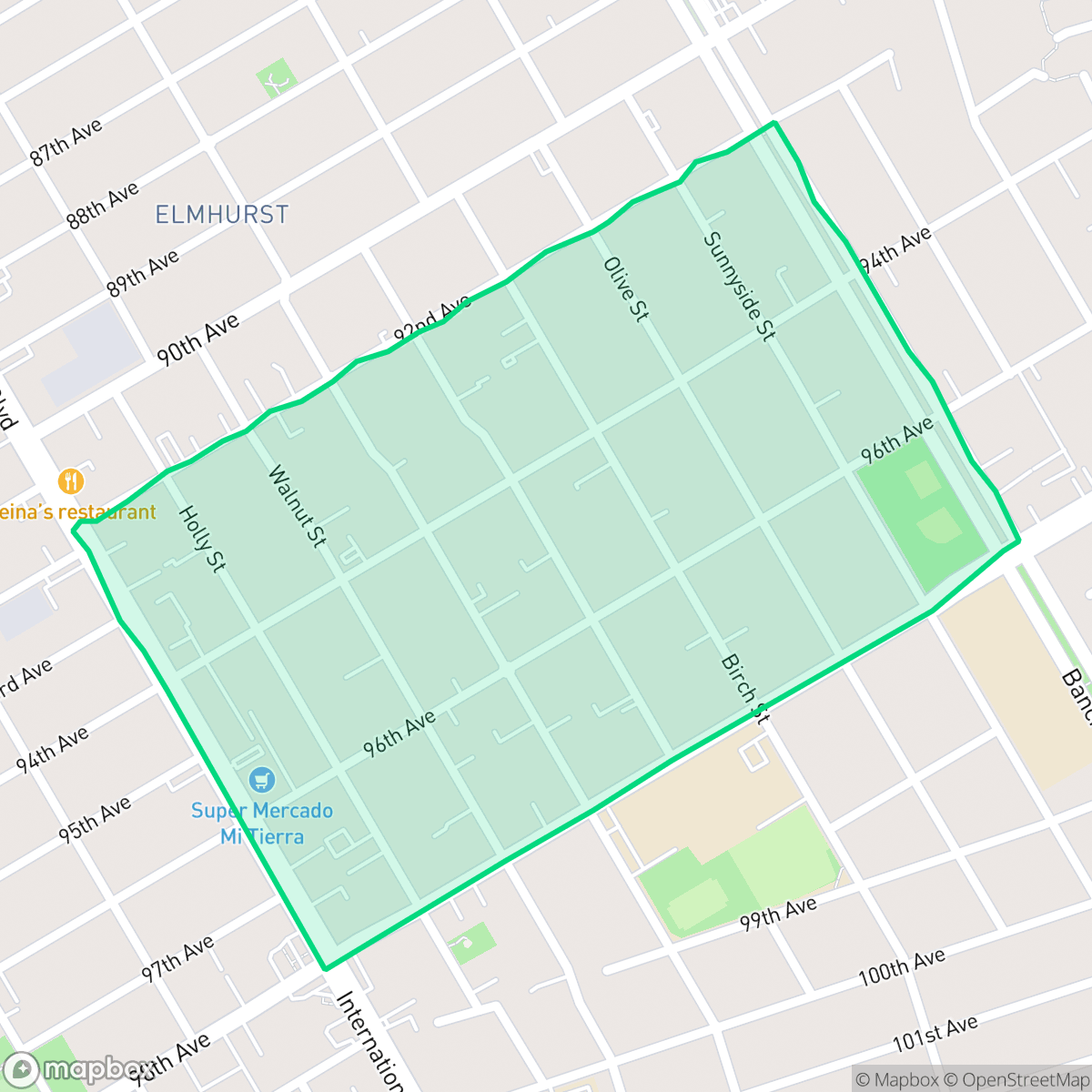
Cox is a dense, residential enclave in East Oakland defined by its grid-based street layout and strong cultural identity. Residents benefit from a highly walkable environment, though the area experiences significant road traffic noise and limited privacy due to tightly packed housing.
Key Highlights
About Cox
Located in East Oakland, the Cox neighborhood is a densely populated, primarily residential area characterized by single-family homes and small apartment buildings, many built between 1940 and 1969. A defining landmark of the neighborhood is Verdese Carter Park, situated at 96th Avenue and Bancroft Avenue. From 1912 to 1975, the park's site was occupied by a lead-acid battery manufacturing plant. After the city acquired the property and opened the park in 1978, severe lead and heavy metal contamination was discovered, leading to extensive EPA-supervised soil remediation in the 1990s. Today, the park serves as a community hub alongside the adjacent Cox Academy. Culturally, Cox is a vibrant, diverse neighborhood with a strong Mexican-American identity, where a significant majority of households are Spanish-speaking.
The area features a consistent urban grid with single-family homes and small apartment buildings constructed primarily between 1940 and 1969. While the neighborhood lacks large-scale industrial sites, its character is shaped by a high-density layout that prioritizes connectivity through a continuous sidewalk network. Local amenities include community-focused spots like Reina's Restaurant and the Christian Tabernacle Church, which serve as gathering points for the predominantly Spanish-speaking population.
Prospective residents should consider specific trade-offs regarding the living environment. According to iHuus data, the area faces challenges with acoustic comfort due to ambient road traffic and limited spacing between structures. While the neighborhood offers exceptional walkability, it is less suited for those seeking suburban quiet or extensive private outdoor space. Additionally, the local school district currently faces significant financial and operational instability, which may impact families considering the area.
Neighborhood Scores Across 15 Qualities
Residential structures are positioned in close quarters with minimal separation between adjacent homes. This density is slightly higher than the Oakland average, according to iHuus data.
Pedestrians benefit from a continuous sidewalk grid and clearly marked crosswalks on nearly every street. This level of connectivity and infrastructure is superior to the Oakland average.
Residential lots are characterized by simple rooflines and small yards, offering less greenery and fewer private amenities than the Oakland average. According to iHuus data, the area consists primarily of high-density, standard-style housing with minimal ornamental landscaping.
Public green space and wide grassy verges are sparse throughout the area, making it less dog friendly than much of Oakland. Residents may find limited options for walking pets due to narrow sidewalks and a lack of nearby expansive parks.
Frequent open land and scattered homes amid woodland provide a slightly more semi-rural feel than the Oakland average. Residential areas within the neighborhood range from dense urban grids to low-rise layouts with larger residential lots, according to iHuus data.
Residential streets and green spaces dominate the landscape, offering a more subdued rhythm than the Oakland average. Local churches and parks provide small pockets of activity, but many essential services require a short drive.
Steady traffic sounds from nearby busy streets are present; however, acoustic levels remain more favorable than the Oakland average according to iHuus data.
Air quality fluctuates between acceptable and unhealthy levels, which is notably lower than the Oakland average. Sensitive groups may experience occasional concern during certain periods according to iHuus data.
Industrial presence is non-existent in this area, which contains no warehouses, factories, or heavy industrial facilities. This neighborhood offers a more residential atmosphere than the Oakland average, according to iHuus data.
Health insurance coverage among residents is lower than the Oakland average. According to iHuus data, fewer than half of the local population is covered by a health plan.
Voting patterns and census indicators show a deeply liberal political leaning that is consistent with the broader Oakland area. According to iHuus data, this neighborhood reflects a political landscape very similar to the city average.
Residents live alongside a balanced mix of young adults, families, and older individuals. This demographic variety is slightly lower than the Oakland average, according to iHuus data.
Address-Level Insights for Cox


iHuus Neighborhood Intelligence Insights
Get address-level neighborhood insights for Cox
- Street-level scores — see how individual blocks compare, not just neighborhood averages
- Micro-zone boundaries — identify quiet pockets, flood boundaries, and walkable clusters before you visit
- 15 dimensions in full — walkability, noise, air quality, school quality, insurance coverage, population age profile, urban/rural index, and more
- Boundary risk alerts — know if your address sits near a block boundary where scores drop, the kind of detail no listing will ever mention
- School insights — individual school ratings and insights, not just district-level data
- Compare before you commit — side-by-side data across neighborhoods, down to block precision
No credit card required
Compare with Any Neighborhood
| Dimension | Cox | Acorn |
|---|---|---|
| 🚶 Walkabilityavg 8.99 | ||
| 🔊 Acoustic Comfortavg 3.24 | ||
| 🤫 Privacy Indexavg 3.74 | ||
| 🎨 Visual Appealavg 6.28 | ||
| 🐕 Dog Friendlinessavg 5.74 | ||
| 🗺️ Urban-Rural Indexavg 6.02 | ||
| ✨ Neighborhood Vibeavg 5.22 | ||
| 🏥 Health Insurance Coverageavg 7.4 | ||
| 🌿 Air Qualityavg 8.06 | ||
| 🏭 Industrial Proximityavg 8.37 | ||
| 🌊 Flood Safetyavg 2.61 | ||
| 🗳️ Ideological Leanavg 9.95 | ||
| 👥 Population Age Profileavg 4.92 | ||
| 🔥 Fire Safetyavg 0.17 | ||
| 🏫 School Quality |
Cox Rankings
School Districts Serving Cox
School Insights for Cox
Below average outcomes; significant attendance and academic challenges.
School Insights
See what's really behind every school rating near Cox
- Individual school ratings — each school's own score with outcome context, not just a district average
- Enrollment & class size data — student-to-teacher ratio and how it compares to the state average
- Full demographics breakdown — ethnicity and gender composition for every school in the enrollment zone
- Every school in the district — all schools within the enrollment boundary ranked by rating, not just the closest one
- Grade levels & benchmarks — elementary through high school, with below/above state-average flags
No credit card required