Fair Oaks, North Fair Oaks
Updated · 2,897 residents
North Fair Oaks offers a distinctive semi-rural atmosphere with a polished aesthetic, characterized by spacious residential properties and a strong sense of community. While the area provides a quiet, suburban environment, residents benefit from clean air and high levels of health insurance coverage.
Key Highlights
About Fair Oaks
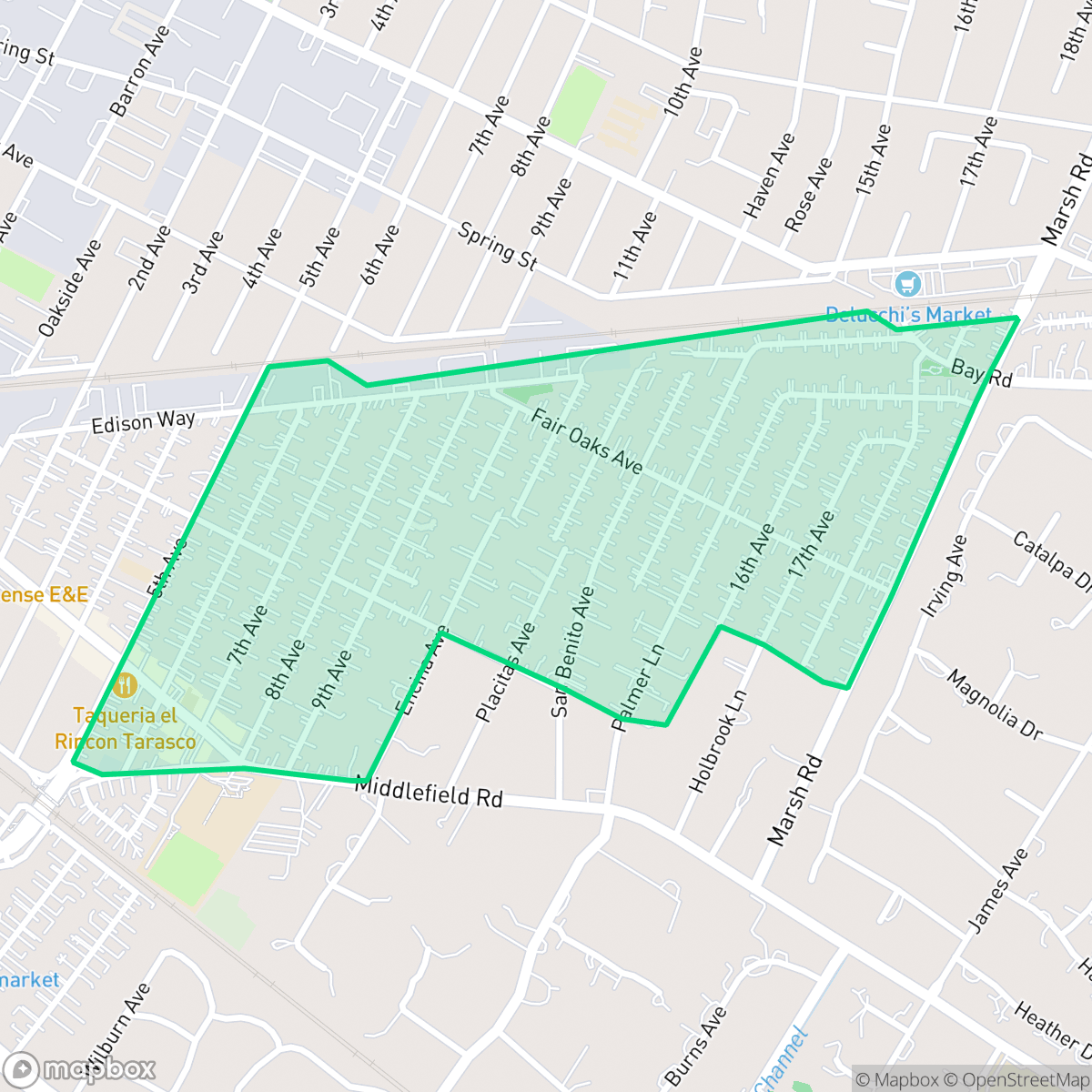
North Fair Oaks, one of San Mateo County's oldest communities, traces its roots to the 1850s. Originally part of a larger residential area known as Fair Oaks, the community remained unincorporated after the 1923 incorporation of neighboring Atherton. The area experienced significant development during two primary boom eras: the period following the 1906 San Francisco earthquake and the years immediately preceding World War II. A defining physical feature is the Hetch Hetchy Aqueduct, which cuts diagonally across the local street grid. Today, North Fair Oaks is recognized for its vibrant cultural identity, often referred to as Little Michoacán due to its large population from the Mexican state of Michoacán. It remains one of the few majority-Hispanic communities in San Mateo County, characterized by a distinct residential and commercial character that reflects its long-standing, diverse heritage.
The area balances a calm, residential lifestyle with a semi-rural feel, featuring frequent open spaces and scattered homes that contrast with typical urban density. The visual appeal is elevated by well-maintained properties and premium neighborhood features, creating a polished environment for those seeking a quieter pace of life. While the community is largely residential, the presence of nearby rail lines and light industrial zones does introduce a consistent background hum of traffic noise, which is a factor for those sensitive to sound. According to iHuus data, the neighborhood provides a unique landscape that feels more open than the typical surrounding city areas.
Prospective residents should consider the moderate flood risk and the limited availability of dedicated public green spaces, which can impact pet owners and those who prioritize outdoor recreation. The area is served by a mix of school districts, ranging from high-performing institutions to those currently managing fiscal and operational transitions. It is best suited for individuals or families who value a stable, liberal-leaning community with a strong cultural identity and are comfortable with a suburban setting that requires navigating some localized noise and environmental considerations.
Neighborhood Scores Across 15 Qualities
Residential spacing is varied, featuring some closely positioned homes alongside areas with more buffer between neighbors. This level of density is slightly higher than the city average, according to iHuus data.
Sidewalks and safe crossings are available along much of the residential grid, though industrial zones and rail lines occasionally interrupt the network. This level of walkability is slightly below the city average according to iHuus data.
Larger homes and frequent upscale amenities provide a more polished aesthetic than the city average. According to iHuus data, the area is characterized by spacious driveways and premium neighborhood features.
Narrow street verges and a lack of immediate public parks may limit walking options for pet owners. However, school fields and small green buffers along residential streets provide some relief, making the area slightly more dog-friendly than the city average according to iHuus data.
Frequent open land and scattered homes among woodlands provide a more semi-rural feel than the typical surrounding city areas. According to iHuus data, this landscape features a mix of low-density residential pockets and light industrial zones.
Low-density residential blocks and light industrial zones create a calm atmosphere that is less active than the city average. While some local dining options are available near the railway, the area lacks a concentrated commercial center.
Steady sounds from nearby busy streets provide a consistent background hum. This level of acoustic activity is notably higher than the average for the city.
Air quality is generally good with rare instances of elevated readings. This level of air purity is slightly higher than the city average, according to iHuus data.
Industrial presence is relatively low, though a railway line and some warehouses create localized noise and light. This level of industrial proximity is slightly higher than the city average according to iHuus data.
Health insurance accessibility is notably higher here than the city average, according to iHuus data. Most residents in the area maintain active coverage.
Voting patterns and census indicators reflect a highly liberal political leaning that is consistent with the city average. According to iHuus data, this political alignment is a defining characteristic of the local community.
A balanced mix of young adults, families, and older residents characterizes the local demographic. This age distribution is slightly more varied than the average seen across the rest of the city.
Flood risk in this area is higher than the city average, though FEMA has not yet completed a detailed study to fully determine the level of danger. According to iHuus data, the area carries an undetermined level of risk that warrants caution during extreme weather events.
Address-Level Insights for Fair Oaks


iHuus Neighborhood Intelligence Insights
Get address-level neighborhood insights for Fair Oaks
- Street-level scores — see how individual blocks compare, not just neighborhood averages
- Micro-zone boundaries — identify quiet pockets, flood boundaries, and walkable clusters before you visit
- 15 dimensions in full — walkability, noise, air quality, school quality, insurance coverage, population age profile, urban/rural index, and more
- Boundary risk alerts — know if your address sits near a block boundary where scores drop, the kind of detail no listing will ever mention
- School insights — individual school ratings and insights, not just district-level data
- Compare before you commit — side-by-side data across neighborhoods, down to block precision
No credit card required
Compare with Any Neighborhood
| Dimension | Fair Oaks | Ampex |
|---|---|---|
| 🚶 Walkabilityavg 7.78 | ||
| 🔊 Acoustic Comfortavg 3.39 | ||
| 🤫 Privacy Indexavg 4.45 | ||
| 🎨 Visual Appealavg 6.52 | ||
| 🐕 Dog Friendlinessavg 4.93 | ||
| 🗺️ Urban-Rural Indexavg 6.27 | ||
| ✨ Neighborhood Vibeavg 4.96 | ||
| 🏥 Health Insurance Coverageavg 4.79 | ||
| 🌿 Air Qualityavg 6.94 | ||
| 🏭 Industrial Proximityavg 6.53 | ||
| 🌊 Flood Safetyavg 3.24 | ||
| 🗳️ Ideological Leanavg 9.81 | ||
| 👥 Population Age Profileavg 4.56 | ||
| 🔥 Fire Safety | ||
| 🏫 School Quality |
Fair Oaks Rankings
School Districts Serving Fair Oaks
School Insights for Fair Oaks
Below average outcomes; significant attendance and academic challenges.
School Insights
See what's really behind every school rating near Fair Oaks
- Individual school ratings — each school's own score with outcome context, not just a district average
- Enrollment & class size data — student-to-teacher ratio and how it compares to the state average
- Full demographics breakdown — ethnicity and gender composition for every school in the enrollment zone
- Every school in the district — all schools within the enrollment boundary ranked by rating, not just the closest one
- Grade levels & benchmarks — elementary through high school, with below/above state-average flags
No credit card required