Waverly Park, Mountain View
Updated · 1,834 residents
Waverly Park is a serene, residential enclave in Mountain View known for its exceptional walkability and quiet, tree-lined streets. While the area offers a calm atmosphere with high visual appeal, it maintains a low-key social profile that prioritizes privacy and suburban comfort.
Key Highlights
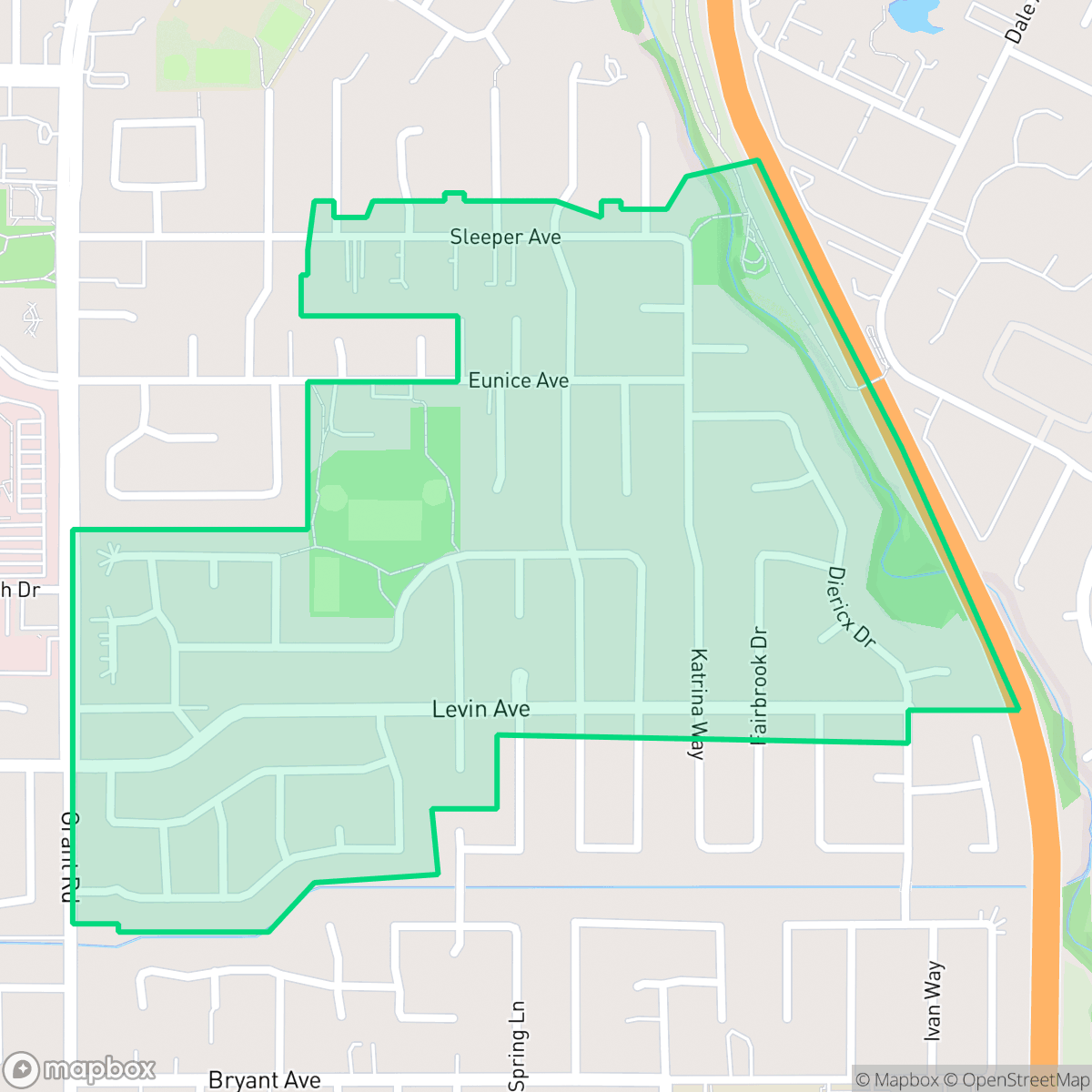
About Waverly Park
Located in the southeastern corner of Mountain View, California, Waverly Park is a quiet residential neighborhood that transitioned from an agricultural apricot orchard into a suburban community starting in 1952. The neighborhood is characterized by its wide, tree-lined streets, large lots, and mid-century ranch-style homes. Locally significant public spaces include Cooper Park and the nearby Stevens Creek Trail. A notable modern development is The Enclave at Waverly Park, a 15-acre community of upscale, solar-powered homes built by SummerHill Homes on a site that previously served as a beloved local pumpkin patch.
The neighborhood functions as a quiet retreat, characterized by its lack of industrial proximity and a peaceful acoustic environment. According to iHuus data, the area maintains a high standard of visual appeal, benefiting from its established green spaces and residential design. Residents enjoy a highly walkable environment that encourages outdoor activity, supported by proximity to local landmarks like Cooper Park and the Stevens Creek Trail.
Prospective residents should note that while the neighborhood provides a stable and secure environment with excellent health insurance coverage, it is not a hub for nightlife or high-intensity retail. The area is best suited for families and professionals seeking a tranquil, suburban lifestyle with access to top-tier high school education. However, individuals should be aware of local fire safety concerns, which remain a notable environmental consideration for the region.
Neighborhood Scores Across 15 Qualities
Residential spacing varies throughout the area, featuring some shared walls and closely positioned homes alongside more buffered properties. According to iHuus data, levels of privacy are slightly higher than the Mountain View average.
Extensive sidewalk networks and a pedestrian overpass across the highway provide seamless connectivity throughout the area. This level of pedestrian infrastructure is slightly above the Mountain View average, according to iHuus data.
Larger homes and upscale amenities contribute to a visual quality that is higher than the Mountain View average. Consistent architectural styles and community pools define the area's landscape, according to iHuus data.
Access to central park greenery and wide, traffic-safe paths makes this area more suitable for pet owners than most of Mountain View. According to iHuus data, the neighborhood provides excellent opportunities for walking dogs due to connected open spaces.
A mix of apartments, townhomes, and commercial plazas defines the landscape, offering a more developed feel than the more semi-rural surroundings found elsewhere in Mountain View. According to iHuus data, the area lacks the frequent open fields and woodlands seen in more sparsely populated parts of the city.
Suburban streets and green spaces provide a serene atmosphere, but the area is notably less lively than the Mountain View average. Residents will find most daily needs require a vehicle, as few businesses are within walking distance.
Frequent acoustic disturbances from nearby railroad tracks and major freeway traffic are common in this area. According to iHuus data, these noise levels are slightly higher than the average for Mountain View.
Air quality levels are generally acceptable, though sensitive groups may experience occasional concern during periods of poor air. This neighborhood maintains an air quality profile that is roughly in line with the Mountain View average, according to iHuus data.
No warehouses, industrial facilities, or hazard sites are present within the neighborhood. According to iHuus data, this area is significantly more free of industrial proximity than the Mountain View average.
Nearly all residents are covered by health insurance, representing a rate that is higher than the Mountain View average. According to iHuus data, this high level of coverage indicates strong access to healthcare resources within the community.
Voting patterns and census indicators show a highly liberal political leaning that is consistent with the broader Mountain View area, according to iHuus data.
Residents live alongside a balanced mix of young professionals, families, and older adults. This demographic spread is slightly more varied than the Mountain View average, according to iHuus data.
Flood risk in this area is notably higher than the Mountain View average due to its location within a 500-year floodplain. While significant flooding is unlikely, some residual risk remains according to iHuus data.
Address-Level Insights for Waverly Park


iHuus Neighborhood Intelligence Insights
Get address-level neighborhood insights for Waverly Park
- Street-level scores — see how individual blocks compare, not just neighborhood averages
- Micro-zone boundaries — identify quiet pockets, flood boundaries, and walkable clusters before you visit
- 15 dimensions in full — walkability, noise, air quality, school quality, insurance coverage, population age profile, urban/rural index, and more
- Boundary risk alerts — know if your address sits near a block boundary where scores drop, the kind of detail no listing will ever mention
- School insights — individual school ratings and insights, not just district-level data
- Compare before you commit — side-by-side data across neighborhoods, down to block precision
No credit card required
Compare with Any Neighborhood
| Dimension | Waverly Park | Blossom Valley |
|---|---|---|
| 🚶 Walkabilityavg 9.25 | ||
| 🔊 Acoustic Comfortavg 3.27 | ||
| 🤫 Privacy Indexavg 5.11 | ||
| 🎨 Visual Appealavg 6.67 | ||
| 🐕 Dog Friendlinessavg 6.99 | ||
| 🗺️ Urban-Rural Indexavg 6.59 | ||
| ✨ Neighborhood Vibeavg 4.37 | ||
| 🏥 Health Insurance Coverageavg 8.96 | ||
| 🌿 Air Qualityavg 6.1 | ||
| 🏭 Industrial Proximityavg 6.34 | ||
| 🌊 Flood Safetyavg 4.11 | ||
| 🗳️ Ideological Leanavg 9.81 | ||
| 👥 Population Age Profileavg 4.83 | ||
| 🔥 Fire Safety | ||
| 🏫 School Quality |
Waverly Park Rankings
School Districts Serving Waverly Park
School Insights for Waverly Park
Below average outcomes; significant attendance and academic challenges.
School Insights
See what's really behind every school rating near Waverly Park
- Individual school ratings — each school's own score with outcome context, not just a district average
- Enrollment & class size data — student-to-teacher ratio and how it compares to the state average
- Full demographics breakdown — ethnicity and gender composition for every school in the enrollment zone
- Every school in the district — all schools within the enrollment boundary ranked by rating, not just the closest one
- Grade levels & benchmarks — elementary through high school, with below/above state-average flags
No credit card required