Wagon Wheel, Mountain View
Updated · 1,712 residents
Known for its distinct midcentury homes featuring integrated wagon wheel motifs, this neighborhood offers a unique residential character within Mountain View. Residents benefit from high walkability to nearby corporate campuses, though the area is notably loud due to consistent road traffic.
Key Highlights
About Wagon Wheel
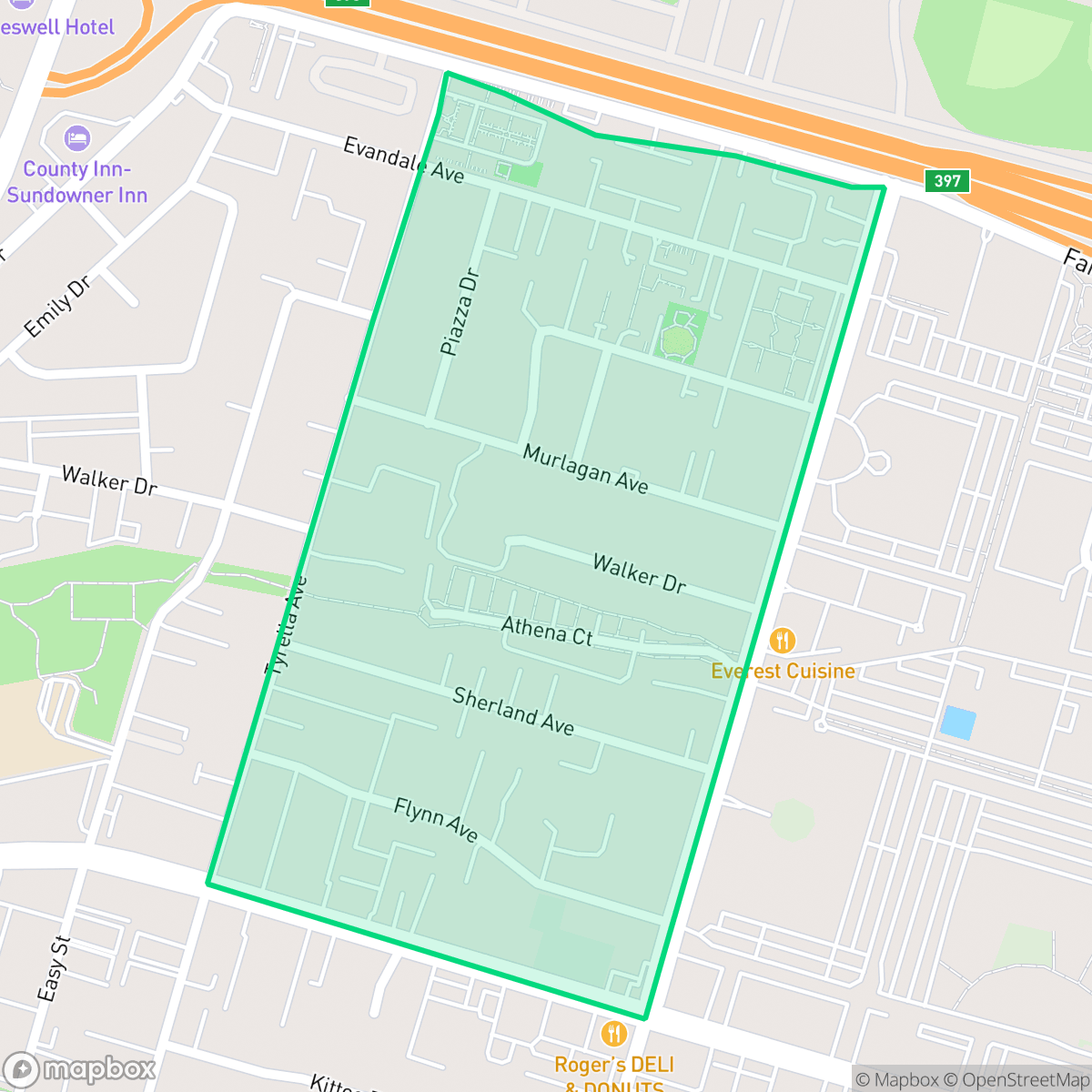
The Wagon Wheel neighborhood in Mountain View, California, bounded by North Whisman Road, Tyrella Avenue, Fairchild Drive, and East Middlefield Road, has deep roots in early Silicon Valley history. Developed during the post-WWII housing boom by builder Art Walker, the neighborhood's midcentury modern homes feature a unique architectural signature: actual Conestoga wagon wheels integrated into their walls and windows. Walker, who reportedly discovered a barn full of the wheels, also established Walker’s Wagon Wheel bar in 1960. Located at the corner of Whisman and Middlefield, this Western-themed tavern became a legendary watering hole where engineers from pioneering firms like Fairchild Semiconductor gathered to trade ideas, recruit, and collaborate. Though the iconic bar was demolished in 2003, its legacy as a catalyst for Silicon Valley’s collaborative culture remains central to the neighborhood's identity.
The area serves as a dense suburban enclave characterized by a mix of single-family homes and multi-unit complexes. While it maintains a quiet atmosphere, the proximity to major transit corridors results in elevated ambient noise levels. According to iHuus data, the neighborhood provides excellent pedestrian connectivity, allowing for easy access to local office hubs and essential amenities.
Prospective residents should consider the trade-offs regarding acoustic comfort and privacy, as the high-density layout results in closely spaced structures. While the area lacks a high concentration of commercial businesses, it remains a practical choice for professionals working in the surrounding tech corridors. Families may find the local school district options varied, with the neighborhood served by a high-performing high school district and a primary school system that is currently navigating a period of operational transition.
Neighborhood Scores Across 15 Qualities
Residential spacing varies significantly across the area, with many multi-family units and townhomes featuring shared walls. According to iHuus data, privacy levels are slightly lower than the Mountain View average due to the presence of densely clustered structures.
Pedestrian access is reliable due to continuous sidewalks and clear crosswalks, though the central highway acts as a local barrier. While the area is highly navigable, walkability is slightly lower than the Mountain View average.
Uniform housing designs and modest yards characterize this area. According to iHuus data, the visual variety in Wagon Wheel is slightly lower than the Mountain View average.
Accessible green spaces and continuous sidewalk verges provide reliable walking routes for pets. According to iHuus data, the availability of communal parks and green patches is slightly below the city average.
A blend of single-family homes, apartment complexes, and commercial campuses characterizes this area. The landscape is comparable to the broader Mountain View average in its balance of developed spaces and open land.
Primarily a calm, suburban area with limited social activity, this neighborhood feels less lively than the Mountain View average. According to iHuus data, the area is mostly oriented around daily convenience and light industrial use near the highway.
Constant noise from nearby airport runways and heavy rail infrastructure makes this area significantly louder than the Mountain View average, according to iHuus data.
Air quality in this area fluctuates between acceptable and unhealthy levels, presenting occasional concerns for sensitive groups. This level of air quality is largely consistent with the Mountain View average, according to iHuus data.
Potential environmental concerns exist due to a nearby EPA Superfund site that may affect groundwater and soil. This area has significantly less industrial activity than the Mountain View average, though some sections experience mixed-use traffic from local commercial operations.
Health insurance enrollment among residents is high, though slightly below the Mountain View average according to iHuus data.
Voting patterns and census indicators reflect a predominantly liberal community, mirroring the broader political landscape of Mountain View.
Residents live alongside a balanced mix of young adults, families, and older individuals. This demographic distribution is slightly more varied than the average seen across Mountain View.
Flood risk in this area is notably higher than the Mountain View average, as some properties sit within a secondary floodplain. According to iHuus data, while the area is generally stable, a residual risk of flooding exists.
Address-Level Insights for Wagon Wheel


iHuus Neighborhood Intelligence Insights
Get address-level neighborhood insights for Wagon Wheel
- Street-level scores — see how individual blocks compare, not just neighborhood averages
- Micro-zone boundaries — identify quiet pockets, flood boundaries, and walkable clusters before you visit
- 15 dimensions in full — walkability, noise, air quality, school quality, insurance coverage, population age profile, urban/rural index, and more
- Boundary risk alerts — know if your address sits near a block boundary where scores drop, the kind of detail no listing will ever mention
- School insights — individual school ratings and insights, not just district-level data
- Compare before you commit — side-by-side data across neighborhoods, down to block precision
No credit card required
Compare with Any Neighborhood
| Dimension | Wagon Wheel | Blossom Valley |
|---|---|---|
| 🚶 Walkabilityavg 9.25 | ||
| 🔊 Acoustic Comfortavg 3.27 | ||
| 🤫 Privacy Indexavg 5.11 | ||
| 🎨 Visual Appealavg 6.67 | ||
| 🐕 Dog Friendlinessavg 6.99 | ||
| 🗺️ Urban-Rural Indexavg 6.59 | ||
| ✨ Neighborhood Vibeavg 4.37 | ||
| 🏥 Health Insurance Coverageavg 8.96 | ||
| 🌿 Air Qualityavg 6.1 | ||
| 🏭 Industrial Proximityavg 6.34 | ||
| 🌊 Flood Safetyavg 4.11 | ||
| 🗳️ Ideological Leanavg 9.81 | ||
| 👥 Population Age Profileavg 4.83 | ||
| 🔥 Fire Safety | ||
| 🏫 School Quality |
Wagon Wheel Rankings
School Districts Serving Wagon Wheel
School Insights for Wagon Wheel
Below average outcomes; significant attendance and academic challenges.
School Insights
See what's really behind every school rating near Wagon Wheel
- Individual school ratings — each school's own score with outcome context, not just a district average
- Enrollment & class size data — student-to-teacher ratio and how it compares to the state average
- Full demographics breakdown — ethnicity and gender composition for every school in the enrollment zone
- Every school in the district — all schools within the enrollment boundary ranked by rating, not just the closest one
- Grade levels & benchmarks — elementary through high school, with below/above state-average flags
No credit card required