Serano, Moreno Valley
Updated · 6,420 residents
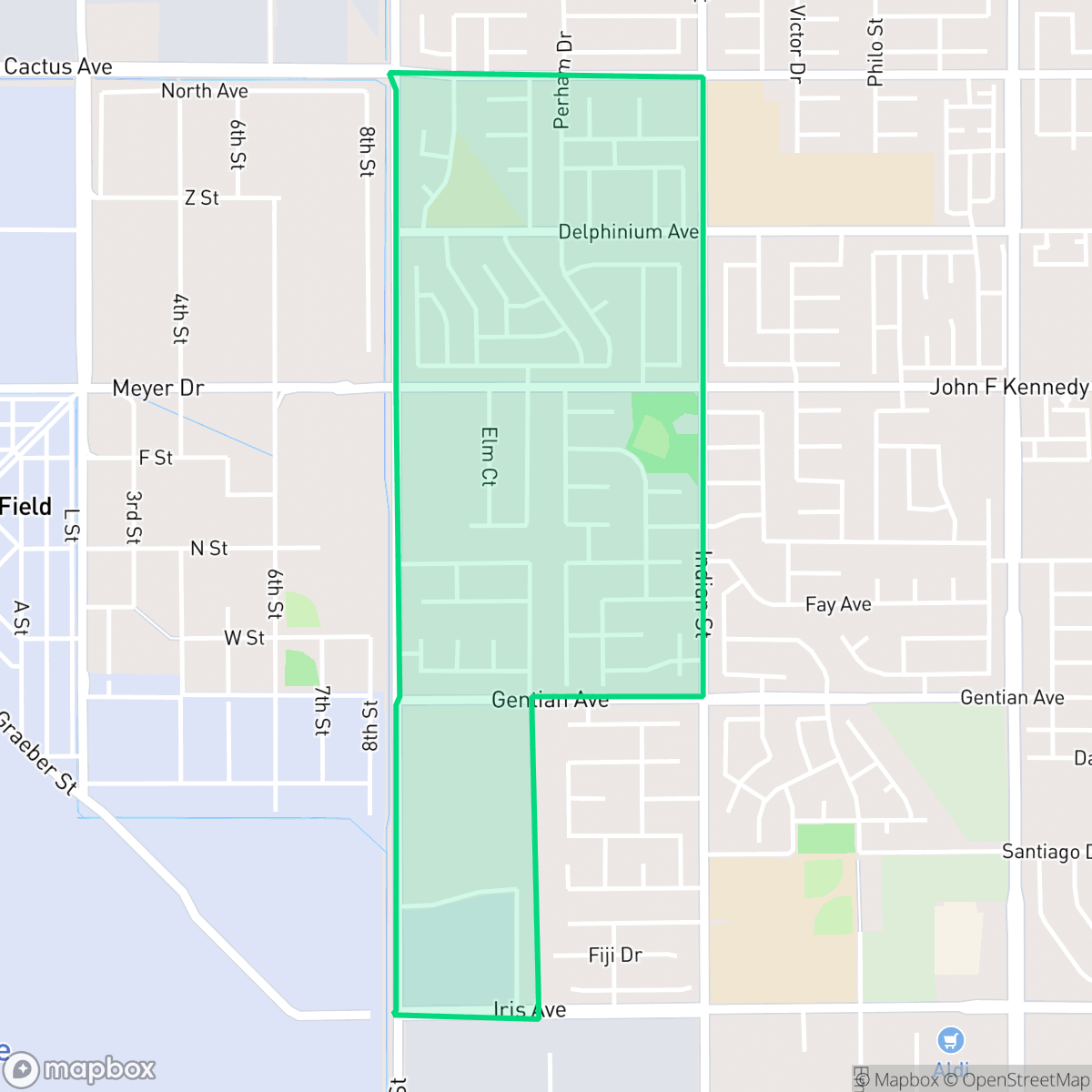
Serano is a quiet, highly walkable suburban neighborhood in Moreno Valley characterized by standard tract housing and a well-connected sidewalk network. While it offers a peaceful residential atmosphere, the area is primarily car-dependent for major services and requires awareness of its proximity to industrial sites.
Key Highlights
About Serano
Serano is a residential community in Moreno Valley defined by its dense suburban layout and consistent architectural style. The neighborhood features a complete network of sidewalks, making it exceptionally walkable for local errands and daily exercise. Residents benefit from a central park area that provides accessible green space, and many homes include private backyard pools, contributing to a classic Southern California suburban aesthetic. According to iHuus data, the area maintains a quiet, low-activity environment that appeals to those seeking a predictable, suburban lifestyle away from busy urban centers.
While the area offers a tranquil setting, prospective residents should consider specific trade-offs, including limited local commercial activity and proximity to an EPA Superfund site. The neighborhood is situated within school districts that demonstrate varying academic performance, though local facilities like Serrano Elementary provide a dedicated starting point for younger students. Given the elevated risk profile for flood and fire events, as well as lower rates of health insurance coverage in the surrounding region, the area is best suited for those prioritizing a stable, quiet residential environment while maintaining access to the broader amenities of the Inland Empire.
Neighborhood Scores Across 15 Qualities
Residential spacing is relatively mixed, with some clusters of closely packed homes sharing shared fence lines. According to iHuus data, privacy levels are roughly comparable to the Moreno Valley average.
Continuous sidewalk networks on both sides of residential streets and main arterials provide a safe environment for pedestrians. This level of connectivity and ease of crossing is notably higher than the Moreno Valley average.
Uniform rooflines and closely spaced homes define this area. According to iHuus data, the visual landscape is slightly less varied than the Moreno Valley average, characterized by small yards and occasional private backyard pools.
Direct access to a central park with green fields and baseball diamonds facilitates dog walking. While sidewalks feature narrow grass verges, the area remains on par with the Moreno Valley average for pet accessibility according to iHuus data.
Residential areas feature a blend of dense housing tracts and large industrial warehouses. This landscape is slightly less open than the Moreno Valley average, as suburban development sits alongside significant logistics and institutional structures.
Limited local business access and a prevalence of industrial units create a low-activity environment. According to iHuus data, this area is notably less lively than the Moreno Valley average, functioning primarily as a quiet, car-oriented suburb.
Local traffic from a nearby busy street creates a consistent level of sound. According to iHuus data, this acoustic environment is more active than the average for Moreno Valley.
Air quality remains consistently high with minimal health concerns. According to iHuus data, the air quality in Serano is slightly better than the Moreno Valley average.
Industrial activity and heavy freight traffic are significantly lower here than the city average. While some areas remain largely residential, proximity to a nearby Superfund site may present potential environmental concerns regarding soil and groundwater.
Health insurance coverage among residents is lower than the Moreno Valley average, according to iHuus data. This indicates a higher proportion of uninsured individuals living in the area compared to the rest of the city.
Voting patterns and census indicators in Serano reflect a predominantly liberal leaning that is more pronounced than the Moreno Valley average.
Residents live alongside a balanced blend of young adults, families, and seniors. This demographic spread is roughly in line with the overall Moreno Valley area.
Address-Level Insights for Serano


iHuus Neighborhood Intelligence Insights
Get address-level neighborhood insights for Serano
- Street-level scores — see how individual blocks compare, not just neighborhood averages
- Micro-zone boundaries — identify quiet pockets, flood boundaries, and walkable clusters before you visit
- 15 dimensions in full — walkability, noise, air quality, school quality, insurance coverage, population age profile, urban/rural index, and more
- Boundary risk alerts — know if your address sits near a block boundary where scores drop, the kind of detail no listing will ever mention
- School insights — individual school ratings and insights, not just district-level data
- Compare before you commit — side-by-side data across neighborhoods, down to block precision
No credit card required
Compare with Any Neighborhood
| Dimension | Serano | Armada |
|---|---|---|
| 🚶 Walkabilityavg 8.76 | ||
| 🔊 Acoustic Comfortavg 4.66 | ||
| 🤫 Privacy Indexavg 5.39 | ||
| 🎨 Visual Appealavg 6.57 | ||
| 🐕 Dog Friendlinessavg 5.77 | ||
| 🗺️ Urban-Rural Indexavg 6.83 | ||
| ✨ Neighborhood Vibeavg 4.56 | ||
| 🏥 Health Insurance Coverageavg 6.12 | ||
| 🌿 Air Qualityavg 9.93 | ||
| 🏭 Industrial Proximityavg 7.44 | ||
| 🌊 Flood Safetyavg 1.73 | ||
| 🗳️ Ideological Leanavg 8.65 | ||
| 👥 Population Age Profileavg 4.41 | ||
| 🔥 Fire Safetyavg 0.38 | ||
| 🏫 School Quality |
Serano Rankings
School Districts Serving Serano
School Insights for Serano
Below average outcomes; significant attendance and academic challenges.
School Insights
See what's really behind every school rating near Serano
- Individual school ratings — each school's own score with outcome context, not just a district average
- Enrollment & class size data — student-to-teacher ratio and how it compares to the state average
- Full demographics breakdown — ethnicity and gender composition for every school in the enrollment zone
- Every school in the district — all schools within the enrollment boundary ranked by rating, not just the closest one
- Grade levels & benchmarks — elementary through high school, with below/above state-average flags
No credit card required