Hidden Springs, Moreno Valley
Updated · 8,627 residents
Hidden Springs is a master-planned community characterized by its scenic foothill location and visually appealing, upscale single-family homes. While it offers a quiet, suburban atmosphere with excellent air quality and minimal industrial presence, residents rely on vehicles for most daily errands due to a limited selection of local businesses. The neighborhood provides a serene environment for those prioritizing outdoor access and aesthetic appeal over urban convenience.
Key Highlights
About Hidden Springs
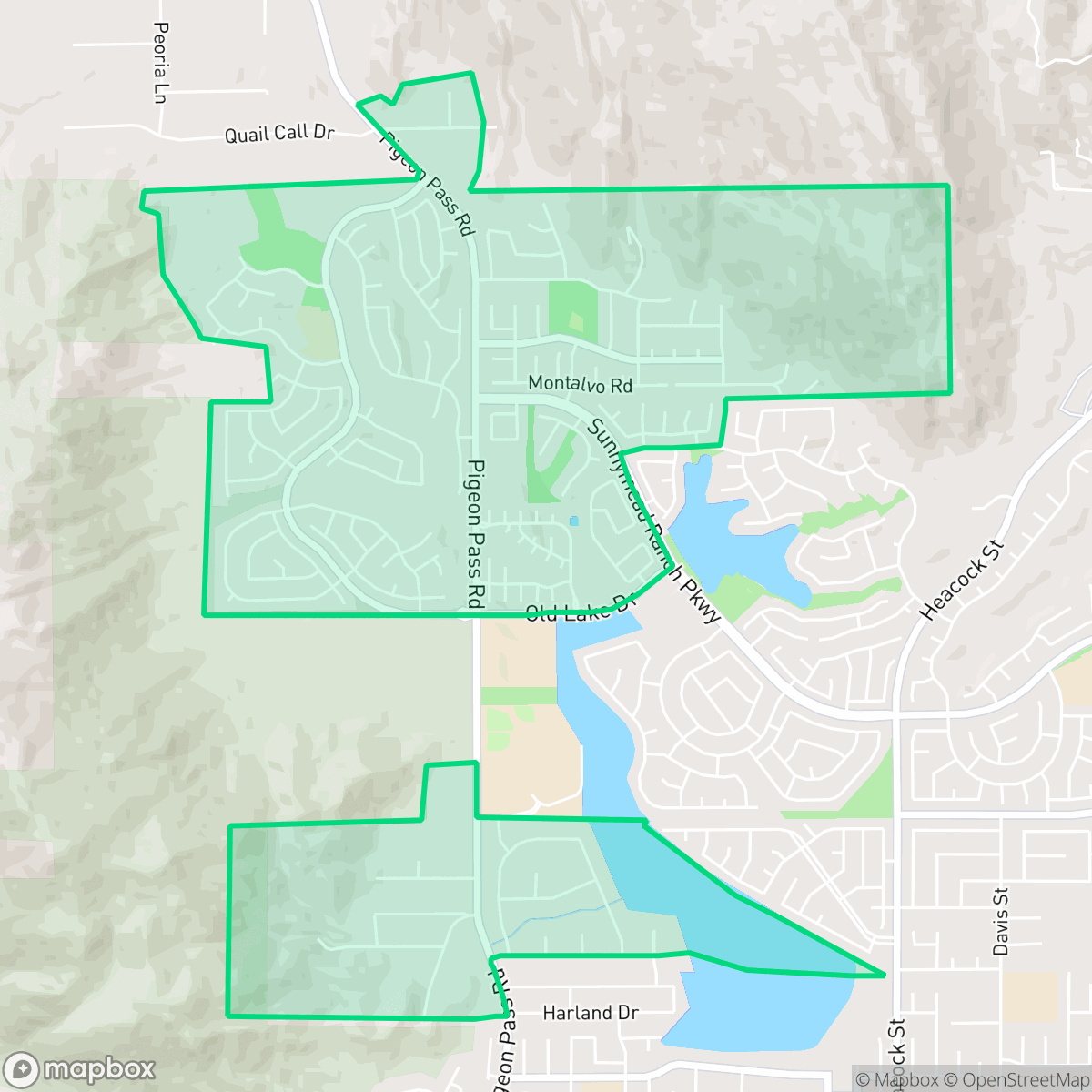
Nestled in the northern foothills of Box Springs Mountain (home to the prominent "M" Mountain), Hidden Springs is a master-planned neighborhood in Moreno Valley, California, developed primarily between 1988 and 1994 under a dedicated city specific plan. The community features over 1,100 single-family homes displaying Mediterranean and contemporary architectural styles, characterized by rolling hills and tree-lined streets. A defining geographic and recreational feature of the neighborhood is the seven-acre Hidden Springs Park, which sits adjacent to the 17-acre Hidden Springs Nature Park. This protected open space includes the Hidden Springs Path, a popular, shaded trail that connects local hikers directly to the broader Box Springs Mountain trail network.
Hidden Springs offers a tranquil, residential environment defined by its high visual appeal and proximity to the Box Springs Mountain trail network. The community maintains a strong sense of privacy and aesthetic consistency, featuring well-landscaped properties and expansive green buffers. According to iHuus data, the area enjoys superior air quality and a complete lack of industrial hazards, making it a desirable location for those seeking a peaceful retreat from the more densely developed sections of Moreno Valley. Living here requires a trade-off between serenity and accessibility. While the neighborhood is walkable in terms of street layout, the scarcity of local services and retail options necessitates regular travel for daily needs. Families should note that while the neighborhood is served by a highly-rated local elementary school, the broader school district faces significant fiscal and academic challenges. The area is best suited for residents who prioritize a quiet, low-density lifestyle and outdoor recreation over the convenience of a bustling urban center.
Neighborhood Scores Across 15 Qualities
Residential spacing is consistent with the Moreno Valley average, offering a mix of standard suburban lots and some larger estates with moderate buffers between neighbors.
Continuous sidewalks and low-traffic cul-de-sacs provide safe pedestrian navigation throughout the area. While the infrastructure is well-defined, long distances to commercial amenities make this area slightly less walkable than the Moreno Valley average.
Large homes with landscaped yards and private pools characterize this area, providing a more premium visual environment than the Moreno Valley average. According to iHuus data, the presence of multi-car driveways and complex architectural features contributes to an affluent streetscape.
Abundant desert trails, continuous sidewalks, and connected green spaces offer superior opportunities for pet exercise compared to the Moreno Valley average. Large community parks and wide natural buffers provide a safe environment for walking dogs away from traffic.
Residential pockets feature a mix of dense suburban tracts and low-density sprawl that transitions into undeveloped desert mountain terrain. This layout offers more open land and proximity to arid open space than the typical Moreno Valley area, according to iHuus data.
Low-density residential areas and vast open spaces define this landscape, offering a serene environment with fewer local businesses and amenities than the Moreno Valley average. Most residents will find the area primarily car-oriented due to the limited selection of nearby dining and services.
Frequent noise from nearby freeway and railroad traffic makes this area significantly louder than the Moreno Valley average, according to iHuus data.
Air quality remains consistently high with minimal health concerns. According to iHuus data, the air quality in this area is slightly below the Moreno Valley average.
Residential life here is entirely free from warehouses, factories, or heavy industrial hazards. This area maintains a much cleaner profile than the Moreno Valley average, consisting primarily of homes, open green spaces, and light commercial use.
Health insurance enrollment among residents is notably higher than the Moreno Valley average, according to iHuus data.
Political leanings in this area are largely liberal, though the community displays a more moderate ideological profile than the Moreno Valley average.
Residents live alongside a balanced distribution of young adults, families, and seniors. This demographic variety is slightly higher than the Moreno Valley average, according to iHuus data.
Flood risk is significantly higher than the Moreno Valley average due to the neighborhood's location within a 100-year floodplain. According to iHuus data, property owners in this area should anticipate the potential necessity of flood insurance.
Significant fire hazards exist within this area, which presents a higher risk than the Moreno Valley average according to iHuus data. Residents should prioritize enhanced mitigation strategies and emergency preparedness.
Address-Level Insights for Hidden Springs


iHuus Neighborhood Intelligence Insights
Get address-level neighborhood insights for Hidden Springs
- Street-level scores — see how individual blocks compare, not just neighborhood averages
- Micro-zone boundaries — identify quiet pockets, flood boundaries, and walkable clusters before you visit
- 15 dimensions in full — walkability, noise, air quality, school quality, insurance coverage, population age profile, urban/rural index, and more
- Boundary risk alerts — know if your address sits near a block boundary where scores drop, the kind of detail no listing will ever mention
- School insights — individual school ratings and insights, not just district-level data
- Compare before you commit — side-by-side data across neighborhoods, down to block precision
No credit card required
Compare with Any Neighborhood
| Dimension | Hidden Springs | Armada |
|---|---|---|
| 🚶 Walkabilityavg 8.76 | ||
| 🔊 Acoustic Comfortavg 4.66 | ||
| 🤫 Privacy Indexavg 5.39 | ||
| 🎨 Visual Appealavg 6.57 | ||
| 🐕 Dog Friendlinessavg 5.77 | ||
| 🗺️ Urban-Rural Indexavg 6.83 | ||
| ✨ Neighborhood Vibeavg 4.56 | ||
| 🏥 Health Insurance Coverageavg 6.12 | ||
| 🌿 Air Qualityavg 9.93 | ||
| 🏭 Industrial Proximityavg 7.44 | ||
| 🌊 Flood Safetyavg 1.73 | ||
| 🗳️ Ideological Leanavg 8.65 | ||
| 👥 Population Age Profileavg 4.41 | ||
| 🔥 Fire Safetyavg 0.38 | ||
| 🏫 School Quality |
Hidden Springs Rankings
School Districts Serving Hidden Springs
School Insights for Hidden Springs
Below average outcomes; significant attendance and academic challenges.
School Insights
See what's really behind every school rating near Hidden Springs
- Individual school ratings — each school's own score with outcome context, not just a district average
- Enrollment & class size data — student-to-teacher ratio and how it compares to the state average
- Full demographics breakdown — ethnicity and gender composition for every school in the enrollment zone
- Every school in the district — all schools within the enrollment boundary ranked by rating, not just the closest one
- Grade levels & benchmarks — elementary through high school, with below/above state-average flags
No credit card required