Miller/Molino, Mill Valley
Updated · 1,886 residents
Miller/Molino is defined by its blend of upscale, wooded residential settings and access to Mill Valley's local amenities. While the area offers access to top-rated schools and a semi-rural aesthetic, residents should be aware of its location within a designated floodplain and the necessity for wildfire preparedness.
Key Highlights
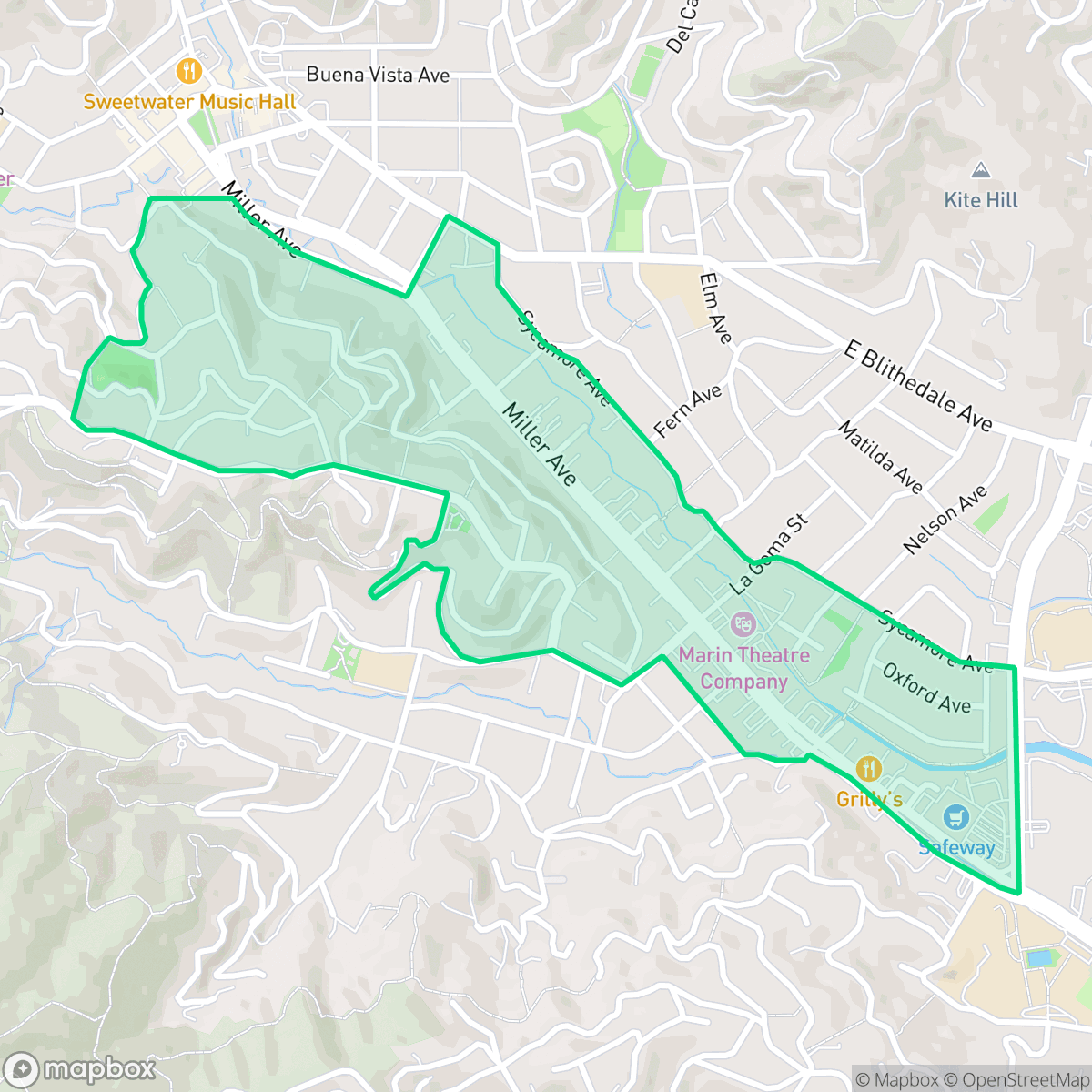
About Miller/Molino
The Miller/Molino area is deeply rooted in the 1890 land auction by the Tamalpais Land & Water Company, which spurred the early residential development of Mill Valley. Miller Avenue serves as a primary historical artery, tracing the boundary between the original Reed and Richardson ranchos along the Arroyo Corte Madera del Presidio. The neighborhood features a mix of early 20th-century architecture, including Craftsman-style homes built following the 1906 San Francisco earthquake, which prompted a population surge. Historically, the area was defined by its connection to the railroad and pedestrian pathways like the Molino stairs, which provided shortcuts for residents to the downtown depot. The district has long been susceptible to flooding from the adjacent creek, a recurring challenge that shaped its infrastructure and commercial development patterns over the last century.
The area is characterized by a mix of large custom homes and lush, tree-filled landscapes that provide a semi-rural atmosphere. It benefits from a higher level of social activity than many neighboring districts, with a variety of local eateries and coffee shops contributing to a vibrant, albeit car-dependent, lifestyle. According to iHuus data, the community is notably age-diverse, creating a balanced social environment that appeals to both families and long-term residents. Prospective residents should note that the neighborhood sits within a designated floodplain, which typically necessitates flood insurance. Additionally, the area faces elevated wildfire risks, requiring proactive mitigation efforts. Despite these environmental considerations, the district provides excellent access to forested trails for outdoor recreation and maintains clean air quality. With top-tier educational opportunities through the local elementary and high school districts, it remains a highly desirable location for those prioritizing academic excellence and a connection to nature.
Neighborhood Scores Across 15 Qualities
Residential spacing fluctuates between clustered central structures and larger estates with significant forest buffers. This level of density is roughly comparable to the Mill Valley average, according to iHuus data.
Sidewalks are available on one side of many streets, and the commercial core offers pedestrian-friendly routes that are slightly more navigable than the Mill Valley average.
Large custom homes, private tennis courts, and extensive landscaping define the area. According to iHuus data, the visual quality is very high, though slightly below the Mill Valley average.
Proximity to forested trails and large parks with ballfields provides excellent recreational space for pets. While still highly accommodating, dog accessibility is slightly lower than the Mill Valley average according to iHuus data.
Residential clusters are heavily integrated with mature tree canopies and large natural preserves. This landscape provides a semi-rural feel that is very similar to the broader Mill Valley area.
A notable variety of dining, coffee shops, and local amenities creates a more active atmosphere than the typical Mill Valley neighborhood. While the area features lively social spots and diverse eateries, the layout remains largely car-dependent with limited walkability.
Steady sounds from nearby busy streets are present; however, acoustic comfort remains higher than the average for Mill Valley according to iHuus data.
Air quality remains consistently clean with only rare instances of elevated readings. This level of air purity is typical for the Mill Valley area according to iHuus data.
Residential streets and open green spaces dominate the area, though a wastewater treatment plant is located to the north. According to iHuus data, the presence of heavy industrial infrastructure is slightly more noticeable here than in the rest of Mill Valley.
Health insurance coverage among residents is notably higher than the Mill Valley average, according to iHuus data.
Voting patterns and census indicators reflect a deeply liberal political identity that is consistent with the broader Mill Valley area, according to iHuus data.
Residents live alongside a balanced mix of young adults, families, and older individuals. This demographic distribution is consistent with the broader Mill Valley area according to iHuus data.
Properties in this area are located within a designated floodplain, making flood insurance a typical requirement for residents. According to iHuus data, the risk level is comparable to the broader Mill Valley area.
Significant fire hazards exist in this area, which presents a higher risk level than the Mill Valley average. Residents should prioritize enhanced mitigation measures and wildfire preparedness.
Address-Level Insights for Miller/Molino


iHuus Neighborhood Intelligence Insights
Get address-level neighborhood insights for Miller/Molino
- Street-level scores — see how individual blocks compare, not just neighborhood averages
- Micro-zone boundaries — identify quiet pockets, flood boundaries, and walkable clusters before you visit
- 15 dimensions in full — walkability, noise, air quality, school quality, insurance coverage, population age profile, urban/rural index, and more
- Boundary risk alerts — know if your address sits near a block boundary where scores drop, the kind of detail no listing will ever mention
- School insights — individual school ratings and insights, not just district-level data
- Compare before you commit — side-by-side data across neighborhoods, down to block precision
No credit card required
Compare with Any Neighborhood
| Dimension | Miller/Molino | Alto |
|---|---|---|
| 🚶 Walkabilityavg 6.97 | ||
| 🔊 Acoustic Comfortavg 5.39 | ||
| 🤫 Privacy Indexavg 6.42 | ||
| 🎨 Visual Appealavg 9.03 | ||
| 🐕 Dog Friendlinessavg 9.28 | ||
| 🗺️ Urban-Rural Indexavg 8.49 | ||
| ✨ Neighborhood Vibeavg 4.1 | ||
| 🏥 Health Insurance Coverageavg 8.03 | ||
| 🌿 Air Qualityavg 8 | ||
| 🏭 Industrial Proximityavg 9.01 | ||
| 🌊 Flood Safetyavg 2.33 | ||
| 🗳️ Ideological Leanavg 9.94 | ||
| 👥 Population Age Profileavg 5.5 | ||
| 🔥 Fire Safetyavg 1.94 | ||
| 🏫 School Quality |
Miller/Molino Rankings
School Districts Serving Miller/Molino
School Insights for Miller/Molino
Below average outcomes; significant attendance and academic challenges.
School Insights
See what's really behind every school rating near Miller/Molino
- Individual school ratings — each school's own score with outcome context, not just a district average
- Enrollment & class size data — student-to-teacher ratio and how it compares to the state average
- Full demographics breakdown — ethnicity and gender composition for every school in the enrollment zone
- Every school in the district — all schools within the enrollment boundary ranked by rating, not just the closest one
- Grade levels & benchmarks — elementary through high school, with below/above state-average flags
No credit card required