Cascade Canyon, Mill Valley
Updated · 2,151 residents
Cascade Canyon is a tranquil, visually stunning neighborhood defined by its deep connection to nature and rural character. It offers residents exceptional privacy and quiet surroundings, though it prioritizes a peaceful atmosphere over urban convenience or nightlife.
Key Highlights
About Cascade Canyon
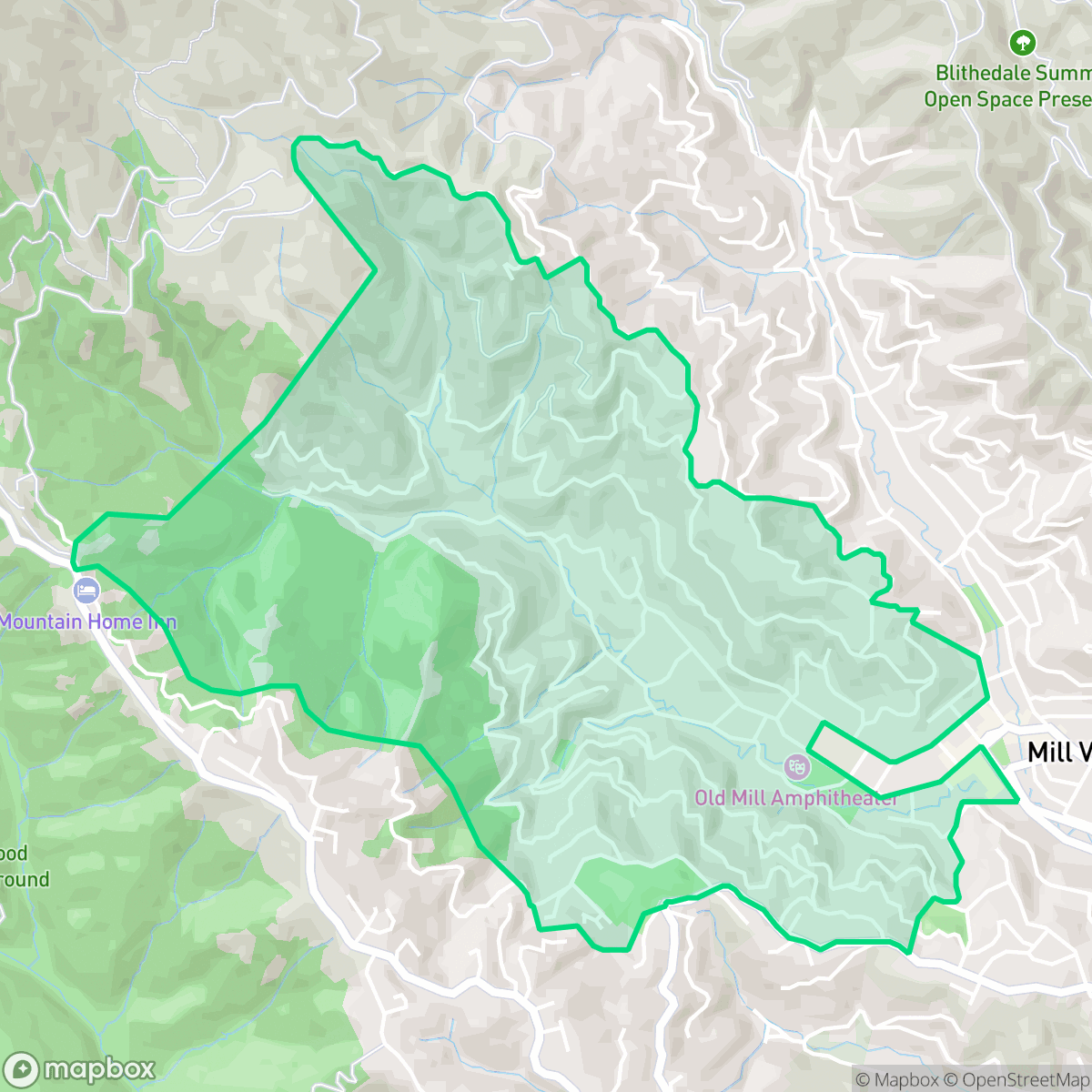
Cascade Canyon in Mill Valley, California, is historically defined as the birthplace of the city. In 1835, Irish settler John Reed constructed Marin County’s first sawmill along Cascade Creek, a landmark that later inspired the town's name. In May 1890, a historic land auction at this sawmill site (now Old Mill Park) officially launched the development of Mill Valley. Following the auction, prominent figures established grand estates in the canyon, most notably Joseph Eastland, who built "Burlwood" in 1893—a 22-room English Tudor mansion that was among the first local homes with electricity. Today, the neighborhood retains its rustic, historic character, defined by towering redwood groves, Cascade Falls, and a network of historic pedestrian paths, steps, and lanes that once served as vital horse-and-buggy shortcuts.
The area is a highly secluded enclave with a strong rural feel, characterized by minimal development and expansive natural scenery. It maintains a very low noise profile, making it an ideal environment for those seeking solitude. With a perfect score for visual appeal and dog friendliness, it serves as a premier destination for outdoor enthusiasts and those who value a serene, quiet lifestyle. The neighborhood is predominantly residential, ensuring a calm rhythm of life that remains largely removed from the bustle of commercial activity.
While the area excels in peace and aesthetic beauty, residents should note the lower walkability compared to the rest of Mill Valley. The neighborhood faces specific environmental considerations, including lower ratings for flood and fire safety, which are important factors for prospective homeowners to consider. It is served by top-tier school districts, making it a stable choice for families, though its quiet nature means it lacks the vibrant entertainment options found in more central locations.
Neighborhood Scores Across 15 Qualities
Residential seclusion varies across the area, as central clusters feature closer proximity between homes while perimeter estates offer significant forest buffers. According to iHuus data, the level of separation between properties is slightly higher than the Mill Valley average.
Sidewalks are present on one side of many streets with safe crossings available. While the terrain is hilly, a network of sidewalks connects certain residential areas and the commercial core, though walkability is slightly below the Mill Valley average.
Extensive landscaping, private amenities, and custom architecture create a highly aesthetic environment that sits above the Mill Valley average. Large estates and significant privacy buffers characterize the area according to iHuus data.
Extensive forest trails and large parks with ballfields provide ample space for exercise. This access to greenery and open trails is slightly above the Mill Valley average according to iHuus data.
Dense hillside development is heavily integrated with mature tree canopy and open space, offering a more rural character than the Mill Valley average according to iHuus data.
A peaceful, low-density landscape provides a tranquil environment that is slightly more subdued than the typical Mill Valley setting. Most areas consist of vast open spaces and minimal development, with only a few scattered social hubs and dining options available near residential pockets.
Consistent noise from nearby thoroughfares is present; however, acoustic levels remain more tranquil than the average for Mill Valley according to iHuus data.
Air quality in this area is consistently good, with rare instances of elevated readings. This level of cleanliness is consistent with the average found throughout Mill Valley, according to iHuus data.
Industrial facilities and heavy warehouses are entirely absent from this area, providing a cleaner environment than the Mill Valley average. Residents can expect a strictly residential atmosphere characterized by open green spaces and no proximity to industrial hazards.
Health insurance access is exceptionally high among residents, significantly surpassing the Mill Valley average according to iHuus data.
Voting patterns and census indicators reflect a deeply liberal community, consistent with the broader trends seen across Mill Valley.
Residents live alongside a balanced demographic of young adults, families, and older populations. According to iHuus data, this age distribution is consistent with the broader Mill Valley area.
Properties in this area are located within a designated floodplain, which typically necessitates flood insurance. According to iHuus data, the risk level is consistent with the broader Mill Valley area.
Significant wildfire hazards exist in this area, representing a higher risk level than the Mill Valley average according to iHuus data. Residents should prioritize enhanced fire mitigation and defensible space measures.
Address-Level Insights for Cascade Canyon


iHuus Neighborhood Intelligence Insights
Get address-level neighborhood insights for Cascade Canyon
- Street-level scores — see how individual blocks compare, not just neighborhood averages
- Micro-zone boundaries — identify quiet pockets, flood boundaries, and walkable clusters before you visit
- 15 dimensions in full — walkability, noise, air quality, school quality, insurance coverage, population age profile, urban/rural index, and more
- Boundary risk alerts — know if your address sits near a block boundary where scores drop, the kind of detail no listing will ever mention
- School insights — individual school ratings and insights, not just district-level data
- Compare before you commit — side-by-side data across neighborhoods, down to block precision
No credit card required
Compare with Any Neighborhood
| Dimension | Cascade Canyon | Alto |
|---|---|---|
| 🚶 Walkabilityavg 6.97 | ||
| 🔊 Acoustic Comfortavg 5.39 | ||
| 🤫 Privacy Indexavg 6.42 | ||
| 🎨 Visual Appealavg 9.03 | ||
| 🐕 Dog Friendlinessavg 9.28 | ||
| 🗺️ Urban-Rural Indexavg 8.49 | ||
| ✨ Neighborhood Vibeavg 4.1 | ||
| 🏥 Health Insurance Coverageavg 8.03 | ||
| 🌿 Air Qualityavg 8 | ||
| 🏭 Industrial Proximityavg 9.01 | ||
| 🌊 Flood Safetyavg 2.33 | ||
| 🗳️ Ideological Leanavg 9.94 | ||
| 👥 Population Age Profileavg 5.5 | ||
| 🔥 Fire Safetyavg 1.94 | ||
| 🏫 School Quality |
Cascade Canyon Rankings
School Districts Serving Cascade Canyon
School Insights for Cascade Canyon
Below average outcomes; significant attendance and academic challenges.
School Insights
See what's really behind every school rating near Cascade Canyon
- Individual school ratings — each school's own score with outcome context, not just a district average
- Enrollment & class size data — student-to-teacher ratio and how it compares to the state average
- Full demographics breakdown — ethnicity and gender composition for every school in the enrollment zone
- Every school in the district — all schools within the enrollment boundary ranked by rating, not just the closest one
- Grade levels & benchmarks — elementary through high school, with below/above state-average flags
No credit card required