Alto, Mill Valley
Updated · 657 residents
Alto is a quiet, semi-rural community defined by its scenic, large-lot estates and direct access to the Camino Alto Open Space Preserve. While the area offers significant privacy and clean air, residents often experience elevated noise levels from nearby transit corridors and flight paths.
Key Highlights
About Alto
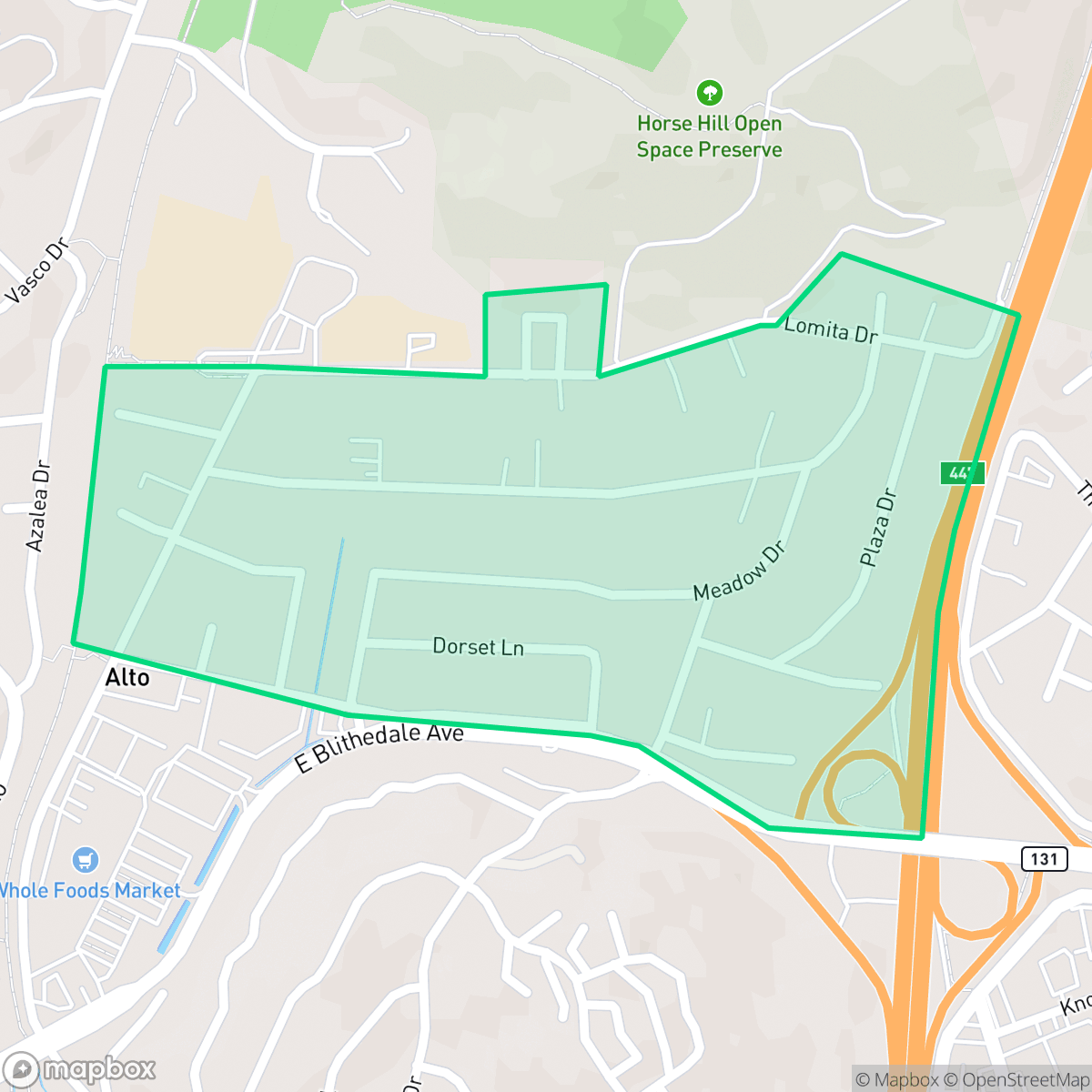
The Alto neighborhood in Mill Valley, California, is historically significant for its role in early regional transportation. In the early 20th century, the area was home to the Alto Powerhouse, a major facility built in 1903 to provide electricity for the North Shore Railroad, which utilized the first third-rail electrified line in California. The neighborhood, once part of the Rancho Corte Madera land grant, transitioned from its rural and agricultural roots into a residential community during the mid-20th century. A central landmark for the area was the Alto School, which served the local community for decades before its site was redeveloped. Today, Alto is characterized by its semi-rural atmosphere, proximity to the Camino Alto Open Space Preserve, and its location within the bowl-shaped topography of the valley, retaining a distinct identity separate from the core of Mill Valley.
The area is characterized by its low-density, residential atmosphere and integration with the surrounding woodland. With its expansive, custom-built estates and natural buffers, the neighborhood provides a sense of seclusion that is rare in more developed parts of the region. It is a strictly residential enclave, devoid of industrial or commercial facilities, which reinforces its calm, steady rhythm. According to iHuus data, the area maintains a high level of visual appeal, with homes scattered among undeveloped land to preserve a natural, forest-like environment. Prospective residents should consider the trade-offs inherent to this landscape. The high-risk fire and flood zones are important factors for property owners to navigate, and the acoustic environment is notably louder than other parts of Mill Valley due to regional transit paths. Despite these challenges, the area benefits from top-tier educational opportunities within the Mill Valley Elementary and Tamalpais Union High School districts, making it a compelling choice for families seeking a balance of natural beauty and academic excellence.
Neighborhood Scores Across 15 Qualities
Large lots with significant separation between homes provide a sense of privacy that is slightly above the Mill Valley average, according to iHuus data.
Sidewalks are available on one side of many streets with safe crossings provided. This level of walkability is slightly below the average for Mill Valley, according to iHuus data.
Large residential estates with custom architecture and significant privacy buffers define the landscape. This level of visual character and greenery is consistent with the broader Mill Valley area.
Extensive trail networks and open spaces provide ample opportunities for outdoor exercise with pets. This level of accessibility to large parks and natural areas is consistent with the Mill Valley average.
Dense forest and significant open green space define this area, which maintains a level of natural openness very similar to the Mill Valley average. Residential integration is low, as homes are scattered among woodland and undeveloped land according to iHuus data.
Residential life follows a calm, steady rhythm within a rural landscape of vast open spaces. This area is less active than the Mill Valley average, characterized by low-density housing and limited social hubs.
Frequent noise from nearby transit corridors and flight paths makes this area significantly louder than the average for Mill Valley. According to iHuus data, residents can expect more consistent acoustic disturbances than most parts of the city.
Air quality remains consistently high with infrequent periods of elevated readings. This level of cleanliness is consistent with the broader Mill Valley area, according to iHuus data.
No warehouses or industrial facilities are present in this area. According to iHuus data, this neighborhood is more strictly residential than the Mill Valley average, consisting only of homes, green spaces, and municipal water infrastructure.
Health insurance enrollment among residents is lower than the Mill Valley average, according to iHuus data.
Voting patterns and census indicators reflect a deeply liberal political landscape, consistent with the broader Mill Valley area according to iHuus data.
Residents live alongside a balanced mix of young adults, families, and older populations. This demographic spread is slightly lower than the average found throughout Mill Valley, according to iHuus data.
Properties in this area are located within a designated floodplain, meaning flood insurance is typically required for residents. According to iHuus data, this risk level is consistent with the average for Mill Valley.
Significant fire hazards exist in this area due to dense vegetation and terrain. According to iHuus data, the risk levels in Alto are consistent with the average for Mill Valley.
Address-Level Insights for Alto


iHuus Neighborhood Intelligence Insights
Get address-level neighborhood insights for Alto
- Street-level scores — see how individual blocks compare, not just neighborhood averages
- Micro-zone boundaries — identify quiet pockets, flood boundaries, and walkable clusters before you visit
- 15 dimensions in full — walkability, noise, air quality, school quality, insurance coverage, population age profile, urban/rural index, and more
- Boundary risk alerts — know if your address sits near a block boundary where scores drop, the kind of detail no listing will ever mention
- School insights — individual school ratings and insights, not just district-level data
- Compare before you commit — side-by-side data across neighborhoods, down to block precision
No credit card required
Compare with Any Neighborhood
| Dimension | Alto | Bayfront/Enchanted Knolls/Shelter Ridge |
|---|---|---|
| 🚶 Walkabilityavg 6.97 | ||
| 🔊 Acoustic Comfortavg 5.39 | ||
| 🤫 Privacy Indexavg 6.42 | ||
| 🎨 Visual Appealavg 9.03 | ||
| 🐕 Dog Friendlinessavg 9.28 | ||
| 🗺️ Urban-Rural Indexavg 8.49 | ||
| ✨ Neighborhood Vibeavg 4.1 | ||
| 🏥 Health Insurance Coverageavg 8.03 | ||
| 🌿 Air Qualityavg 8 | ||
| 🏭 Industrial Proximityavg 9.01 | ||
| 🌊 Flood Safetyavg 2.33 | ||
| 🗳️ Ideological Leanavg 9.94 | ||
| 👥 Population Age Profileavg 5.5 | ||
| 🔥 Fire Safetyavg 1.94 | ||
| 🏫 School Quality |
Alto Rankings
School Districts Serving Alto
School Insights for Alto
Below average outcomes; significant attendance and academic challenges.
School Insights
See what's really behind every school rating near Alto
- Individual school ratings — each school's own score with outcome context, not just a district average
- Enrollment & class size data — student-to-teacher ratio and how it compares to the state average
- Full demographics breakdown — ethnicity and gender composition for every school in the enrollment zone
- Every school in the district — all schools within the enrollment boundary ranked by rating, not just the closest one
- Grade levels & benchmarks — elementary through high school, with below/above state-average flags
No credit card required