Paradise Cove, Malibu
Updated · 439 residents
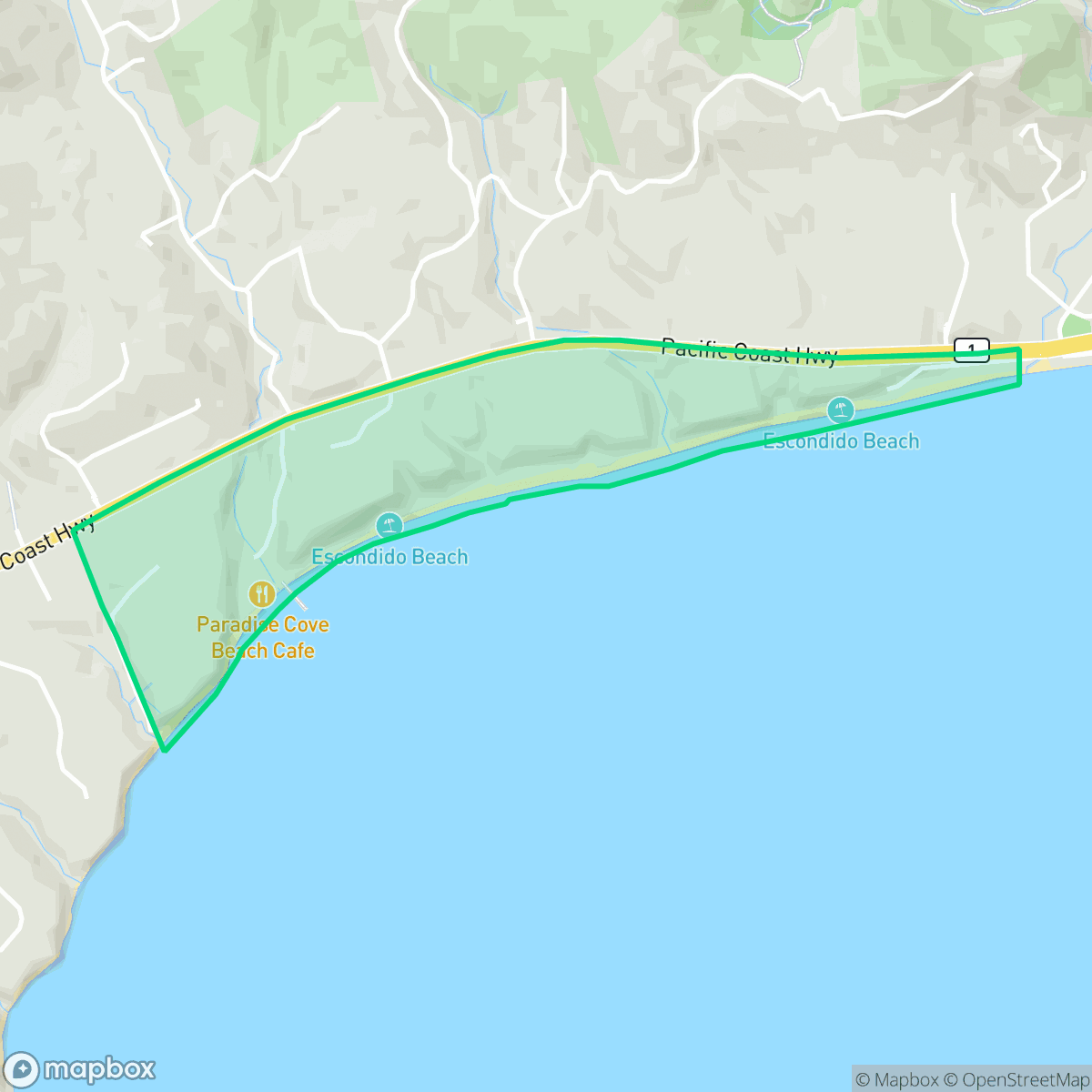
Paradise Cove is a secluded coastal enclave defined by its expansive rural character and immediate proximity to the Pacific Coast Highway. While the neighborhood offers a serene, natural environment, residents experience significant noise from constant road traffic and limited walkability for daily errands.
Key Highlights
About Paradise Cove
Once the site of the ancient Chumash village of Sumo, Paradise Cove in Malibu was known in the late 1800s as "Smugglers Cove," where early Chinese immigrants secretly landed. Formerly part of the Rindge family's historic Malibu Rancho, the area evolved in 1945 with the construction of the Paradise Cove Pier for sport fishing. In the 1950s, Joe Morris acquired the 70-acre property, which was later sold to the Kissel family in the 1970s and transformed into the iconic Paradise Cove Mobile Home Park. This unique coastal enclave gained fame as a quintessential Hollywood backdrop, hosting Marilyn Monroe photo shoots and serving as the filming location for Gidget, Beach Blanket Bingo, and The Rockford Files. Today, the neighborhood maintains its relaxed character, anchored by the Paradise Cove Beach Cafe.
The neighborhood functions as a quiet, rural retreat characterized by open green spaces and a direct connection to the coastline. Despite its visual appeal, the area is notably loud due to its location along a major transit artery, with traffic noise levels averaging 69 decibels. The environment is largely residential with minimal development, fostering a sense of isolation that prioritizes natural surroundings over urban convenience. According to iHuus data, the area maintains high air quality and excellent health insurance coverage, though the lack of local amenities necessitates reliance on personal vehicles for most needs.
Living in this coastal pocket involves specific trade-offs, particularly regarding environmental safety and infrastructure. The area faces significant fire safety risks, which remains a critical consideration for residents in this region. Families are served by the Santa Monica-Malibu Unified School District, which is currently navigating a period of fiscal and structural transition as it prepares to split into two separate districts by 2026. This location is best suited for those who prioritize coastal access and a rural lifestyle over proximity to commercial centers or quiet acoustic environments.
Neighborhood Scores Across 15 Qualities
Large lots with significant separation between properties provide a sense of seclusion. This level of privacy is largely consistent with the average found across Malibu.
Low-traffic streets provide a peaceful environment for walking, though the lack of sidewalks makes the area less walkable than the Malibu average according to iHuus data.
Low density housing features custom architecture and significant privacy buffers. While the area remains highly aesthetic, the level of visual variety is slightly lower than the Malibu average according to iHuus data.
Wide paths and connected green spaces provide safe areas for walking pets away from traffic. However, this level of accessibility is slightly lower than the average found elsewhere in Malibu.
Sparse development and natural landscapes define this area, which is consistent with the broader Malibu landscape according to iHuus data.
Remote landscapes and significant open space define this area, offering far less commercial activity than the typical Malibu neighborhood. Residents will find a tranquil, low-density environment with very few local services or nightlife options nearby according to iHuus data.
Frequent acoustic disturbances characterize this area due to its immediate proximity to heavy transit infrastructure. According to iHuus data, noise levels are notably higher than the Malibu average.
Air quality is mostly clean with only rare instances of elevated readings, though it remains slightly lower than the Malibu city average according to iHuus data.
Zero industrial facilities or warehouses are present within the area, maintaining a strictly residential atmosphere that is slightly more secluded than the Malibu average. According to iHuus data, the landscape consists entirely of residential properties and open green spaces.
Health insurance access is nearly universal among residents, reflecting a rate that is higher than the Malibu average according to iHuus data.
Voting patterns and census indicators reflect a predominantly liberal community, appearing more liberal than the average for Malibu. According to iHuus data, this political leaning is a defining characteristic of the area.
Residents live alongside a balanced mix of young adults, families, and seniors. This demographic variety is slightly more diverse than the average found throughout Malibu, according to iHuus data.
Flood risk levels in this area are higher than the Malibu average, though current FEMA studies for this specific location remain incomplete. Residents should remain cautious as the precise level of vulnerability is not yet fully documented.
Severe wildfire hazards exist in this area, requiring maximum protection measures. According to iHuus data, this level of danger is consistent with the average for Malibu.
Address-Level Insights for Paradise Cove


iHuus Neighborhood Intelligence Insights
Get address-level neighborhood insights for Paradise Cove
- Street-level scores — see how individual blocks compare, not just neighborhood averages
- Micro-zone boundaries — identify quiet pockets, flood boundaries, and walkable clusters before you visit
- 15 dimensions in full — walkability, noise, air quality, school quality, insurance coverage, population age profile, urban/rural index, and more
- Boundary risk alerts — know if your address sits near a block boundary where scores drop, the kind of detail no listing will ever mention
- School insights — individual school ratings and insights, not just district-level data
- Compare before you commit — side-by-side data across neighborhoods, down to block precision
No credit card required
Compare with Any Neighborhood
| Dimension | Paradise Cove | Malibu Park |
|---|---|---|
| 🚶 Walkabilityavg 5.25 | ||
| 🔊 Acoustic Comfortavg 0.92 | ||
| 🤫 Privacy Indexavg 6.96 | ||
| 🎨 Visual Appealavg 9.7 | ||
| 🐕 Dog Friendlinessavg 8.01 | ||
| 🗺️ Urban-Rural Indexavg 9.56 | ||
| ✨ Neighborhood Vibeavg 2.75 | ||
| 🏥 Health Insurance Coverageavg 9.45 | ||
| 🌿 Air Qualityavg 8.23 | ||
| 🏭 Industrial Proximityavg 9.93 | ||
| 🌊 Flood Safetyavg 4.85 | ||
| 🗳️ Ideological Leanavg 8.43 | ||
| 👥 Population Age Profileavg 5.39 | ||
| 🔥 Fire Safetyavg 0.16 | ||
| 🏫 School Quality |
Paradise Cove Rankings
School Districts Serving Paradise Cove
School Insights for Paradise Cove
Below average outcomes; significant attendance and academic challenges.
School Insights
See what's really behind every school rating near Paradise Cove
- Individual school ratings — each school's own score with outcome context, not just a district average
- Enrollment & class size data — student-to-teacher ratio and how it compares to the state average
- Full demographics breakdown — ethnicity and gender composition for every school in the enrollment zone
- Every school in the district — all schools within the enrollment boundary ranked by rating, not just the closest one
- Grade levels & benchmarks — elementary through high school, with below/above state-average flags
No credit card required