Sylmar, Los Angeles
Updated · 76,800 residents
Sylmar is a sprawling, northern Los Angeles neighborhood characterized by its dense suburban layout, proximity to major logistics hubs, and a blend of residential tracts and industrial zones. While the area offers a relatively quiet, car-dependent lifestyle, residents benefit from decent air quality and access to several highly-rated magnet schools.
Key Highlights
About Sylmar
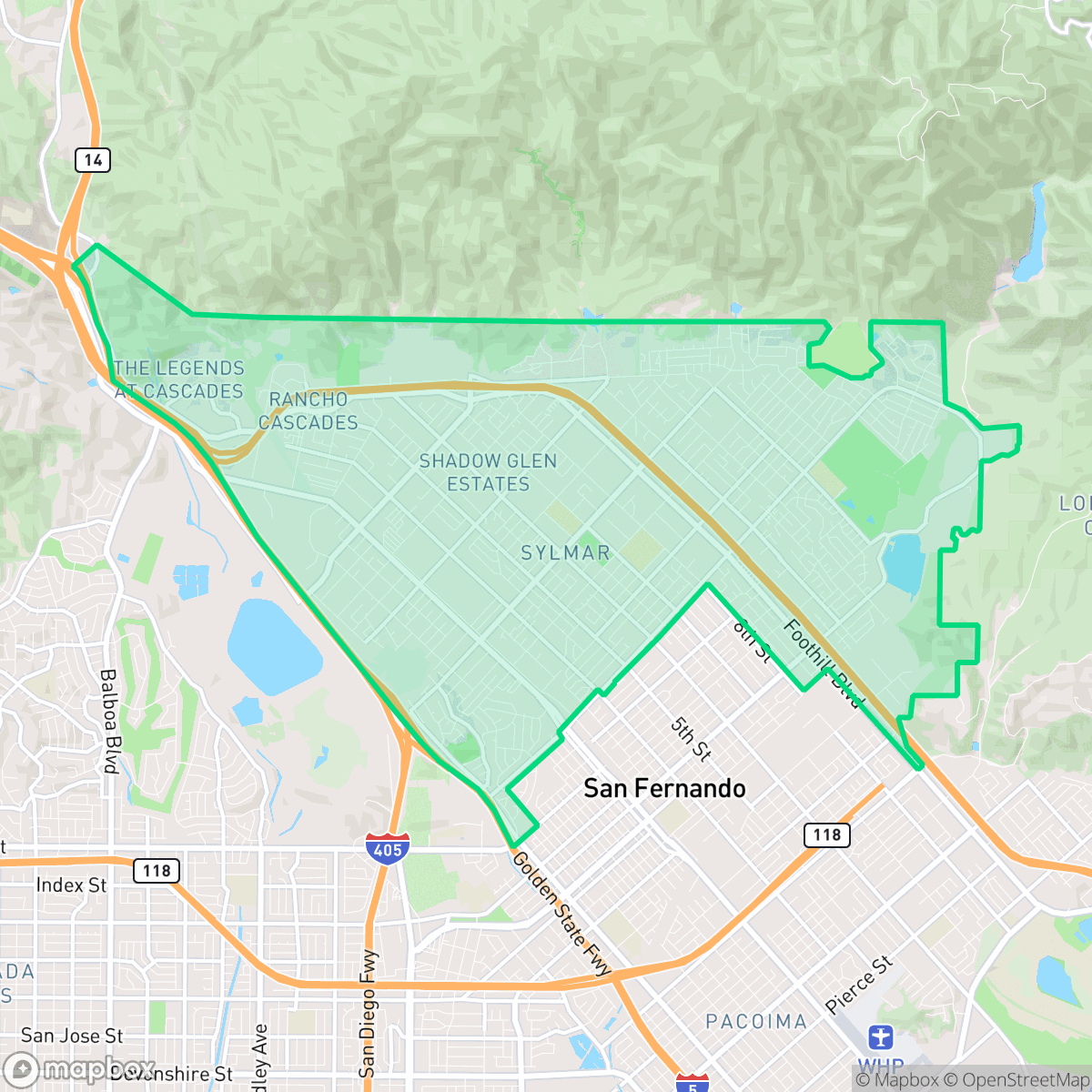
Sylmar, the northernmost neighborhood of Los Angeles, began as an agricultural community originally named Morningside in 1874. It was renamed Sylmar in 1893—a Latin portmanteau meaning "sea of trees"—reflecting the vast olive orchards that by 1906 became the largest olive grove in the world. The neighborhood’s development was accelerated by the 1913 completion of the Los Angeles Aqueduct, which terminates at the historic Cascades spillway. Though heavily impacted by the 1971 San Fernando earthquake, Sylmar has preserved much of its rural, equestrian charm. Notable local landmarks include the San Fernando Pioneer Memorial Cemetery, established in 1892, and the Nethercutt Collection, a world-renowned museum showcasing classic automobiles.
The neighborhood functions as a dense suburban landscape where residential areas frequently interface with large-scale industrial warehouses and major highway corridors. According to iHuus data, the community features a consistent grid layout that provides moderate walkability, although this is often offset by the noise generated by heavy road traffic and the presence of logistics infrastructure. The visual character is defined by middle-class tract housing and private backyards, which serve as the primary green space for residents due to a relative lack of expansive public parks.
Prospective residents should consider that the area experiences significant acoustic challenges due to its proximity to freight corridors and highways. While the region provides a more accessible entry point into the Los Angeles housing market, it requires a reliance on personal vehicles for daily errands. Families may find value in the diverse educational options, including several high-performing magnet and charter schools, though they should also be aware of the elevated fire safety risks inherent to this northern part of the city.
Neighborhood Scores Across 15 Qualities
Residential spacing is somewhat tight, particularly in apartment blocks and high-density grids where homes often share property lines. According to iHuus data, this level of density offers slightly more separation between neighbors than the Los Angeles average.
Sidewalks and crosswalks are consistent throughout residential blocks, though large industrial zones and major highway corridors create significant pedestrian barriers. While much of the neighborhood features a navigable grid, the ease of walking is lower than the Los Angeles average due to these high-traffic interruptions.
A combination of large, affluent estates with manicured yards and dense, middle-class tract housing creates a varied visual environment. According to iHuus data, the overall aesthetic is slightly below the Los Angeles average due to the prevalence of high-density housing and industrial neighbors.
Access to public green space for pets varies significantly, ranging from large parklands and hillside trails to dense industrial areas with limited sidewalks. While some parts of the neighborhood offer excellent walking options, other blocks lack public parks and rely primarily on private backyards.
Varying landscapes of rugged, undeveloped hillsides and industrial warehouses blend with suburban residential pockets. This area offers a more open, less densely built environment than the typical Los Angeles urban core, according to iHuus data.
A mix of industrial warehouses and suburban streets creates a serene but low-activity environment. Most local dining and services are scattered and require a vehicle, as the neighborhood offers less commercial density than the Los Angeles average.
Frequent noise from nearby railroad tracks and heavy freeway traffic characterizes the area. According to iHuus data, acoustic comfort is lower than the Los Angeles city average.
Air quality remains mostly clean with rare instances of elevated readings. This level of air quality is roughly in line with the average found across Los Angeles.
Logistics hubs, large warehouses, and wastewater treatment facilities are present throughout the area, creating more industrial-related traffic and noise than the city average. While heavy manufacturing is largely absent, residents should expect significant truck activity and utility infrastructure near major transit corridors.
Health insurance access among residents is slightly above the Los Angeles average, according to iHuus data. Most community members have access to medical coverage through employer or private plans.
Voting patterns and census indicators in Sylmar align closely with the broader political landscape of Los Angeles. According to iHuus data, the area reflects a nearly identical ideological leaning to the city average.
Residents will find a balanced distribution of young adults, families, and seniors. This demographic spread is roughly in line with the typical age profile found across Los Angeles.
Significant flood risks exist here due to proximity to the 100-year floodplain, which is notably higher than the Los Angeles average. According to iHuus data, residents may find that flood insurance is typically required for properties in this area.
Wildfire danger is exceptionally high in this area, representing a much more significant hazard than the typical Los Angeles neighborhood. According to iHuus data, the surrounding landscape requires heightened awareness and maximum fire protection measures.
Address-Level Insights for Sylmar


iHuus Neighborhood Intelligence Insights
Get address-level neighborhood insights for Sylmar
- Street-level scores — see how individual blocks compare, not just neighborhood averages
- Micro-zone boundaries — identify quiet pockets, flood boundaries, and walkable clusters before you visit
- 15 dimensions in full — walkability, noise, air quality, school quality, insurance coverage, population age profile, urban/rural index, and more
- Boundary risk alerts — know if your address sits near a block boundary where scores drop, the kind of detail no listing will ever mention
- School insights — individual school ratings and insights, not just district-level data
- Compare before you commit — side-by-side data across neighborhoods, down to block precision
No credit card required
Compare with Any Neighborhood
| Dimension | Sylmar | Adams-Normandie |
|---|---|---|
| 🚶 Walkabilityavg 8.9 | ||
| 🔊 Acoustic Comfortavg 2.91 | ||
| 🤫 Privacy Indexavg 4.14 | ||
| 🎨 Visual Appealavg 6.58 | ||
| 🐕 Dog Friendlinessavg 5.04 | ||
| 🗺️ Urban-Rural Indexavg 5.96 | ||
| ✨ Neighborhood Vibeavg 5.07 | ||
| 🏥 Health Insurance Coverageavg 6.2 | ||
| 🌿 Air Qualityavg 8.12 | ||
| 🏭 Industrial Proximityavg 8.46 | ||
| 🌊 Flood Safetyavg 2.66 | ||
| 🗳️ Ideological Leanavg 9.56 | ||
| 👥 Population Age Profileavg 4.85 | ||
| 🔥 Fire Safetyavg 0.18 | ||
| 🏫 School Quality |
Sylmar Rankings
School Districts Serving Sylmar
School Insights for Sylmar
Below average outcomes; significant attendance and academic challenges.
School Insights
See what's really behind every school rating near Sylmar
- Individual school ratings — each school's own score with outcome context, not just a district average
- Enrollment & class size data — student-to-teacher ratio and how it compares to the state average
- Full demographics breakdown — ethnicity and gender composition for every school in the enrollment zone
- Every school in the district — all schools within the enrollment boundary ranked by rating, not just the closest one
- Grade levels & benchmarks — elementary through high school, with below/above state-average flags
No credit card required