Golden Triangle, Los Angeles
Updated · 1,797 residents
The Golden Triangle serves as the primary commercial hub of Beverly Hills, offering an exceptionally walkable environment filled with world-class retail and dining. While the area provides residents with high-quality health insurance coverage and clean air, the dense urban layout results in limited privacy and significant noise from surrounding road traffic.
Key Highlights
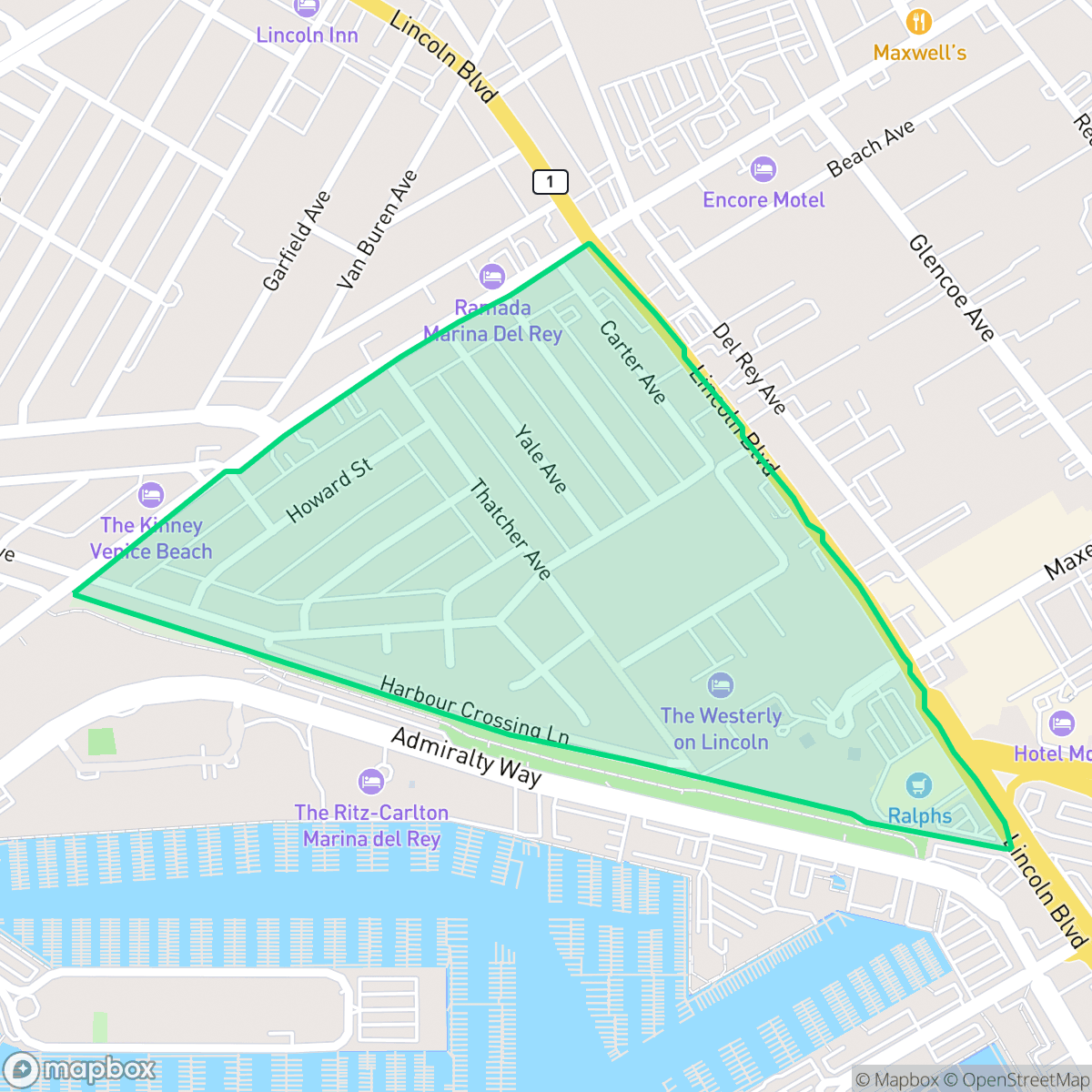
About Golden Triangle
The Golden Triangle is the iconic commercial and retail heart of Beverly Hills, bordered by Santa Monica Boulevard, Wilshire Boulevard, and Canon Drive. Originally planned in 1907 by landscape architect Wilbur D. Cook as a triangular business district, the area evolved from a quiet farming community into a global symbol of luxury. Its post-World War II transformation accelerated in 1961 when Fred Hayman opened Giorgio Beverly Hills, the first high-end boutique on Rodeo Drive, which remains the neighborhood's premier thoroughfare. This shift attracted prestigious retailers like Gucci and Tiffany & Co. in the 1970s. Architecturally, the district blends historic Art Deco influences with modern minimalism, anchored by landmarks such as the Italian Renaissance-style Beverly Wilshire Hotel (built in 1928) and the European-style cobblestone walkway of Two Rodeo Drive.
This district functions as a dense, high-energy urban core where commercial activity and residential living intersect. According to iHuus data, the area boasts a perfect walkability score, allowing residents to easily access diverse amenities and major thoroughfares without a vehicle. The neighborhood maintains a strong commitment to public health, reflected in its high health insurance coverage rates, and benefits from relatively good air quality despite its central position in the Los Angeles basin. Prospective residents should weigh these conveniences against notable trade-offs in the living environment. The area is characterized by high-density housing with shared walls, which contributes to a lower privacy index. Furthermore, the neighborhood experiences significant road traffic noise, and residents should be aware of the local fire safety profile. It is best suited for individuals who prioritize immediate access to a vibrant commercial center and high-density urban convenience over quiet, secluded living.
Neighborhood Scores Across 15 Qualities
Residential structures are closely situated with minimal separation between buildings. According to iHuus data, this density of multi-family and row-house housing results in less privacy than the typical Los Angeles neighborhood.
Pedestrian access is excellent due to a consistent street grid with wide, continuous sidewalks and frequent marked crosswalks. Most daily errands can be completed on foot, making this area more walkable than the Los Angeles average.
Dense housing and apartment complexes dominate the landscape, featuring small yards and shared amenities like pools. This level of visual variety is slightly below the Los Angeles average.
Sidewalk verges are notably narrow and large public parks are difficult to find within this dense sector. Most available green space consists of private yards or small parkway strips, making the area slightly less dog friendly than the Los Angeles average.
A blend of multi-story apartments and single-family homes creates a landscape of streets and green space in equal measure. This balance of density is slightly less urban than the Los Angeles average, according to iHuus data.
Local dining and social hubs provide a more active atmosphere than the Los Angeles average. While some areas feature high-energy urban density near the water, other pockets remain quieter with more suburban, industrial characteristics.
Frequent noise from nearby freeways and rail lines makes this area significantly louder than the Los Angeles average. According to iHuus data, residents should expect consistent acoustic disturbances from heavy transit infrastructure.
Air quality is generally good with rare instances of elevated readings; however, levels are slightly lower than the Los Angeles average according to iHuus data.
Large-scale warehouses and boat storage yards contribute to notable noise and traffic levels, though the area lacks heavy industrial facilities. This level of industrial proximity is slightly higher than the Los Angeles average according to iHuus data.
Health insurance enrollment among residents is notably higher than the average for Los Angeles. According to iHuus data, a significant majority of the population maintains medical coverage.
Voting patterns and census indicators show a predominantly liberal political leaning that is slightly more pronounced than the Los Angeles average, according to iHuus data.
A balanced mix of young adults, families, and older residents characterizes the area. This demographic spread is slightly more diverse than the average seen across Los Angeles.
Flood risk in this area is notably higher than the Los Angeles average, though current FEMA studies lack the detail required for a precise assessment. Residents should remain aware of potential drainage concerns during heavy rain events according to iHuus data.
Address-Level Insights for Golden Triangle


iHuus Neighborhood Intelligence Insights
Get address-level neighborhood insights for Golden Triangle
- Street-level scores — see how individual blocks compare, not just neighborhood averages
- Micro-zone boundaries — identify quiet pockets, flood boundaries, and walkable clusters before you visit
- 15 dimensions in full — walkability, noise, air quality, school quality, insurance coverage, population age profile, urban/rural index, and more
- Boundary risk alerts — know if your address sits near a block boundary where scores drop, the kind of detail no listing will ever mention
- School insights — individual school ratings and insights, not just district-level data
- Compare before you commit — side-by-side data across neighborhoods, down to block precision
No credit card required
Compare with Any Neighborhood
| Dimension | Golden Triangle | Adams-Normandie |
|---|---|---|
| 🚶 Walkabilityavg 8.9 | ||
| 🔊 Acoustic Comfortavg 2.91 | ||
| 🤫 Privacy Indexavg 4.14 | ||
| 🎨 Visual Appealavg 6.58 | ||
| 🐕 Dog Friendlinessavg 5.04 | ||
| 🗺️ Urban-Rural Indexavg 5.96 | ||
| ✨ Neighborhood Vibeavg 5.07 | ||
| 🏥 Health Insurance Coverageavg 6.2 | ||
| 🌿 Air Qualityavg 8.12 | ||
| 🏭 Industrial Proximityavg 8.46 | ||
| 🌊 Flood Safetyavg 2.66 | ||
| 🗳️ Ideological Leanavg 9.56 | ||
| 👥 Population Age Profileavg 4.85 | ||
| 🔥 Fire Safetyavg 0.18 | ||
| 🏫 School Quality |
Golden Triangle Rankings
School Districts Serving Golden Triangle
School Insights for Golden Triangle
Below average outcomes; significant attendance and academic challenges.
School Insights
See what's really behind every school rating near Golden Triangle
- Individual school ratings — each school's own score with outcome context, not just a district average
- Enrollment & class size data — student-to-teacher ratio and how it compares to the state average
- Full demographics breakdown — ethnicity and gender composition for every school in the enrollment zone
- Every school in the district — all schools within the enrollment boundary ranked by rating, not just the closest one
- Grade levels & benchmarks — elementary through high school, with below/above state-average flags
No credit card required