Glendale, Los Angeles
Updated · 2,919 residents
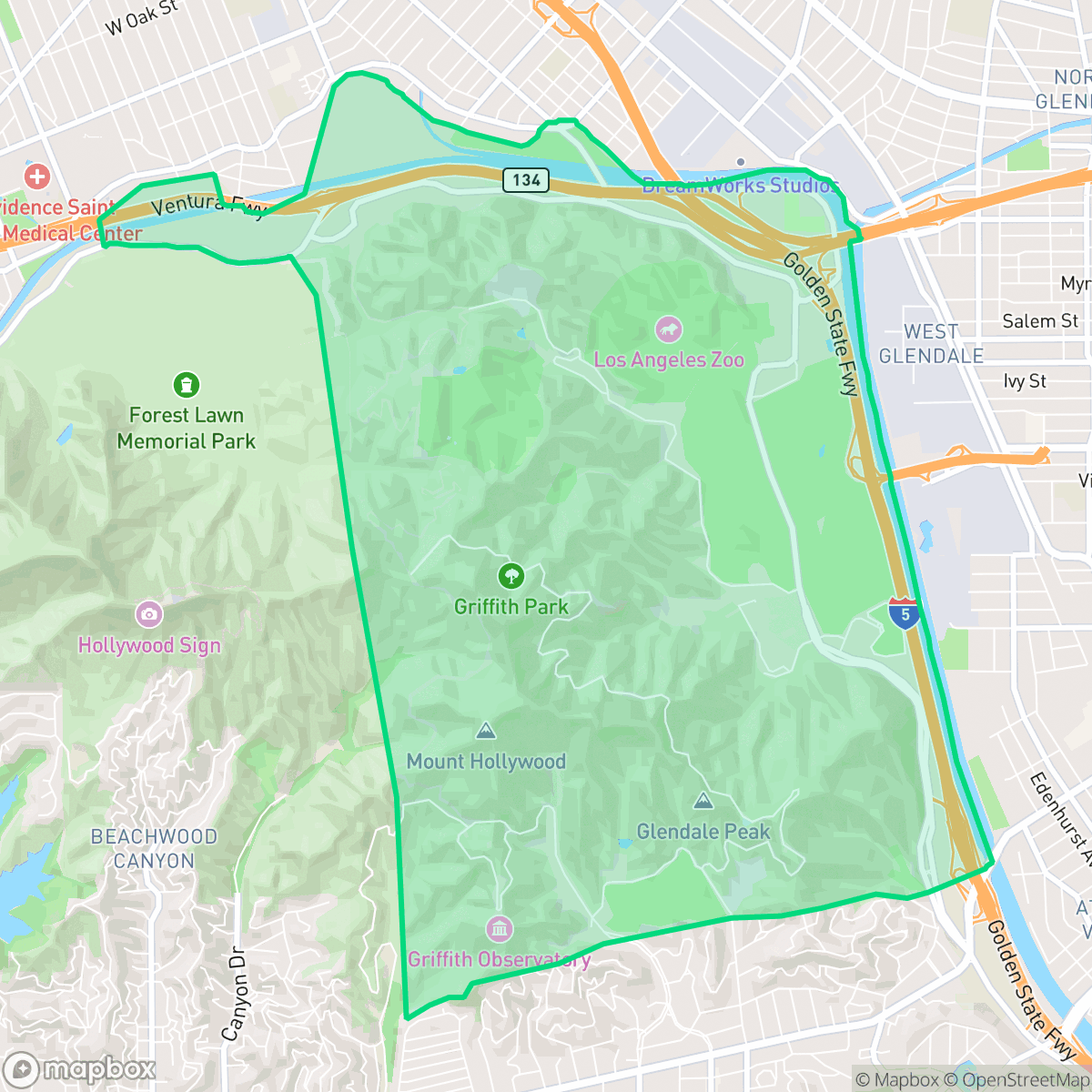
Glendale is a quiet, remote area characterized by a mix of rugged open space and industrial infrastructure. While it offers high dog friendliness and scenic visual appeal, residents should expect significant road noise and limited local walkability.
Key Highlights
About Glendale
Originally part of Rancho San Rafael, a 1798 Spanish land grant to José María Verdugo, Glendale was established as a townsite in 1884 and incorporated in 1906. Civic pioneer Leslie C. Brand catalyzed early growth by bringing the Pacific Electric Railway in 1904 and building his Moorish-inspired estate, El Miradero, which today serves as the Brand Library and Art Center. The area boasts a rich architectural heritage, including the c. 1828 Catalina Verdugo Adobe—home to the historic "Oak of Peace" where Californios planned their 1847 surrender. Other notable landmarks include the 1925 Art Deco and Egyptian-style Alex Theatre and the 1929 Grand Central Air Terminal, Los Angeles’ first commercial airport, which showcases a unique blend of Spanish Colonial Revival and Zigzag Moderne design.
The neighborhood functions as a low-density, car-oriented environment that balances vast natural landscapes with pockets of light industrial development. It serves as an escape from the typical urban bustle of Los Angeles, providing residents with access to significant open green space and trails. The area maintains a serene, rural-like atmosphere, though this comes with the trade-off of limited local businesses and daily services within walking distance.
Prospective residents should note that the area faces specific environmental and infrastructure challenges, including high levels of road traffic noise and a high risk of fire. While the neighborhood is highly rated for dog owners and visual appeal, it lacks the dense amenities found in neighboring communities. It is best suited for those who prioritize proximity to nature and quiet, remote surroundings over immediate access to urban conveniences.
Neighborhood Scores Across 15 Qualities
Residential spacing varies between hillside estates and denser apartment complexes, though overall privacy levels are higher than the Los Angeles average. Most homes feature moderate separation and fenced backyards, according to iHuus data.
Pedestrian access is reliable due to continuous sidewalks and marked crosswalks at major intersections, though a major freeway acts as a barrier to seamless movement. This level of walkability is slightly lower than the Los Angeles average.
Well-maintained properties and a high density of private pools contribute to a visual environment that is more polished than the Los Angeles average. According to iHuus data, the area features many large homes on landscaped lots, though some sections consist of standard tract housing.
Extensive riverside green belts, public parklands, and tree-lined sidewalks provide much more space for pet exercise than the Los Angeles average. According to iHuus data, the abundance of connected green spaces and wide paths makes navigating the neighborhood safe from heavy traffic.
A blend of managed green space, rugged terrain, and scattered residential pockets provides a more open environment than the Los Angeles average. According to iHuus data, the landscape varies from dense industrial and transit corridors to expansive areas of open land.
Primarily composed of industrial units and low-density housing, this area offers a tranquil environment with significantly less activity than the Los Angeles average. Most daily needs require a vehicle, as local businesses and social services are sparse and scattered throughout the landscape.
Frequent noise from nearby freeways and railroad tracks characterizes the area. Acoustic comfort is slightly lower than the average for Los Angeles, according to iHuus data.
Air quality in this area is mostly clean with infrequent instances of elevated readings. According to iHuus data, the air quality is slightly lower than the average for Los Angeles.
Predominantly residential and light commercial zones define this area, though some parts of the neighborhood sit near historical sites under EPA monitoring for groundwater concerns. This level of industrial activity is lower than the Los Angeles city average.
Health insurance coverage among residents is slightly lower than the average found across Los Angeles. According to iHuus data, a notable portion of the population lacks employer-sponsored or private coverage.
Voting patterns and census indicators show a strong liberal leaning that is very similar to the broader Los Angeles area, according to iHuus data.
Residents live among a balanced spread of young adults, families, and older populations. This demographic distribution is slightly more varied than the average seen across Los Angeles.
Flood risk in this area is notably higher than the Los Angeles average, though detailed federal studies are currently unavailable. Residents should remain aware of potential vulnerabilities during extreme weather events according to iHuus data.
High fire hazards exist throughout the area, representing a risk level slightly higher than the Los Angeles average. According to iHuus data, residents in this neighborhood require maximum protection measures due to the extreme nature of the local fire threat.
Address-Level Insights for Glendale


iHuus Neighborhood Intelligence Insights
Get address-level neighborhood insights for Glendale
- Street-level scores — see how individual blocks compare, not just neighborhood averages
- Micro-zone boundaries — identify quiet pockets, flood boundaries, and walkable clusters before you visit
- 15 dimensions in full — walkability, noise, air quality, school quality, insurance coverage, population age profile, urban/rural index, and more
- Boundary risk alerts — know if your address sits near a block boundary where scores drop, the kind of detail no listing will ever mention
- School insights — individual school ratings and insights, not just district-level data
- Compare before you commit — side-by-side data across neighborhoods, down to block precision
No credit card required
Compare with Any Neighborhood
| Dimension | Glendale | Adams-Normandie |
|---|---|---|
| 🚶 Walkabilityavg 8.9 | ||
| 🔊 Acoustic Comfortavg 2.91 | ||
| 🤫 Privacy Indexavg 4.14 | ||
| 🎨 Visual Appealavg 6.58 | ||
| 🐕 Dog Friendlinessavg 5.04 | ||
| 🗺️ Urban-Rural Indexavg 5.96 | ||
| ✨ Neighborhood Vibeavg 5.07 | ||
| 🏥 Health Insurance Coverageavg 6.2 | ||
| 🌿 Air Qualityavg 8.12 | ||
| 🏭 Industrial Proximityavg 8.46 | ||
| 🌊 Flood Safetyavg 2.66 | ||
| 🗳️ Ideological Leanavg 9.56 | ||
| 👥 Population Age Profileavg 4.85 | ||
| 🔥 Fire Safetyavg 0.18 | ||
| 🏫 School Quality |
Glendale Rankings
School Districts Serving Glendale
School Insights for Glendale
Below average outcomes; significant attendance and academic challenges.
School Insights
See what's really behind every school rating near Glendale
- Individual school ratings — each school's own score with outcome context, not just a district average
- Enrollment & class size data — student-to-teacher ratio and how it compares to the state average
- Full demographics breakdown — ethnicity and gender composition for every school in the enrollment zone
- Every school in the district — all schools within the enrollment boundary ranked by rating, not just the closest one
- Grade levels & benchmarks — elementary through high school, with below/above state-average flags
No credit card required