Beverly Glen, Los Angeles
Updated · 13,794 residents
Beverly Glen is a tranquil, low-density enclave tucked into the Santa Monica Mountains, characterized by its stunning natural scenery and unique hillside architecture. While it offers exceptional air quality and a serene, rural feel, the area is highly car-dependent with minimal commercial activity.
Key Highlights
About Beverly Glen
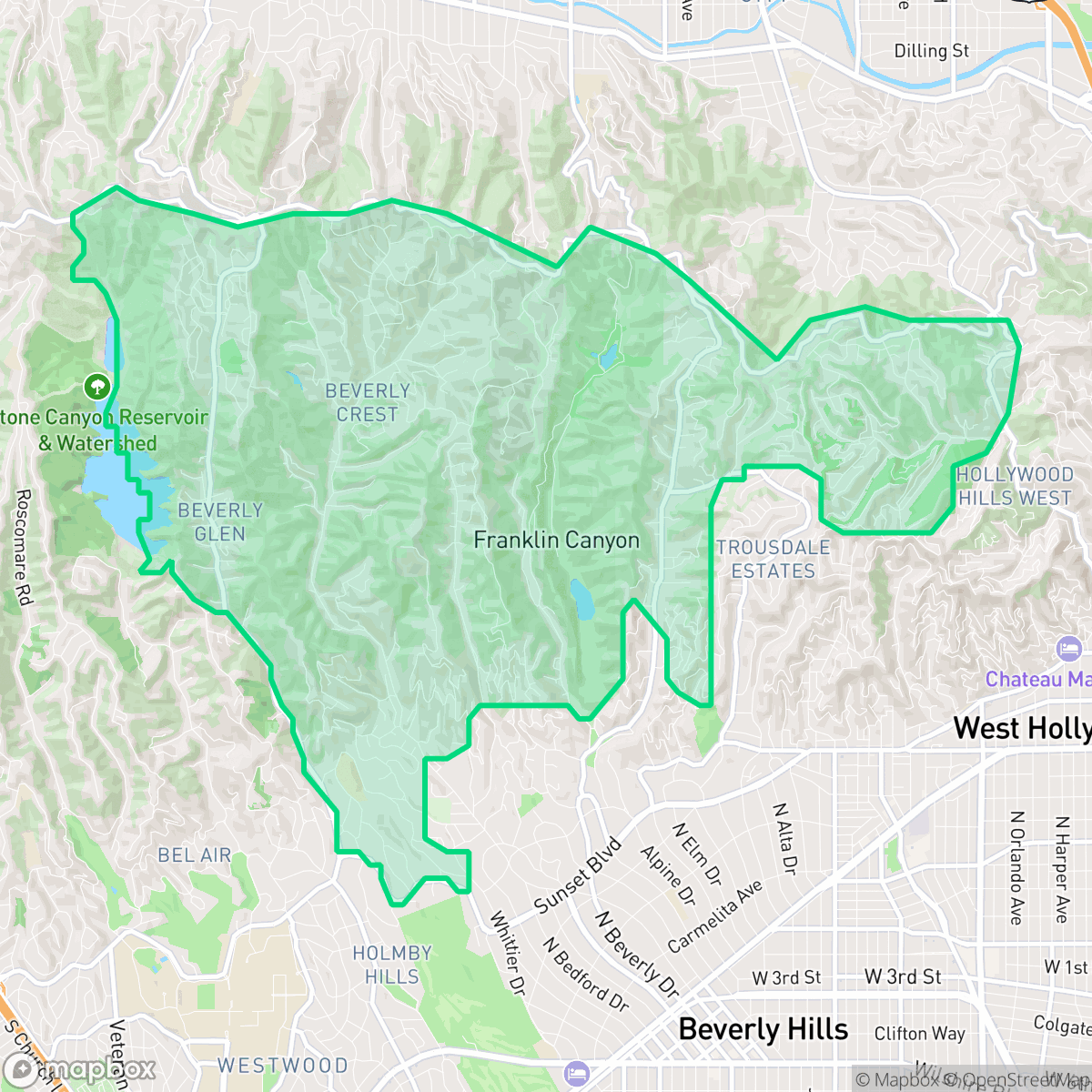
Nestled in a canyon of the Santa Monica Mountains, Beverly Glen was originally known as Brown Canyon after 1867 homesteader Cornelius Brown. In 1909, real estate promoter Bertram Chapman Mayo acquired the land and hired Sikh laborers (historically referred to as "Hindus") to clear roads and residential lots. To market the rugged terrain, Mayo offered cheap, barely habitable parcels to buyers who purchased subscriptions to Sunset magazine. The canyon road was officially renamed Beverly Glen Boulevard in 1918. Today, the neighborhood is known for its rustic, tranquil atmosphere and unique architectural features, most notably "Stilt Street"—a striking row of twenty stilt houses designed by modernist architect Richard Neutra that perch steeply above the boulevard. The area is also home to the Stone Canyon Reservoir.
This neighborhood serves as a quiet retreat from the dense urban sprawl of Los Angeles, defined by its high visual appeal and proximity to protected natural open spaces. Residents enjoy a peaceful environment where the natural landscape takes center stage, supported by excellent air quality and a strong sense of privacy. The area maintains a distinct, low-density character that prioritizes residential calm over commercial convenience, offering a remote atmosphere that feels far removed from the city center.
Prospective residents should note that the area is primarily car-oriented, with very limited local shopping or dining options. While the setting is serene, it carries a significant fire risk, and the lack of walkability means daily errands require a vehicle. Families are often drawn to the neighborhood for access to top-rated schools like Wonderland Avenue Elementary, though the overall lack of nightlife and commercial density makes it better suited for those seeking a quiet, nature-focused lifestyle.
Neighborhood Scores Across 15 Qualities
Expansive lots and significant separation between homes provide a level of seclusion that is substantially higher than the Los Angeles average, according to iHuus data.
Low sidewalk availability makes pedestrian travel difficult, though the tranquil streets provide a pleasant environment for walking. According to iHuus data, walkability in this area is notably lower than the Los Angeles average.
Low-density estates featuring custom architecture and significant privacy buffers characterize the area. This level of visual greenery and architectural prestige is substantially higher than the Los Angeles average.
Connected green spaces and wide, low-traffic paths provide an environment much more favorable for pet owners than the Los Angeles average. According to iHuus data, these features offer safe areas for walking and exercise.
Extensive protected open spaces and low-density residential fringes provide a much more rural character than most of Los Angeles. Residents experience significant proximity to forests and reservoirs, far exceeding the typical urban density found across the city.
Primarily residential and low-density, this area lacks a distinct commercial character and features significantly less local activity than the Los Angeles average. Residents will find a serene setting with vast open spaces, though most daily errands and social destinations require a car.
A steady hum of local traffic from nearby busy streets characterizes the area. This level of acoustic activity is notably higher than the average found across Los Angeles.
Air quality remains consistently high with minimal health concerns for residents. According to iHuus data, these levels are notably better than the Los Angeles city average.
Industrial activity and manufacturing hazards are entirely absent from this area. According to iHuus data, the neighborhood contains only residential and natural spaces, which is significantly cleaner than the city average.
Health insurance access is exceptionally high among residents, significantly outpacing the average for Los Angeles. According to iHuus data, nearly all inhabitants are covered by a health plan.
Voting patterns and census indicators reflect a strongly liberal community, though this leaning is slightly less pronounced than the broader Los Angeles average.
Residents experience a balanced demographic spread of young adults, families, and seniors. This population profile is more varied than the average found across Los Angeles, according to iHuus data.
Residual flood risks exist within certain parts of the area, though safety levels are significantly higher than the Los Angeles average according to iHuus data.
High fire hazard levels exist throughout this area due to dense vegetation and topography. This risk is slightly higher than the average for Los Angeles, requiring residents to maintain rigorous emergency preparedness and protection measures.
Address-Level Insights for Beverly Glen


iHuus Neighborhood Intelligence Insights
Get address-level neighborhood insights for Beverly Glen
- Street-level scores — see how individual blocks compare, not just neighborhood averages
- Micro-zone boundaries — identify quiet pockets, flood boundaries, and walkable clusters before you visit
- 15 dimensions in full — walkability, noise, air quality, school quality, insurance coverage, population age profile, urban/rural index, and more
- Boundary risk alerts — know if your address sits near a block boundary where scores drop, the kind of detail no listing will ever mention
- School insights — individual school ratings and insights, not just district-level data
- Compare before you commit — side-by-side data across neighborhoods, down to block precision
No credit card required
Compare with Any Neighborhood
| Dimension | Beverly Glen | Adams-Normandie |
|---|---|---|
| 🚶 Walkabilityavg 8.9 | ||
| 🔊 Acoustic Comfortavg 2.91 | ||
| 🤫 Privacy Indexavg 4.14 | ||
| 🎨 Visual Appealavg 6.58 | ||
| 🐕 Dog Friendlinessavg 5.04 | ||
| 🗺️ Urban-Rural Indexavg 5.96 | ||
| ✨ Neighborhood Vibeavg 5.07 | ||
| 🏥 Health Insurance Coverageavg 6.2 | ||
| 🌿 Air Qualityavg 8.12 | ||
| 🏭 Industrial Proximityavg 8.46 | ||
| 🌊 Flood Safetyavg 2.66 | ||
| 🗳️ Ideological Leanavg 9.56 | ||
| 👥 Population Age Profileavg 4.85 | ||
| 🔥 Fire Safetyavg 0.18 | ||
| 🏫 School Quality |
Beverly Glen Rankings
School Districts Serving Beverly Glen
School Insights for Beverly Glen
Below average outcomes; significant attendance and academic challenges.
School Insights
See what's really behind every school rating near Beverly Glen
- Individual school ratings — each school's own score with outcome context, not just a district average
- Enrollment & class size data — student-to-teacher ratio and how it compares to the state average
- Full demographics breakdown — ethnicity and gender composition for every school in the enrollment zone
- Every school in the district — all schools within the enrollment boundary ranked by rating, not just the closest one
- Grade levels & benchmarks — elementary through high school, with below/above state-average flags
No credit card required