Wilmington, Long Beach
Updated · 1,135 residents
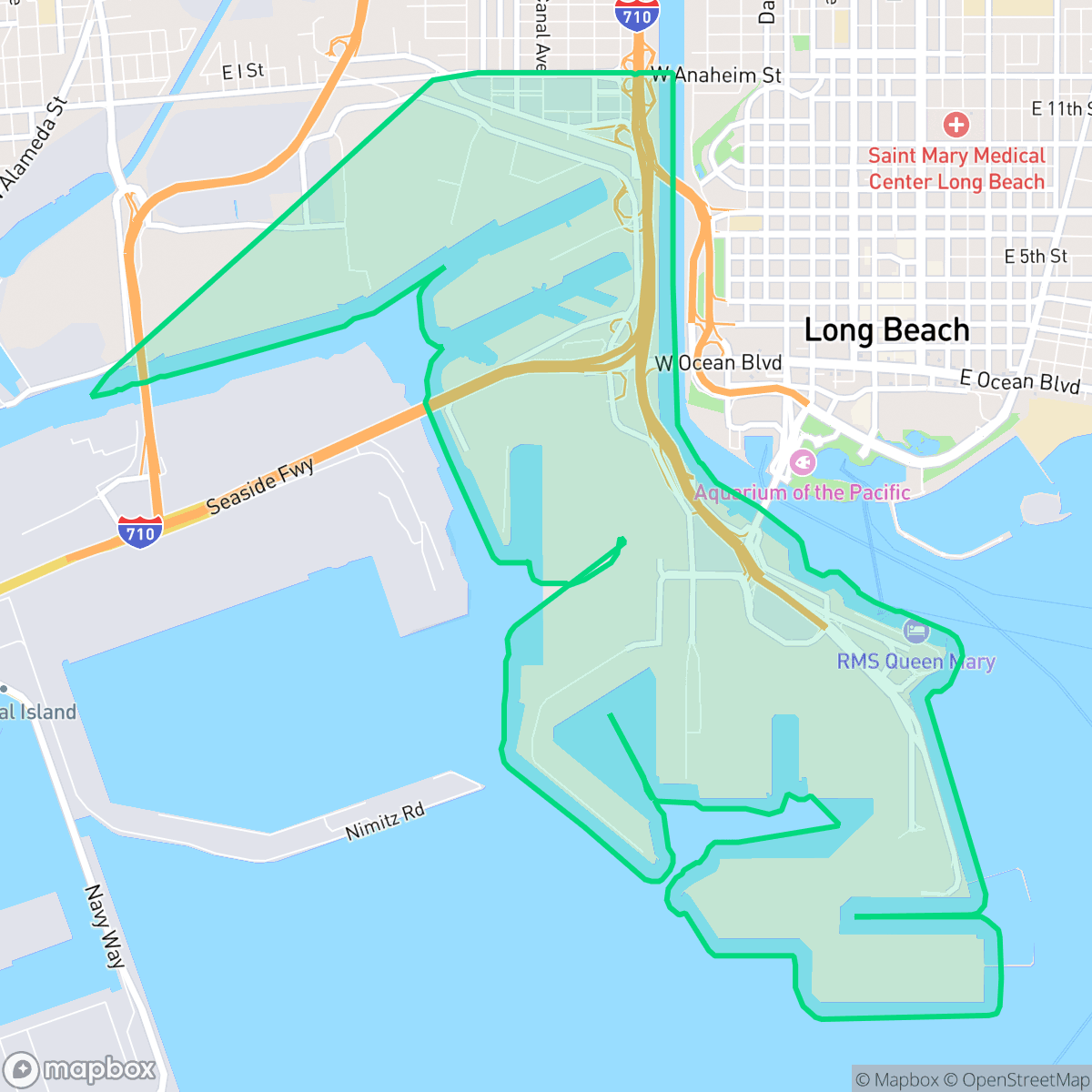
Wilmington is a heavily industrial neighborhood in Long Beach defined by its massive maritime logistics infrastructure, container terminals, and expansive storage facilities. The area is characterized by a concrete-dominant landscape with limited residential amenities and very low walkability. According to iHuus data, it serves primarily as a critical hub for global shipping and freight operations rather than a traditional residential community.
Key Highlights
About Wilmington
The neighborhood functions as a dense industrial maritime center, dominated by large-scale gray infrastructure, gantry cranes, and active rail yards. It is a critical node in regional logistics, featuring massive shipping terminals and fuel storage farms that shape the local landscape. The environment is almost entirely paved, with minimal natural vegetation or green space, creating a stark, high-density industrial atmosphere that prioritizes functionality over aesthetic appeal.
Living in this area requires significant reliance on personal vehicles, as the neighborhood features extremely low walkability and limited local services. Residents face challenges regarding privacy and environmental conditions due to the proximity of heavy freight corridors and industrial operations. It is best suited for those who prioritize proximity to major logistics hubs and maritime employment centers over traditional suburban amenities or quiet, pedestrian-friendly environments.
Neighborhood Scores Across 15 Qualities
Residential lots feature narrow separations between detached homes, resulting in more closely clustered housing than the Long Beach average. This layout provides less personal buffer between neighbors according to iHuus data.
Walking is constrained by a lack of sidewalks throughout much of the area, making it significantly less walkable than the Long Beach average. Quiet residential streets provide a calmer environment for those moving on foot, though navigation is primarily intended for vehicle use.
Standard tract housing with modest yards and simple rooflines characterizes the area. According to iHuus data, the visual variety in this neighborhood is lower than the Long Beach average.
Public park access and green verges are relatively sparse in this area. According to iHuus data, opportunities for dog walking are below the Long Beach average.
Heavy maritime infrastructure and large-scale logistics hubs dominate the landscape, resulting in a more industrial environment than the Long Beach average. Extensive paved surfaces, warehouses, and port facilities significantly limit the presence of natural greenery and open residential space.
Predominantly industrial and functional, this area lacks a concentrated social core and relies heavily on vehicles for transit. Most parts of the neighborhood feature a calm, low-energy atmosphere that is significantly less vibrant than the Long Beach average.
Frequent noise from nearby airport runways and heavy rail lines creates an environment significantly noisier than the Long Beach average. According to iHuus data, acoustic comfort is very low due to constant industrial and transit sounds.
Air quality remains generally good with infrequent periods of elevated readings, though it tends to be slightly lower than the Long Beach average according to iHuus data.
Large-scale logistics hubs, container terminals, and oil refineries are prominent features here. This level of industrial activity is significantly higher than the Long Beach average, presenting a landscape dominated by shipping infrastructure and heavy truck traffic.
Health insurance coverage in Wilmington is lower than the Long Beach average. According to iHuus data, a significant portion of the resident population lacks coverage.
Political leanings in this area are predominantly liberal, though the neighborhood leans slightly less progressive than the broader Long Beach area according to iHuus data.
Residents live alongside a balanced mix of young professionals, families, and seniors. This demographic spread is largely consistent with the broader Long Beach area according to iHuus data.
Flood risk is significantly higher here than in the rest of Long Beach, as much of the area sits within a designated floodplain. According to iHuus data, residents should expect a higher likelihood of flooding and may find flood insurance to be a standard requirement.
Address-Level Insights for Wilmington


iHuus Neighborhood Intelligence Insights
Get address-level neighborhood insights for Wilmington
- Street-level scores — see how individual blocks compare, not just neighborhood averages
- Micro-zone boundaries — identify quiet pockets, flood boundaries, and walkable clusters before you visit
- 15 dimensions in full — walkability, noise, air quality, school quality, insurance coverage, population age profile, urban/rural index, and more
- Boundary risk alerts — know if your address sits near a block boundary where scores drop, the kind of detail no listing will ever mention
- School insights — individual school ratings and insights, not just district-level data
- Compare before you commit — side-by-side data across neighborhoods, down to block precision
No credit card required
Compare with Any Neighborhood
| Dimension | Wilmington | Airport Area |
|---|---|---|
| 🚶 Walkabilityavg 9.37 | ||
| 🔊 Acoustic Comfortavg 3.04 | ||
| 🤫 Privacy Indexavg 3.63 | ||
| 🎨 Visual Appealavg 6.3 | ||
| 🐕 Dog Friendlinessavg 5.35 | ||
| 🗺️ Urban-Rural Indexavg 6 | ||
| ✨ Neighborhood Vibeavg 5.01 | ||
| 🏥 Health Insurance Coverageavg 6.4 | ||
| 🌿 Air Qualityavg 8.69 | ||
| 🏭 Industrial Proximityavg 8.14 | ||
| 🌊 Flood Safetyavg 3.75 | ||
| 🗳️ Ideological Leanavg 9.2 | ||
| 👥 Population Age Profileavg 4.81 | ||
| 🔥 Fire Safety | ||
| 🏫 School Quality |
Wilmington Rankings
School Districts Serving Wilmington
School Insights for Wilmington
Below average outcomes; significant attendance and academic challenges.
School Insights
See what's really behind every school rating near Wilmington
- Individual school ratings — each school's own score with outcome context, not just a district average
- Enrollment & class size data — student-to-teacher ratio and how it compares to the state average
- Full demographics breakdown — ethnicity and gender composition for every school in the enrollment zone
- Every school in the district — all schools within the enrollment boundary ranked by rating, not just the closest one
- Grade levels & benchmarks — elementary through high school, with below/above state-average flags
No credit card required