North La Verne Hillside, La Verne
Updated · 1,813 residents
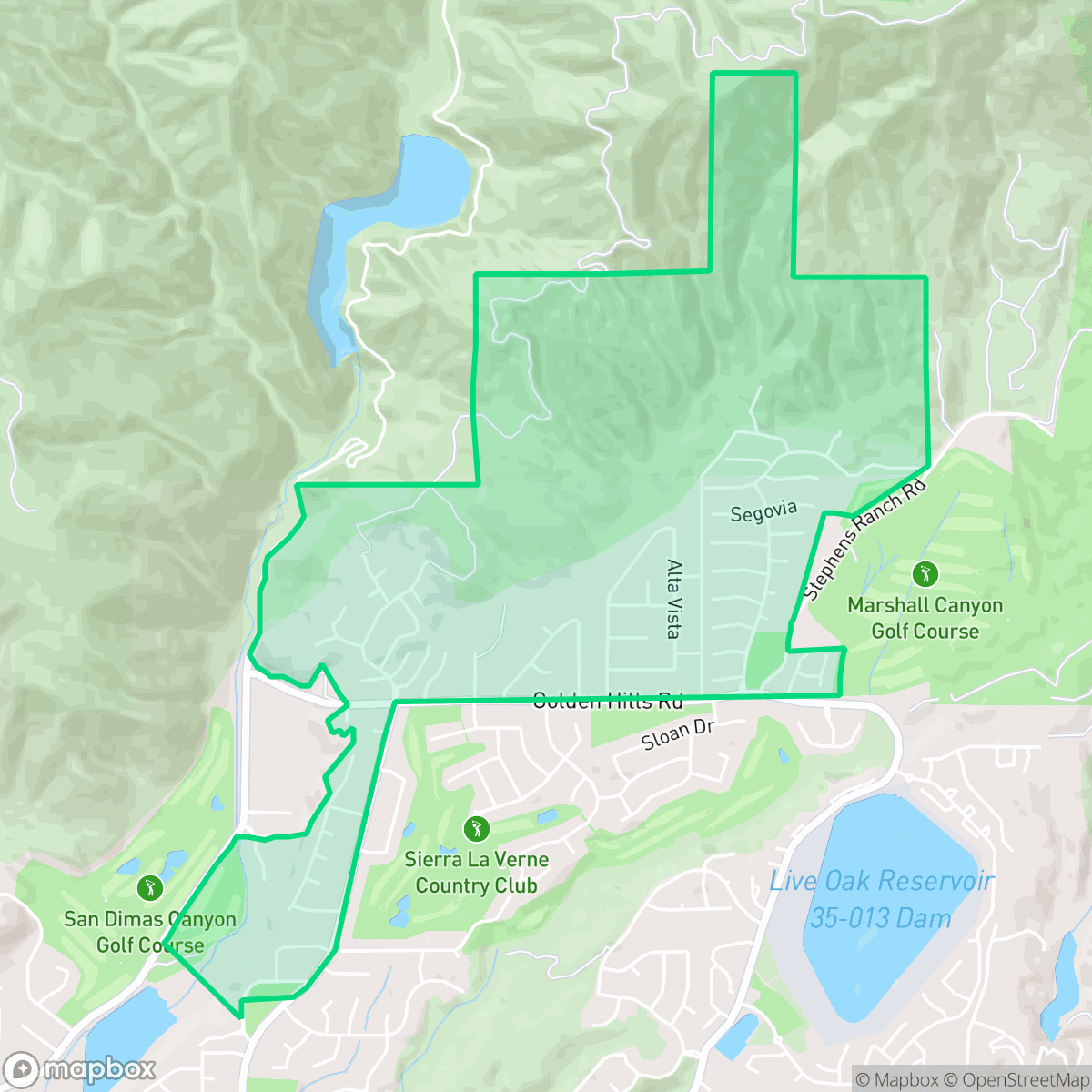
North La Verne Hillside is a tranquil, low-density community nestled in the foothills, defined by its rugged topography and scenic natural beauty. Residents benefit from exceptional air quality and a quiet residential environment, though limited local commercial amenities require travel for daily errands.
Key Highlights
About North La Verne Hillside
The name "La Verne" originated in the northern foothill area of the city, coined by the L.H. Bixby family and other early ranchers who settled there in the late 19th century. Drawn to the spring-like, green landscape, these ranchers operated independently of the southern Lordsburg townsite. In the late 20th century, as postwar housing developments began replacing the region's historic citrus groves, the city established a hillside development overlay zone to preserve the rugged natural topography and foothills of North La Verne. To protect the area's agricultural heritage, local advocates founded the La Verne Heritage Foundation in 1984. This effort established Heritage Park, which preserves a historic orange grove and the Weber House, a Queen Anne-style farmhouse built in 1883 and relocated to the site to safeguard it from modern tract home development.
The neighborhood is characterized by its expansive open spaces and quiet, low-density residential streets that prioritize privacy and natural surroundings. The area maintains a distinct rural-suburban feel, offering residents high visual appeal and a peaceful atmosphere removed from the bustle of typical urban centers. With a strong commitment to environmental preservation, the landscape remains largely defined by its topography, providing a serene backdrop for those seeking a retreat from denser city environments.
Living in this area involves certain trade-offs, particularly regarding convenience and safety. While the neighborhood boasts access to the highly-rated Bonita Unified School District, the limited local business presence results in lower walkability and a quieter social scene. Prospective residents should note that the rugged foothill location presents specific environmental risks, including significant concerns regarding flood and fire safety. This area is best suited for individuals or families who prioritize a quiet, high-quality air environment and proximity to nature over immediate access to commercial hubs.
Neighborhood Scores Across 15 Qualities
Homes feature a moderate level of spacing with some buffer between neighbors, offering slightly more seclusion than the La Verne average according to iHuus data.
Sidewalks are available on one side of the street and safe crossings are present, though walkability is slightly lower than the La Verne average.
Large residences and premium amenities create a highly aesthetic environment that is notably more visually appealing than the La Verne average. According to iHuus data, the area features spacious properties and well-maintained landscapes.
Connected green spaces and wide, traffic-free paths provide an environment much more suitable for pets than the La Verne average. According to iHuus data, the area offers significant opportunities for safe, continuous walking routes.
Frequent open land and scattered homes among woodland areas create a more semi-rural atmosphere than the typical La Verne residential setting, according to iHuus data.
Residential life here is characterized by a calm, low-density environment with significant open space. According to iHuus data, the area lacks a distinct commercial character and offers very few local businesses within walking distance, matching the city average for activity levels.
Frequent noise from nearby freeway and railroad corridors is present in this area. According to iHuus data, acoustic disturbance levels are slightly higher than the La Verne average.
Air quality remains consistently high with minimal health concerns, performing even better than the La Verne average according to iHuus data.
Industrial facilities and warehouses are entirely absent from this area, providing a residential environment that is significantly cleaner of industrial presence than the La Verne average. According to iHuus data, the landscape consists solely of residential streets and open green spaces.
Health insurance accessibility is notably higher here than in the rest of La Verne. According to iHuus data, a significant majority of the local population is covered by health insurance plans.
Political leanings in this area are notably more conservative than the La Verne average. Most residents identify with conservative values, though a small minority of opposing viewpoints exists within the community.
A balanced blend of young adults, families, and older residents defines the area. This demographic spread is slightly more varied than the average seen across La Verne, according to iHuus data.
Properties are located within a designated floodplain, which implies a higher risk of flooding compared to the La Verne average. Residents should prepare for potential requirements regarding flood insurance coverage according to iHuus data.
Wildfire hazards are exceptionally high in this area due to its hillside location; according to iHuus data, this risk level is slightly higher than the average for La Verne.
Address-Level Insights for North La Verne Hillside


iHuus Neighborhood Intelligence Insights
Get address-level neighborhood insights for North La Verne Hillside
- Street-level scores — see how individual blocks compare, not just neighborhood averages
- Micro-zone boundaries — identify quiet pockets, flood boundaries, and walkable clusters before you visit
- 15 dimensions in full — walkability, noise, air quality, school quality, insurance coverage, population age profile, urban/rural index, and more
- Boundary risk alerts — know if your address sits near a block boundary where scores drop, the kind of detail no listing will ever mention
- School insights — individual school ratings and insights, not just district-level data
- Compare before you commit — side-by-side data across neighborhoods, down to block precision
No credit card required
Compare with Any Neighborhood
| Dimension | North La Verne Hillside | Foothill Boulevard Corridor |
|---|---|---|
| 🚶 Walkabilityavg 8.19 | ||
| 🔊 Acoustic Comfortavg 2.95 | ||
| 🤫 Privacy Indexavg 5.37 | ||
| 🎨 Visual Appealavg 6.87 | ||
| 🐕 Dog Friendlinessavg 6.38 | ||
| 🗺️ Urban-Rural Indexavg 6.78 | ||
| ✨ Neighborhood Vibeavg 4.03 | ||
| 🏥 Health Insurance Coverageavg 7.95 | ||
| 🌿 Air Qualityavg 9.42 | ||
| 🏭 Industrial Proximityavg 7.94 | ||
| 🌊 Flood Safetyavg 2.78 | ||
| 🗳️ Ideological Leanavg 5.37 | ||
| 👥 Population Age Profileavg 5.28 | ||
| 🔥 Fire Safetyavg 0.34 | ||
| 🏫 School Quality |
North La Verne Hillside Rankings
School Districts Serving North La Verne Hillside
School Insights for North La Verne Hillside
Below average outcomes; significant attendance and academic challenges.
School Insights
See what's really behind every school rating near North La Verne Hillside
- Individual school ratings — each school's own score with outcome context, not just a district average
- Enrollment & class size data — student-to-teacher ratio and how it compares to the state average
- Full demographics breakdown — ethnicity and gender composition for every school in the enrollment zone
- Every school in the district — all schools within the enrollment boundary ranked by rating, not just the closest one
- Grade levels & benchmarks — elementary through high school, with below/above state-average flags
No credit card required