Whiting Woods, Glendale
Updated · 308 residents
Whiting Woods is a secluded, rural-feeling canyon enclave in the Verdugo Mountains known for its mature oak trees and significant mid-century modern architecture. Residents enjoy a high degree of privacy and acoustic comfort, though the area offers limited walkability and minimal commercial activity. According to iHuus data, this neighborhood is well-suited for those seeking a quiet, nature-oriented lifestyle away from the urban grid.
Key Highlights
About Whiting Woods
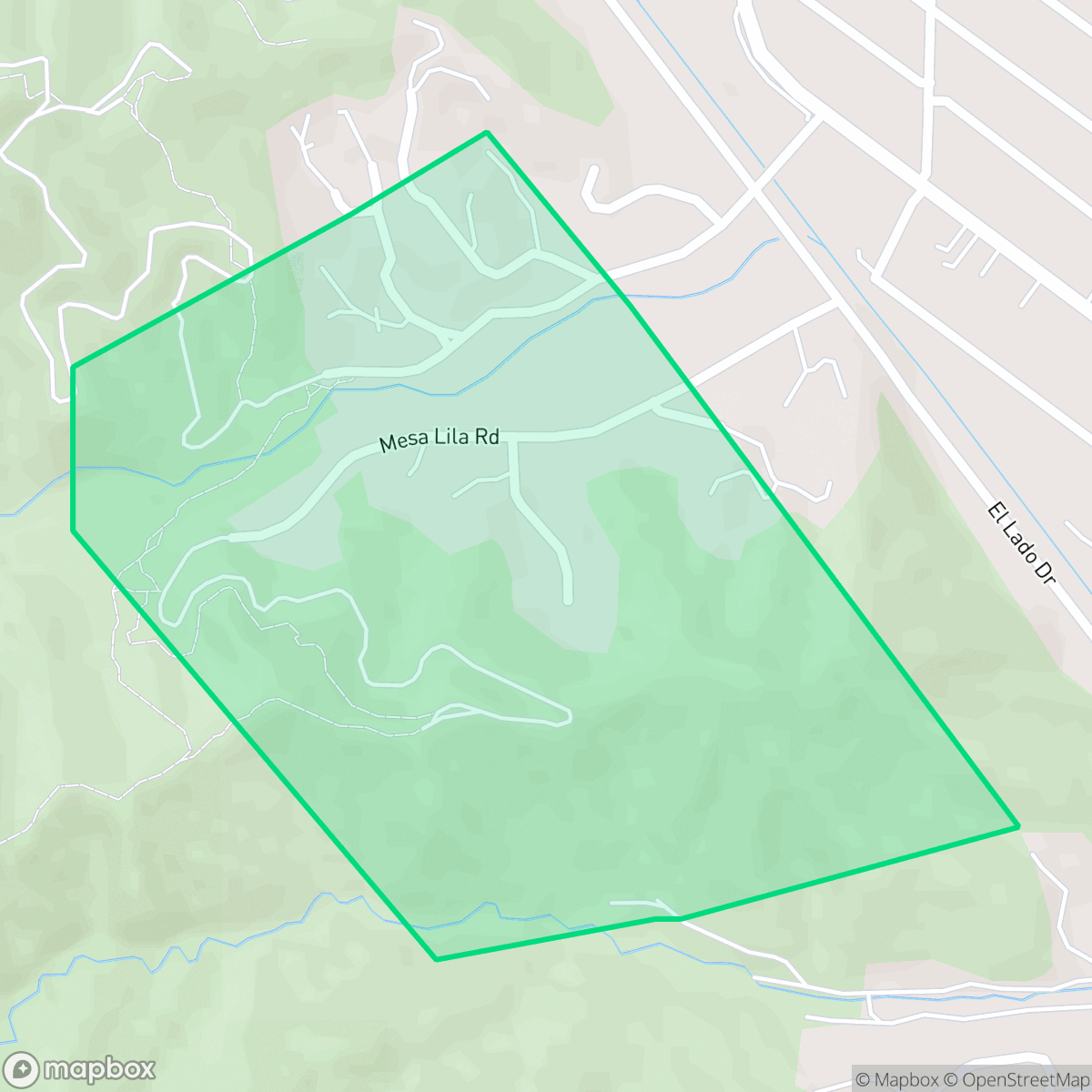
Whiting Woods, a secluded canyon neighborhood in Glendale's Verdugo Mountains, originated in 1915 when Perry Whiting, a wealthy building supply supplier, acquired the former Pasadena Mountain Club. Over the next decade, Whiting cobbled together 670 acres, building a grand adobe mansion known as Whiting Manor. In 1948, the land was subdivided for residential development, and the neighborhood was annexed by Glendale around 1950. Built out through the 1950s, the community is celebrated for its preservation of mature oak trees and exceptional mid-century architecture. Notable landmarks include John Lautner’s 1949 Schaffer House, Richard Neutra’s Taylor House, and Clair Earl’s Daily House. In 1979, the Whiting Woods Property Owners Association successfully partnered with conservationists to block a major subdivision, preserving the surrounding northern mountain slope as a wilderness park.
The area functions as a quiet residential retreat, characterized by its remote, rural atmosphere and expansive green spaces. The landscape is defined by its steep topography and natural beauty, providing a stark contrast to the denser urban environments found elsewhere in Glendale. With its exceptionally high privacy and acoustic comfort, the neighborhood serves as a sanctuary for those prioritizing silence and seclusion in a mountain setting.
Living here requires a trade-off in convenience, as the area lacks local businesses and walkability. Prospective residents should be aware of the fire risk associated with the canyon terrain, which is a significant factor in this environment. It is best suited for individuals or families who value architectural heritage and a connection to the natural landscape over proximity to retail or public transit hubs.
Neighborhood Scores Across 15 Qualities
Residential spacing varies from shared walls in apartment buildings to significant tree buffers and setbacks near hillside estates. According to iHuus data, this level of separation is higher than the Glendale average.
Wide sidewalks and ample crossings make navigating the neighborhood on foot easy; according to iHuus data, walkability here is notably higher than the Glendale average.
Large residences, private pools, and well-maintained landscapes create a highly polished environment that sits well above the Glendale average. According to iHuus data, the area is characterized by spacious properties and frequent upscale amenities.
Expansive hillside green belts and wide, vegetated sidewalk verges provide ample space for pet walking. This area offers significantly more accessible space for dogs compared to the Glendale average, according to iHuus data.
Large natural hillside areas and frequent open land provide a more semi-rural atmosphere than most of Glendale. According to iHuus data, the landscape features a mix of single-family homes scattered among woodland and dense suburban pockets.
Predominantly rural and residential, this area lacks the commercial density and activity levels found elsewhere in Glendale. Most of the neighborhood consists of vast, open landscapes with very few local businesses or nearby amenities available for easy access.
Frequent noise from nearby freeways and railroad tracks characterizes this area. According to iHuus data, acoustic comfort is notably lower than the Glendale average.
Air quality in this area is consistently good with infrequent periods of poor air. According to iHuus data, these levels are consistent with the average found across Glendale.
Heavy industry and hazardous warehouses are entirely absent from this area. According to iHuus data, this neighborhood offers a more residential landscape than the Glendale average.
Health insurance enrollment is very high among residents, surpassing the average for Glendale. According to iHuus data, nearly all inhabitants have access to medical coverage.
Political leanings in this area tend toward the liberal side, though the community is slightly less progressive than the Glendale city average according to iHuus data.
Residents live alongside a balanced variety of young professionals, families, and seniors. This demographic distribution is slightly more varied than the average seen across Glendale.
Flood risk in this area is significantly lower than the Glendale average, though some residual risk remains due to its location within a 500-year floodplain according to iHuus data.
Wildfire danger is exceptionally high in this area, posing a much more significant threat than typical parts of Glendale. According to iHuus data, residents should prioritize maximum fire protection measures due to the extreme hazard level.
Address-Level Insights for Whiting Woods


iHuus Neighborhood Intelligence Insights
Get address-level neighborhood insights for Whiting Woods
- Street-level scores — see how individual blocks compare, not just neighborhood averages
- Micro-zone boundaries — identify quiet pockets, flood boundaries, and walkable clusters before you visit
- 15 dimensions in full — walkability, noise, air quality, school quality, insurance coverage, population age profile, urban/rural index, and more
- Boundary risk alerts — know if your address sits near a block boundary where scores drop, the kind of detail no listing will ever mention
- School insights — individual school ratings and insights, not just district-level data
- Compare before you commit — side-by-side data across neighborhoods, down to block precision
No credit card required
Compare with Any Neighborhood
| Dimension | Whiting Woods | Adams Hill |
|---|---|---|
| 🚶 Walkabilityavg 8.69 | ||
| 🔊 Acoustic Comfortavg 3.71 | ||
| 🤫 Privacy Indexavg 4.65 | ||
| 🎨 Visual Appealavg 6.99 | ||
| 🐕 Dog Friendlinessavg 5.3 | ||
| 🗺️ Urban-Rural Indexavg 6.32 | ||
| ✨ Neighborhood Vibeavg 5.1 | ||
| 🏥 Health Insurance Coverageavg 7.89 | ||
| 🌿 Air Qualityavg 8.01 | ||
| 🏭 Industrial Proximityavg 8.92 | ||
| 🌊 Flood Safetyavg 2.96 | ||
| 🗳️ Ideological Leanavg 8.52 | ||
| 👥 Population Age Profileavg 5.28 | ||
| 🔥 Fire Safetyavg 0.5 | ||
| 🏫 School Quality |
Whiting Woods Rankings
School Districts Serving Whiting Woods
School Insights for Whiting Woods
Below average outcomes; significant attendance and academic challenges.
School Insights
See what's really behind every school rating near Whiting Woods
- Individual school ratings — each school's own score with outcome context, not just a district average
- Enrollment & class size data — student-to-teacher ratio and how it compares to the state average
- Full demographics breakdown — ethnicity and gender composition for every school in the enrollment zone
- Every school in the district — all schools within the enrollment boundary ranked by rating, not just the closest one
- Grade levels & benchmarks — elementary through high school, with below/above state-average flags
No credit card required