Sparr Heights, Glendale
Updated · 1,823 residents
Sparr Heights is an exceptionally walkable residential enclave in northern Glendale that blends historic architectural charm with convenient access to local dining and community parks. According to iHuus data, the area offers a high quality of life, though residents should be aware of elevated road noise levels and specific fire safety considerations.
Key Highlights
About Sparr Heights
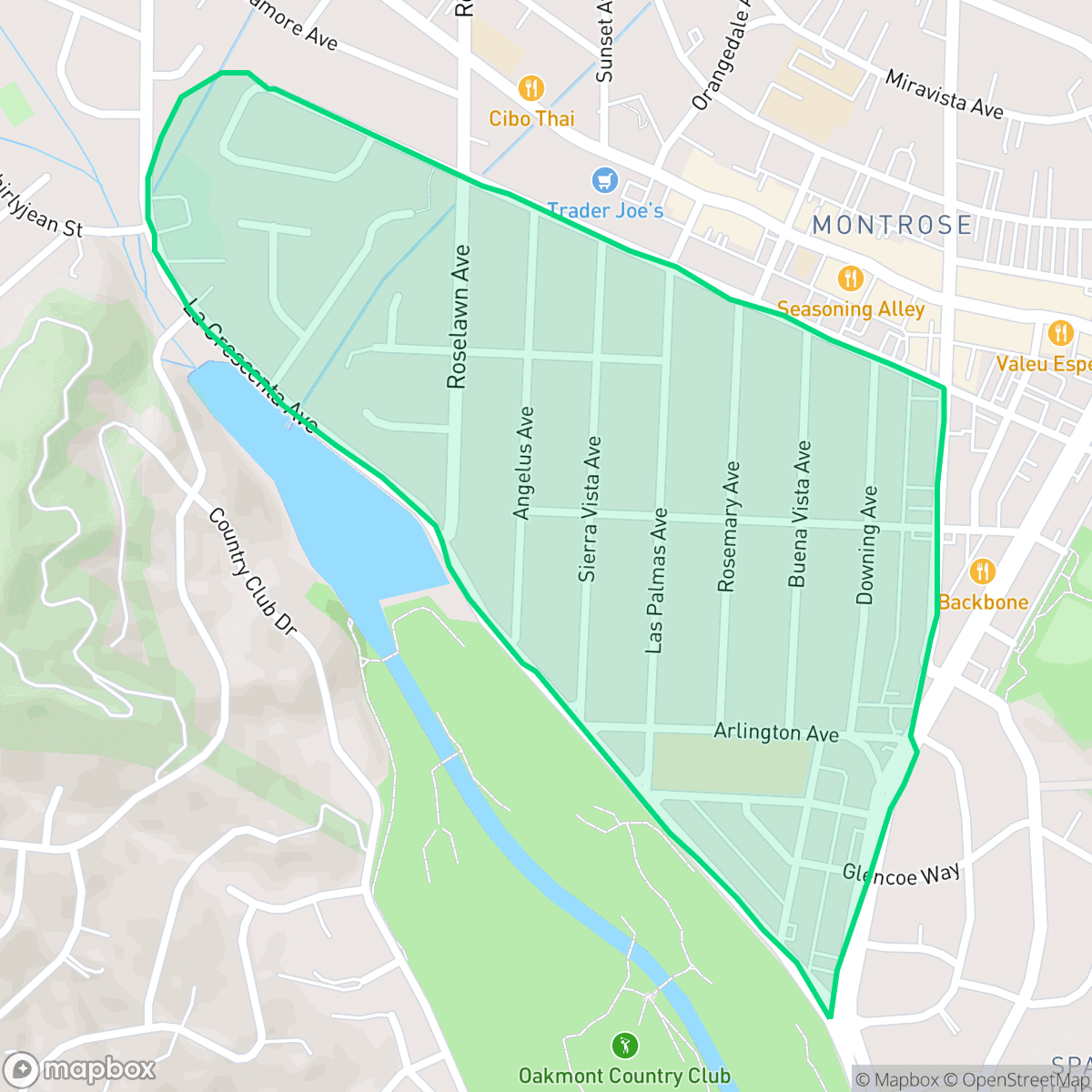
Located in northern Glendale, California, Sparr Heights originated in 1900 when developer William S. Sparr purchased local orchard and vineyard land. In the 1920s, Sparr cleared his agricultural holdings to subdivide the area into residential tracts. Developed primarily during the 1920s and 1930s, the neighborhood retains its historic character, featuring a cohesive mix of Spanish Colonial Revival and Tudor Revival architecture. A central local landmark is the Sparr Heights Community Center; donated to the city by Sparr in 1922, the building later served as a terminus for the Glendale-and-Montrose streetcar system. Today, this quiet residential enclave maintains a distinct small-town identity, bolstered by its close proximity to the adjacent, historic Montrose Shopping Park.
The neighborhood is characterized by its high walkability and proximity to the Montrose Shopping Park, which serves as a primary hub for local commerce and community activity. With a design that prioritizes pedestrian movement, the area supports a lively atmosphere while maintaining a cohesive aesthetic through its well-preserved residential streets. Residents benefit from strong health insurance coverage and access to high-performing schools like John C. Fremont Elementary, which is part of the Glendale Unified School District.
While the area is visually appealing and free from industrial hazards, it does present specific livability trade-offs. The acoustic environment is notably affected by road traffic, resulting in a higher noise profile compared to other parts of the city. Additionally, while the neighborhood is well-protected against flooding, it faces a significant fire safety risk that prospective residents should factor into their decision-making process. It is an ideal location for those who prioritize a walkable lifestyle and community-focused living over absolute acoustic seclusion.
Neighborhood Scores Across 15 Qualities
Residential spacing offers a balanced degree of separation between neighbors, providing more privacy than the typical Glendale average. Houses are generally set back with modest yard buffers between adjacent properties.
Continuous sidewalk networks along residential streets and main commercial arterials make much of the area accessible on foot. This level of connectivity is roughly comparable to the Glendale average according to iHuus data.
Large, well-maintained homes with private pools and expansive driveways characterize this area. According to iHuus data, the visual landscape is notably more polished than the Glendale average.
Private backyards are the primary feature for pets, as public park access is limited to a single small sports field. This level of accessibility for dogs is slightly above the Glendale average, according to iHuus data.
Frequent open land and scattered homes provide a more semi-rural atmosphere than the Glendale average. According to iHuus data, the area features a mix of single-family homes and woodland elements.
Local dining options and community parks provide a noticeable level of activity, making this area significantly more lively than the Glendale average. While social hubs like nearby eateries and Montrose Community Park are accessible, the low-density suburban layout typically requires a vehicle for easy navigation.
Local traffic from nearby busy streets creates a continuous background noise level that is slightly higher than the Glendale average.
Air quality remains consistently good with infrequent instances of poor air. This level of cleanliness is typical for the Glendale area, according to iHuus data.
Industrial activity and heavy warehouse facilities are entirely absent from this area. According to iHuus data, the neighborhood lacks the industrial presence found in other parts of Glendale.
Health insurance access among Sparr Heights residents is notably higher than the Glendale average, according to iHuus data.
Residents will find a predominantly liberal political environment, though it is slightly less progressive than the broader Glendale area according to iHuus data.
Residents will find a diverse demographic spread across different life stages, representing a slightly more balanced distribution of ages than the Glendale average. This mix includes a combination of young adults, families, and older residents, according to iHuus data.
Residual flood risk exists within this area, though safety levels are significantly higher than the Glendale average. According to iHuus data, the neighborhood sits within a lower-risk floodplain zone.
Significant fire hazards exist within this area, which presents a much higher risk level than the Glendale average. Residents should be prepared for enhanced mitigation needs and heightened safety precautions according to iHuus data.
Address-Level Insights for Sparr Heights


iHuus Neighborhood Intelligence Insights
Get address-level neighborhood insights for Sparr Heights
- Street-level scores — see how individual blocks compare, not just neighborhood averages
- Micro-zone boundaries — identify quiet pockets, flood boundaries, and walkable clusters before you visit
- 15 dimensions in full — walkability, noise, air quality, school quality, insurance coverage, population age profile, urban/rural index, and more
- Boundary risk alerts — know if your address sits near a block boundary where scores drop, the kind of detail no listing will ever mention
- School insights — individual school ratings and insights, not just district-level data
- Compare before you commit — side-by-side data across neighborhoods, down to block precision
No credit card required
Compare with Any Neighborhood
| Dimension | Sparr Heights | Adams Hill |
|---|---|---|
| 🚶 Walkabilityavg 8.69 | ||
| 🔊 Acoustic Comfortavg 3.71 | ||
| 🤫 Privacy Indexavg 4.65 | ||
| 🎨 Visual Appealavg 6.99 | ||
| 🐕 Dog Friendlinessavg 5.3 | ||
| 🗺️ Urban-Rural Indexavg 6.32 | ||
| ✨ Neighborhood Vibeavg 5.1 | ||
| 🏥 Health Insurance Coverageavg 7.89 | ||
| 🌿 Air Qualityavg 8.01 | ||
| 🏭 Industrial Proximityavg 8.92 | ||
| 🌊 Flood Safetyavg 2.96 | ||
| 🗳️ Ideological Leanavg 8.52 | ||
| 👥 Population Age Profileavg 5.28 | ||
| 🔥 Fire Safetyavg 0.5 | ||
| 🏫 School Quality |
Sparr Heights Rankings
School Districts Serving Sparr Heights
School Insights for Sparr Heights
Below average outcomes; significant attendance and academic challenges.
School Insights
See what's really behind every school rating near Sparr Heights
- Individual school ratings — each school's own score with outcome context, not just a district average
- Enrollment & class size data — student-to-teacher ratio and how it compares to the state average
- Full demographics breakdown — ethnicity and gender composition for every school in the enrollment zone
- Every school in the district — all schools within the enrollment boundary ranked by rating, not just the closest one
- Grade levels & benchmarks — elementary through high school, with below/above state-average flags
No credit card required