Scholl Canyon, Glendale
Updated · 612 residents
Scholl Canyon is a secluded, rural-leaning enclave in the San Rafael Hills characterized by expansive natural terrain and a quiet, low-density atmosphere. While the area offers high privacy and excellent air quality, residents experience limited walkability and minimal local commercial activity.
Key Highlights
About Scholl Canyon
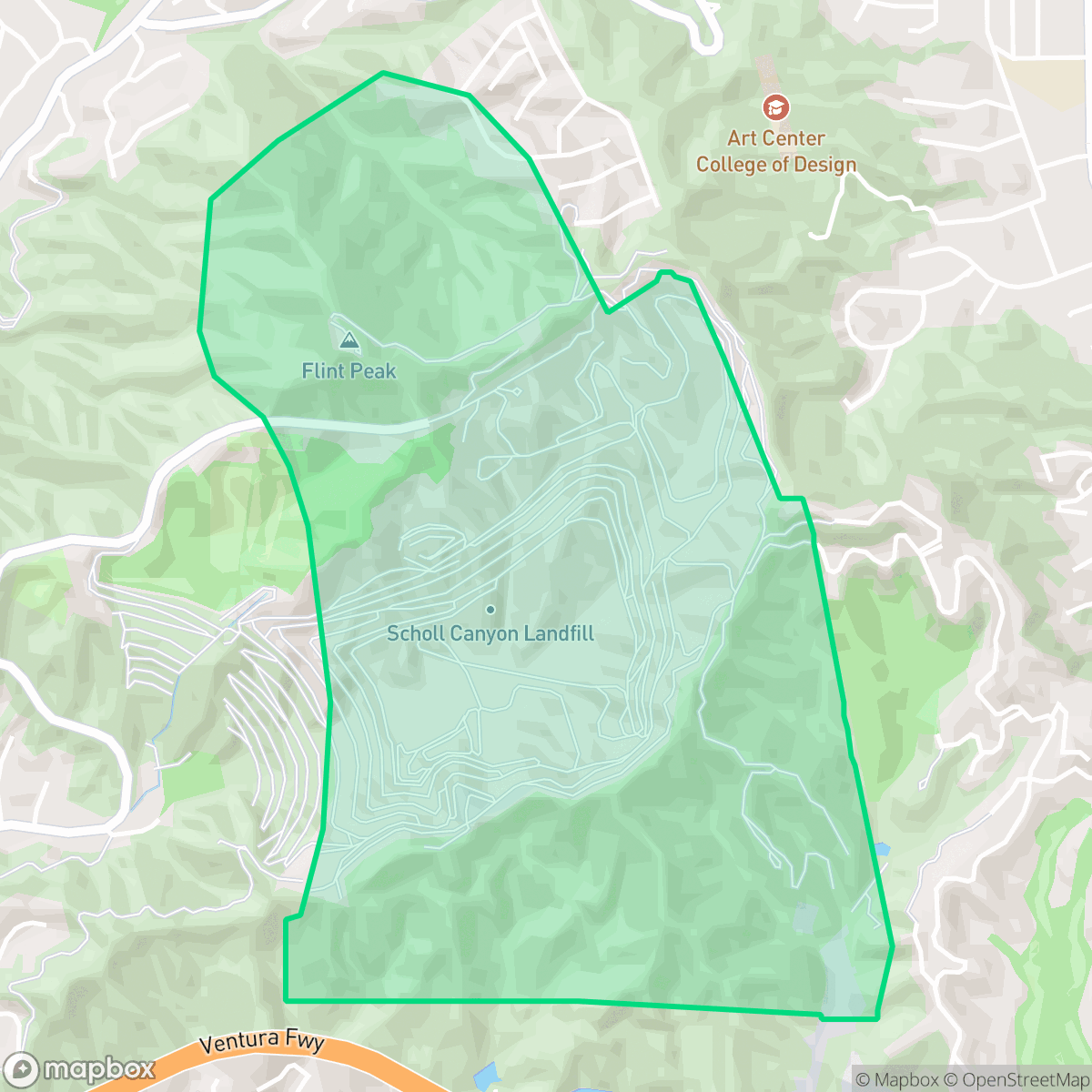
Before its 1920s subdivision into residential tracts, Scholl Canyon in Glendale’s San Rafael Hills was a secluded, oak-lined canyon dominated by fruit orchards and ranching. The area underwent a dramatic transformation in 1961 when the City of Glendale opened the Scholl Canyon Landfill, which eventually grew to cover hundreds of acres. In 1993, a closed portion of the landfill was reclaimed and developed into the Scholl Canyon Golf and Tennis Club, providing recreational space atop the reclaimed land. Today, the surrounding residential neighborhood, closely tied to the adjacent Glenoaks Canyon, balances its quiet, hillside character with the active landfill, which serves as a critical regional waste facility and a source of methane-to-energy power generation for the city.
This neighborhood functions as a remote residential pocket defined by its rugged, hilly topography and significant open space. With a very low population density, the area prioritizes privacy and natural beauty over urban convenience. Residents enjoy a setting that feels detached from the traditional grid of Glendale, though the presence of large-scale earthworks and industrial operations near the landfill remains a defining feature of the local landscape. According to iHuus data, the area maintains high marks for visual appeal and provides a serene environment for those seeking distance from the city center. Prospective residents should consider the trade-offs of this hillside location, as the area is not designed for pedestrian travel and lacks immediate access to retail or dining. The neighborhood is particularly well-suited for dog owners and those who value a quiet, rural-like aesthetic, though the significant risk of wildfire is a critical factor for homeowners to monitor. While the local Glendale Unified School District provides strong educational options, the daily experience here is one of isolation and industrial proximity rather than neighborhood-scale walkability or social vibrancy.
Neighborhood Scores Across 15 Qualities
Large lot sizes and significant separation between properties provide a higher degree of seclusion than the Glendale average, according to iHuus data.
Sidewalk availability is inconsistent across the area, with many streets featuring pavement on only one side. This makes walking less convenient than in most parts of Glendale, according to iHuus data.
Custom architecture and significant privacy buffers create a highly aesthetic environment that is notably more visually pleasing than the Glendale average. Large estates and manicured landscapes define the area's appearance according to iHuus data.
Abundant large parks and open trails provide significant space for pet owners. This level of accessibility to outdoor recreation is much higher than the Glendale average, according to iHuus data.
Expansive natural hillsides and undeveloped canyon terrain create a much more open, sparsely populated environment than the typical Glendale neighborhood. Residents can expect vast green spaces and low building density according to iHuus data.
Minimal commercial activity and vast open spaces create a very low-activity environment that is significantly quieter than the Glendale average. Residents will find very few local destinations or social hubs within the immediate area, making it a highly car-dependent setting according to iHuus data.
Steady traffic sounds from nearby busy streets are present, though acoustic levels remain slightly higher than the Glendale average according to iHuus data.
Air quality is consistently high with minimal health concerns for residents. According to iHuus data, levels in Scholl Canyon are notably cleaner than the Glendale average.
Industrial activity is virtually nonexistent here, as the area is comprised of quiet streets and open green spaces. According to iHuus data, this lack of warehouses or heavy manufacturing makes the neighborhood comparable to the Glendale average for industrial proximity.
Health insurance access is very high among residents, significantly exceeding the Glendale average according to iHuus data.
Political leanings in this area are predominantly liberal, though the neighborhood aligns closely with the broader ideological trends seen across Glendale.
A diverse range of age groups resides here, providing a slight increase in demographic variety compared to the Glendale average. According to iHuus data, the area maintains a stable mix of young professionals, families, and seniors.
Residual flood risk exists due to the area's location within a 500-year floodplain, though this level of risk is notably higher than the Glendale average according to iHuus data.
Extreme fire hazards are present in this area, which is slightly more severe than the typical risk found across Glendale. Residents should prioritize maximum protection measures and remain vigilant regarding local wildfire safety protocols.
Address-Level Insights for Scholl Canyon


iHuus Neighborhood Intelligence Insights
Get address-level neighborhood insights for Scholl Canyon
- Street-level scores — see how individual blocks compare, not just neighborhood averages
- Micro-zone boundaries — identify quiet pockets, flood boundaries, and walkable clusters before you visit
- 15 dimensions in full — walkability, noise, air quality, school quality, insurance coverage, population age profile, urban/rural index, and more
- Boundary risk alerts — know if your address sits near a block boundary where scores drop, the kind of detail no listing will ever mention
- School insights — individual school ratings and insights, not just district-level data
- Compare before you commit — side-by-side data across neighborhoods, down to block precision
No credit card required
Compare with Any Neighborhood
| Dimension | Scholl Canyon | Adams Hill |
|---|---|---|
| 🚶 Walkabilityavg 8.69 | ||
| 🔊 Acoustic Comfortavg 3.71 | ||
| 🤫 Privacy Indexavg 4.65 | ||
| 🎨 Visual Appealavg 6.99 | ||
| 🐕 Dog Friendlinessavg 5.3 | ||
| 🗺️ Urban-Rural Indexavg 6.32 | ||
| ✨ Neighborhood Vibeavg 5.1 | ||
| 🏥 Health Insurance Coverageavg 7.89 | ||
| 🌿 Air Qualityavg 8.01 | ||
| 🏭 Industrial Proximityavg 8.92 | ||
| 🌊 Flood Safetyavg 2.96 | ||
| 🗳️ Ideological Leanavg 8.52 | ||
| 👥 Population Age Profileavg 5.28 | ||
| 🔥 Fire Safetyavg 0.5 | ||
| 🏫 School Quality |
Scholl Canyon Rankings
School Districts Serving Scholl Canyon
School Insights for Scholl Canyon
Below average outcomes; significant attendance and academic challenges.
School Insights
See what's really behind every school rating near Scholl Canyon
- Individual school ratings — each school's own score with outcome context, not just a district average
- Enrollment & class size data — student-to-teacher ratio and how it compares to the state average
- Full demographics breakdown — ethnicity and gender composition for every school in the enrollment zone
- Every school in the district — all schools within the enrollment boundary ranked by rating, not just the closest one
- Grade levels & benchmarks — elementary through high school, with below/above state-average flags
No credit card required