Riverside Rancho, Glendale
Updated · 3,131 residents
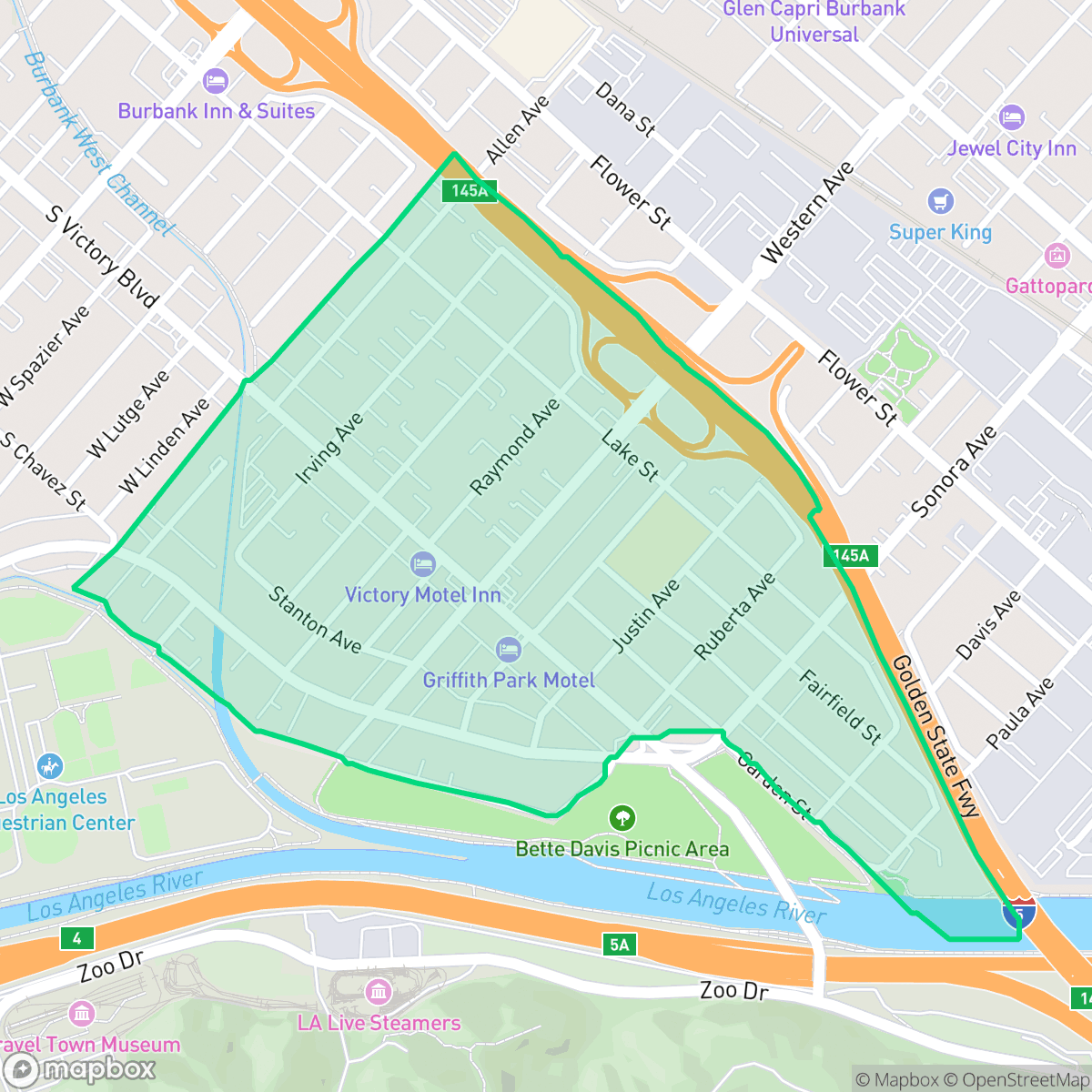
Riverside Rancho is a unique equestrian enclave in Glendale defined by its ranch-style architecture and direct access to Griffith Park trail systems. The neighborhood features a dense urban-suburban mix characterized by significant road traffic noise and proximity to industrial zones.
Key Highlights
About Riverside Rancho
Located in the Glendale Narrows along the Los Angeles River, Glendale’s Riverside Rancho is a historic, urban equestrian neighborhood with housing stock largely built between the 1940s and 1960s. Along with the neighboring Burbank Rancho and Atwater Village, it forms a rare cluster of horse-keeping communities in the Los Angeles area. Characterized by ranch-style homes, backyard stables, and pipe corrals, the neighborhood maintains a distinct "country living in the city" identity. A central historic landmark and community hub is the Silver Spur Stables, built in the 1930s. Residents and riders benefit from direct access to Griffith Park’s extensive trail system via a dedicated community equestrian bridge over the river, preserving a long-standing equestrian lifestyle amidst modern urbanization.
The neighborhood functions as a distinct residential pocket where traditional equestrian lifestyle elements meet modern urban density. While the presence of backyard stables and pipe corrals preserves a rural atmosphere, the area is physically constrained by its location near major highways and industrial facilities. Residents have access to the Glendale Unified School District, with Benjamin Franklin Elementary serving as a primary local educational anchor. The built environment consists of tightly spaced homes, which limits privacy compared to more suburban settings, yet the community maintains a stable social profile and high ideological cohesion. According to iHuus data, the area offers excellent flood safety, though it faces challenges regarding fire safety and acoustic comfort due to ambient road traffic. This location is best suited for individuals who prioritize equestrian accessibility and proximity to local schools over absolute quiet. Prospective residents should weigh the benefits of the established trail network against the realities of living near active industrial corridors and high-traffic thoroughfares.
Neighborhood Scores Across 15 Qualities
Residential spacing is comparable to the Glendale average, offering a mix of standard suburban yards and areas where homes are more closely packed. Some residents may experience shared walls or narrow gaps between structures depending on their specific location within the neighborhood.
Sidewalks and crosswalks are available along many streets, though some areas are impacted by high traffic arterials and industrial zones. This level of pedestrian accessibility is slightly below the Glendale average according to iHuus data.
Standard tract housing and small yards characterize the landscape, which offers less visual variety than the Glendale average. Some pockets feature well-manicured properties and private pools, though other areas consist of dense residential units and commercial warehouses.
Limited access to public parks and narrow sidewalk verges make this area less ideal for pet owners compared to the Glendale average. Most residents rely on private, fenced backyards as there is minimal visible green space for off-leash activity.
Residential blocks and green spaces are distributed alongside larger commercial and industrial structures. This area presents a slightly less urban density than the Glendale average, according to iHuus data.
Low levels of activity and a reliance on vehicle travel characterize this area. According to iHuus data, the landscape is primarily composed of industrial units and suburban blocks that are significantly less lively than the Glendale average.
Frequent noise from nearby railroad tracks and heavy freeway traffic impacts the area. According to iHuus data, acoustic comfort in this neighborhood is significantly lower than the Glendale average.
Air quality is mostly clean with only rare instances of elevated readings, though it tends to be slightly lower than the Glendale average according to iHuus data.
Industrial activity is significantly lower here than in most parts of Glendale. While large warehouses and freight corridors are notably absent, residents should be aware of a nearby EPA Superfund site that may impact groundwater quality according to iHuus data.
Health insurance accessibility in this area is lower than the Glendale average, according to iHuus data. Residents may find fewer options for coverage compared to other parts of the city.
Voting patterns and census indicators show a predominantly liberal leaning that is more pronounced than the Glendale city average, according to iHuus data.
Residents live alongside a balanced mix of young adults, families, and older populations. This demographic distribution is roughly in line with the average seen across Glendale.
Flood risk in this area is higher than the Glendale average, though official assessments from FEMA remain incomplete for this specific location. Residents should remain aware of potential uncertainty regarding localized drainage during heavy rain events.
Fire safety risks in this area are significantly higher than the Glendale average. Residents should be aware of heightened wildfire vulnerability according to iHuus data.
Address-Level Insights for Riverside Rancho


iHuus Neighborhood Intelligence Insights
Get address-level neighborhood insights for Riverside Rancho
- Street-level scores — see how individual blocks compare, not just neighborhood averages
- Micro-zone boundaries — identify quiet pockets, flood boundaries, and walkable clusters before you visit
- 15 dimensions in full — walkability, noise, air quality, school quality, insurance coverage, population age profile, urban/rural index, and more
- Boundary risk alerts — know if your address sits near a block boundary where scores drop, the kind of detail no listing will ever mention
- School insights — individual school ratings and insights, not just district-level data
- Compare before you commit — side-by-side data across neighborhoods, down to block precision
No credit card required
Compare with Any Neighborhood
| Dimension | Riverside Rancho | Adams Hill |
|---|---|---|
| 🚶 Walkabilityavg 8.69 | ||
| 🔊 Acoustic Comfortavg 3.71 | ||
| 🤫 Privacy Indexavg 4.65 | ||
| 🎨 Visual Appealavg 6.99 | ||
| 🐕 Dog Friendlinessavg 5.3 | ||
| 🗺️ Urban-Rural Indexavg 6.32 | ||
| ✨ Neighborhood Vibeavg 5.1 | ||
| 🏥 Health Insurance Coverageavg 7.89 | ||
| 🌿 Air Qualityavg 8.01 | ||
| 🏭 Industrial Proximityavg 8.92 | ||
| 🌊 Flood Safetyavg 2.96 | ||
| 🗳️ Ideological Leanavg 8.52 | ||
| 👥 Population Age Profileavg 5.28 | ||
| 🔥 Fire Safetyavg 0.5 | ||
| 🏫 School Quality |
Riverside Rancho Rankings
School Districts Serving Riverside Rancho
School Insights for Riverside Rancho
Below average outcomes; significant attendance and academic challenges.
School Insights
See what's really behind every school rating near Riverside Rancho
- Individual school ratings — each school's own score with outcome context, not just a district average
- Enrollment & class size data — student-to-teacher ratio and how it compares to the state average
- Full demographics breakdown — ethnicity and gender composition for every school in the enrollment zone
- Every school in the district — all schools within the enrollment boundary ranked by rating, not just the closest one
- Grade levels & benchmarks — elementary through high school, with below/above state-average flags
No credit card required