Pelanconi, Glendale
Updated · 1,806 residents
Pelanconi is a quiet, highly walkable residential community in Glendale characterized by its affluent, well-manicured properties and suburban layout. Residents benefit from excellent air quality and high health insurance coverage, though the area remains a peaceful, low-key environment with limited local commercial activity.
Key Highlights
About Pelanconi
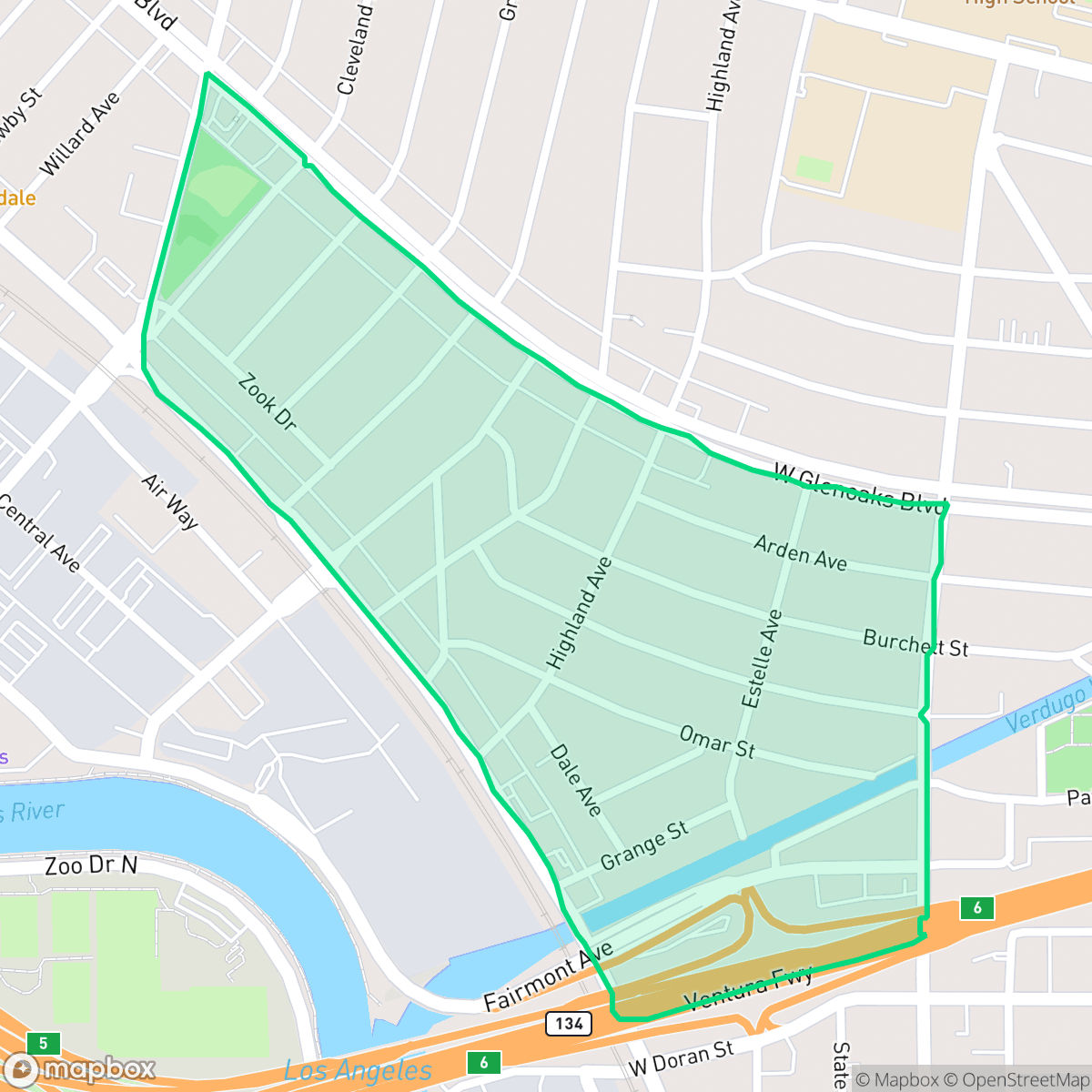
The Pelanconi neighborhood in Glendale, California, originated as a vast agricultural estate and vineyard owned by Italian immigrant Antonio Pelanconi and his wife, Isabel, in the late 19th century. For decades, these vineyards supplied grapes for the historic Pelanconi winery on Olvera Street in Los Angeles. Following the settlement of the family estate after 1917, developer Walter B. Davis subdivided the land in the mid-1920s to create an ideal residential community. Davis designed the neighborhood with wide, curved streets and spacious parkways, cutting Highland Avenue through the former vineyards. The neighborhood's viticultural heritage is preserved in local street names like Pelanconi Avenue and Tononi Drive. At its heart lies the triangular Pelanconi Park, established in the late 1920s and later filled with community-donated flora and California holly.
This neighborhood functions as a dense suburban grid defined by low-rise single-family homes and a high degree of walkability. Residents enjoy continuous sidewalks on both sides of every street, making the area easy to navigate on foot despite a lack of immediate commercial destinations. The visual appeal is notable, with many properties featuring private swimming pools and maintained landscaping that contribute to an established, affluent aesthetic. The area maintains a tranquil atmosphere, with acoustic comfort levels that are generally favorable compared to the city average.
For those considering a move to the area, the neighborhood is best suited for individuals or families seeking a stable, quiet environment supported by the Glendale Unified School District. While the community offers high health insurance coverage and clean air, potential residents should be aware of the limited dog-friendly infrastructure and the specific environmental risks associated with local flood and fire safety profiles. The lack of nearby industry ensures a residential focus, though the presence of a nearby EPA Superfund site is a factor to consider regarding groundwater quality.
Neighborhood Scores Across 15 Qualities
Residential spacing varies between closely situated multi-unit complexes and single-family homes with modest side yards. According to iHuus data, the level of privacy is roughly in line with the Glendale average.
Continuous sidewalks and well-defined pedestrian crossings make most errands easy to complete on foot. This neighborhood offers a slightly more walkable environment than the Glendale average, although major freeway infrastructure can interrupt the connectivity of the network.
Well-manicured properties and large homes with private pools characterize much of the area, though overall visual appeal is slightly below the Glendale average according to iHuus data.
Walking routes for dogs are somewhat restricted due to narrow sidewalk verges and a lack of accessible public parks. Most greenery in the area is contained within private yards, making the neighborhood slightly less dog friendly than the Glendale average.
Residential streets and green spaces exist in roughly equal measure, though the area feels slightly more urban than the Glendale average. According to iHuus data, the landscape consists of a mix of low-rise housing, light industrial zones, and significant freeway infrastructure.
Local activity remains relatively low compared to the Glendale average, as the area is characterized by a calm, suburban rhythm. Most residents will find a steady but subdued environment consisting of scattered essential services and quiet residential blocks.
Steady traffic sounds from a nearby busy street characterize the area, though acoustic levels remain slightly higher than the Glendale average.
Air quality in this area remains consistently good with rare instances of elevated readings. According to iHuus data, these conditions are typical for the Glendale area.
Light industrial and warehouse structures exist alongside residential zones, resulting in a higher concentration of industrial activity than the Glendale average. According to iHuus data, the area is also impacted by the proximity of an EPA Superfund site and noise from nearby freight traffic and concrete wash channels.
Health insurance access is widespread among residents, appearing slightly above the Glendale average according to iHuus data.
Political leanings in this area align closely with the broader Glendale average, featuring a liberal majority with a small opposing presence.
A balanced demographic of young professionals, families, and seniors characterizes the area. According to iHuus data, this age distribution is slightly more varied than the average found across Glendale.
Property within the 100-year floodplain is subject to elevated flood risks; according to iHuus data, this risk is slightly higher than the Glendale average and may necessitate flood insurance.
Extreme fire hazards exist throughout this area, presenting a significantly higher risk level than the Glendale average according to iHuus data.
Address-Level Insights for Pelanconi


iHuus Neighborhood Intelligence Insights
Get address-level neighborhood insights for Pelanconi
- Street-level scores — see how individual blocks compare, not just neighborhood averages
- Micro-zone boundaries — identify quiet pockets, flood boundaries, and walkable clusters before you visit
- 15 dimensions in full — walkability, noise, air quality, school quality, insurance coverage, population age profile, urban/rural index, and more
- Boundary risk alerts — know if your address sits near a block boundary where scores drop, the kind of detail no listing will ever mention
- School insights — individual school ratings and insights, not just district-level data
- Compare before you commit — side-by-side data across neighborhoods, down to block precision
No credit card required
Compare with Any Neighborhood
| Dimension | Pelanconi | Adams Hill |
|---|---|---|
| 🚶 Walkabilityavg 8.69 | ||
| 🔊 Acoustic Comfortavg 3.71 | ||
| 🤫 Privacy Indexavg 4.65 | ||
| 🎨 Visual Appealavg 6.99 | ||
| 🐕 Dog Friendlinessavg 5.3 | ||
| 🗺️ Urban-Rural Indexavg 6.32 | ||
| ✨ Neighborhood Vibeavg 5.1 | ||
| 🏥 Health Insurance Coverageavg 7.89 | ||
| 🌿 Air Qualityavg 8.01 | ||
| 🏭 Industrial Proximityavg 8.92 | ||
| 🌊 Flood Safetyavg 2.96 | ||
| 🗳️ Ideological Leanavg 8.52 | ||
| 👥 Population Age Profileavg 5.28 | ||
| 🔥 Fire Safetyavg 0.5 | ||
| 🏫 School Quality |
Pelanconi Rankings
School Districts Serving Pelanconi
School Insights for Pelanconi
Below average outcomes; significant attendance and academic challenges.
School Insights
See what's really behind every school rating near Pelanconi
- Individual school ratings — each school's own score with outcome context, not just a district average
- Enrollment & class size data — student-to-teacher ratio and how it compares to the state average
- Full demographics breakdown — ethnicity and gender composition for every school in the enrollment zone
- Every school in the district — all schools within the enrollment boundary ranked by rating, not just the closest one
- Grade levels & benchmarks — elementary through high school, with below/above state-average flags
No credit card required