Mariposa, Glendale
Updated · 15,265 residents
Mariposa is a dense, highly walkable neighborhood in Glendale defined by its grid-based street layout and a mix of historic homes and modern multi-family apartments. Residents benefit from excellent pedestrian access to local dining and community landmarks, though the area is characterized by limited private outdoor space and high residential density.
Key Highlights
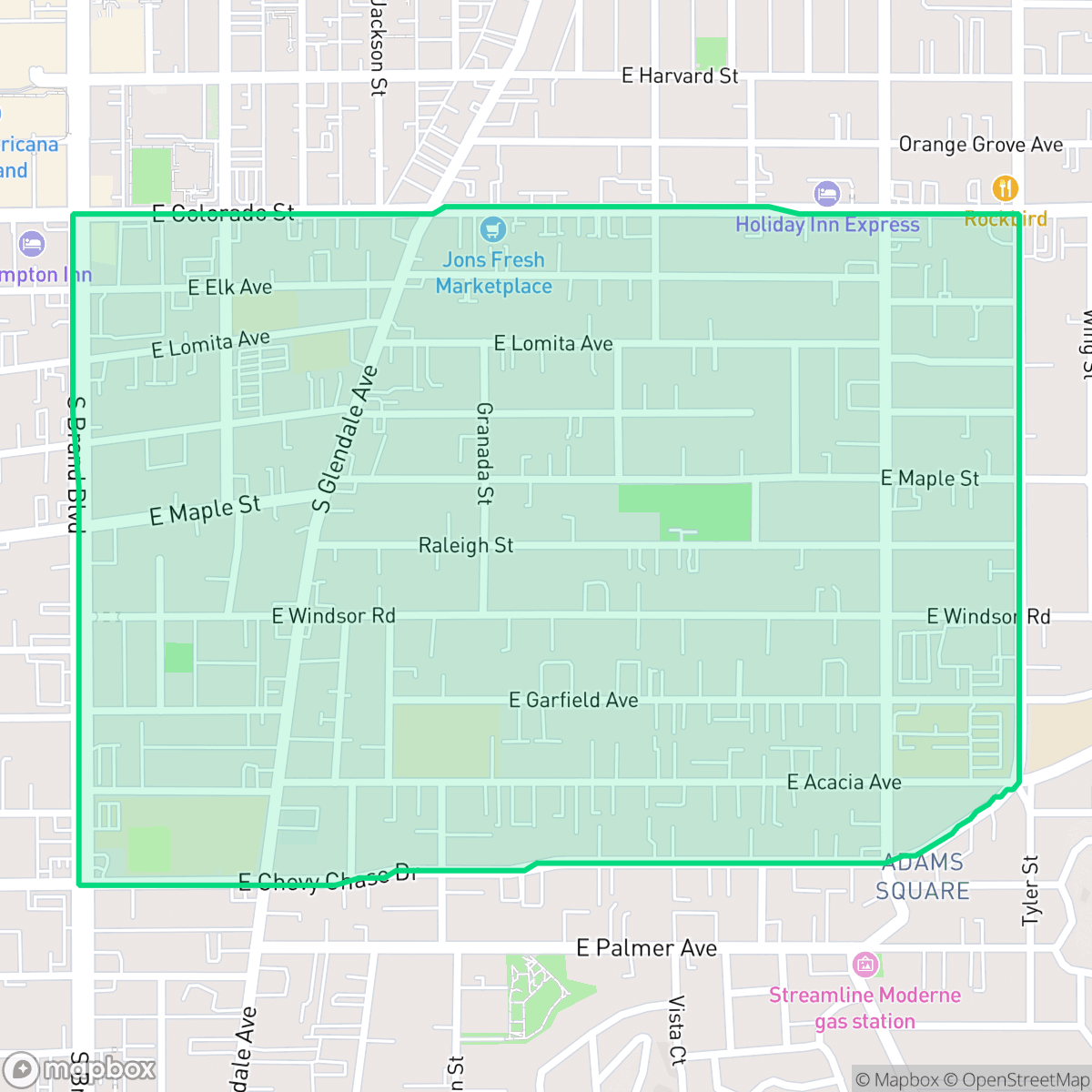
About Mariposa
The Mariposa neighborhood in Glendale, California, has roots in the historic agricultural community of Tropico, which was annexed to Glendale in 1918. Developed largely during the 1920s boom, the neighborhood is characterized by a mix of pre-1940 single-family homes, Mediterranean-style townhomes, and mid-century apartments. A prominent local landmark is the 1873 Richardson Home, located at the corner of Cypress and Mariposa streets. Built by Tropico pioneer and rancher W.C.B. Richardson on his Santa Eulalia Ranch, the wood-frame farmhouse was relocated to its current site around 1910 and is designated as Glendale Historical Landmark No. 5. To preserve the area's aging housing stock, the city launched the Mariposa Neighborhood Improvement Project in 2002, focusing on restoring the neighborhood's dense, renter-occupied multi-family properties.
The neighborhood functions as a vibrant, transit-accessible urban core within Glendale, offering a high degree of walkability that allows residents to reach local amenities and services without relying on a vehicle. The built environment consists of tightly packed structures, ranging from early 20th-century residences to mid-century apartment complexes, which creates a close-knit, active streetscape. While the area lacks expansive private yards and green space, it maintains a lively atmosphere supported by a variety of local restaurants and community centers, making it an efficient choice for those who prioritize proximity to urban conveniences over suburban seclusion.
Living in this part of Glendale requires balancing the benefits of a central location with the realities of high-density urban life. The neighborhood experiences moderate noise levels primarily from road traffic, and the proximity of neighboring structures means that privacy is more constrained than in lower-density parts of the city. It is best suited for individuals or small households who value a car-lite lifestyle and want to be integrated into a well-connected, established community with strong access to the Glendale Unified School District's academic resources.
Neighborhood Scores Across 15 Qualities
Residential structures are often positioned in close proximity, featuring shared walls or minimal separation between homes. This density is notably higher than the Glendale average, particularly within the apartment blocks and multi-family housing clusters identified by iHuus data.
Pedestrian movement is easy throughout the area due to a dense grid of streets featuring continuous sidewalks and frequent marked crosswalks. This infrastructure provides a level of walkability that is significantly higher than the Glendale average.
Residential views consist largely of uniform apartment complexes and traditional tract housing with limited private yard space. This level of visual variety is slightly below the Glendale average.
Public spaces for pets are scarce due to a high concentration of concrete and narrow sidewalks. While some hilly buffers and a large cemetery park provide walking options, the area offers fewer public parks than the Glendale average, according to iHuus data.
Residential areas feature a dense blend of single-family homes and multi-unit apartment complexes. This environment is slightly more open than the Glendale average, though much of the landscape consists of developed suburban blocks rather than vast open land.
Frequent visits to local dining and social hubs are common here, as the area features a much higher concentration of activity than the Glendale average. According to iHuus data, the neighborhood provides a steady rhythm of life through its diverse mix of suburban streets, green spaces, and various eateries.
Steady traffic sounds from nearby thoroughfares create a consistent ambient hum, though levels remain more tranquil than the Glendale average according to iHuus data.
Air quality remains consistently good with rare instances of elevated readings. This level of air purity is consistent with the average found throughout Glendale.
Industrial presence is non-existent in this area, as the neighborhood consists entirely of residential and light commercial structures. According to iHuus data, this lack of heavy industry or warehouses makes the area cleaner and more residential than the Glendale average.
Health insurance access among residents is relatively high, though it sits slightly below the Glendale city average according to iHuus data.
Voting patterns and census indicators show a more pronounced liberal leaning than the Glendale average, according to iHuus data.
Residents live alongside a balanced spread of young adults, families, and older individuals. This demographic variety in Mariposa is consistent with the average across Glendale.
Properties in this area are located within a designated floodplain, which means residents should anticipate a significantly higher risk of flooding than the Glendale average. According to iHuus data, flood insurance is typically required for homes in this neighborhood.
High levels of wildfire vulnerability exist in this area, representing a significantly greater hazard than the Glendale average. According to iHuus data, residents should prioritize maximum fire protection and emergency preparedness measures.
Address-Level Insights for Mariposa


iHuus Neighborhood Intelligence Insights
Get address-level neighborhood insights for Mariposa
- Street-level scores — see how individual blocks compare, not just neighborhood averages
- Micro-zone boundaries — identify quiet pockets, flood boundaries, and walkable clusters before you visit
- 15 dimensions in full — walkability, noise, air quality, school quality, insurance coverage, population age profile, urban/rural index, and more
- Boundary risk alerts — know if your address sits near a block boundary where scores drop, the kind of detail no listing will ever mention
- School insights — individual school ratings and insights, not just district-level data
- Compare before you commit — side-by-side data across neighborhoods, down to block precision
No credit card required
Compare with Any Neighborhood
| Dimension | Mariposa | Adams Hill |
|---|---|---|
| 🚶 Walkabilityavg 8.69 | ||
| 🔊 Acoustic Comfortavg 3.71 | ||
| 🤫 Privacy Indexavg 4.65 | ||
| 🎨 Visual Appealavg 6.99 | ||
| 🐕 Dog Friendlinessavg 5.3 | ||
| 🗺️ Urban-Rural Indexavg 6.32 | ||
| ✨ Neighborhood Vibeavg 5.1 | ||
| 🏥 Health Insurance Coverageavg 7.89 | ||
| 🌿 Air Qualityavg 8.01 | ||
| 🏭 Industrial Proximityavg 8.92 | ||
| 🌊 Flood Safetyavg 2.96 | ||
| 🗳️ Ideological Leanavg 8.52 | ||
| 👥 Population Age Profileavg 5.28 | ||
| 🔥 Fire Safetyavg 0.5 | ||
| 🏫 School Quality |
Mariposa Rankings
School Districts Serving Mariposa
School Insights for Mariposa
Below average outcomes; significant attendance and academic challenges.
School Insights
See what's really behind every school rating near Mariposa
- Individual school ratings — each school's own score with outcome context, not just a district average
- Enrollment & class size data — student-to-teacher ratio and how it compares to the state average
- Full demographics breakdown — ethnicity and gender composition for every school in the enrollment zone
- Every school in the district — all schools within the enrollment boundary ranked by rating, not just the closest one
- Grade levels & benchmarks — elementary through high school, with below/above state-average flags
No credit card required