Grand Central, Glendale
Updated · 3,274 residents
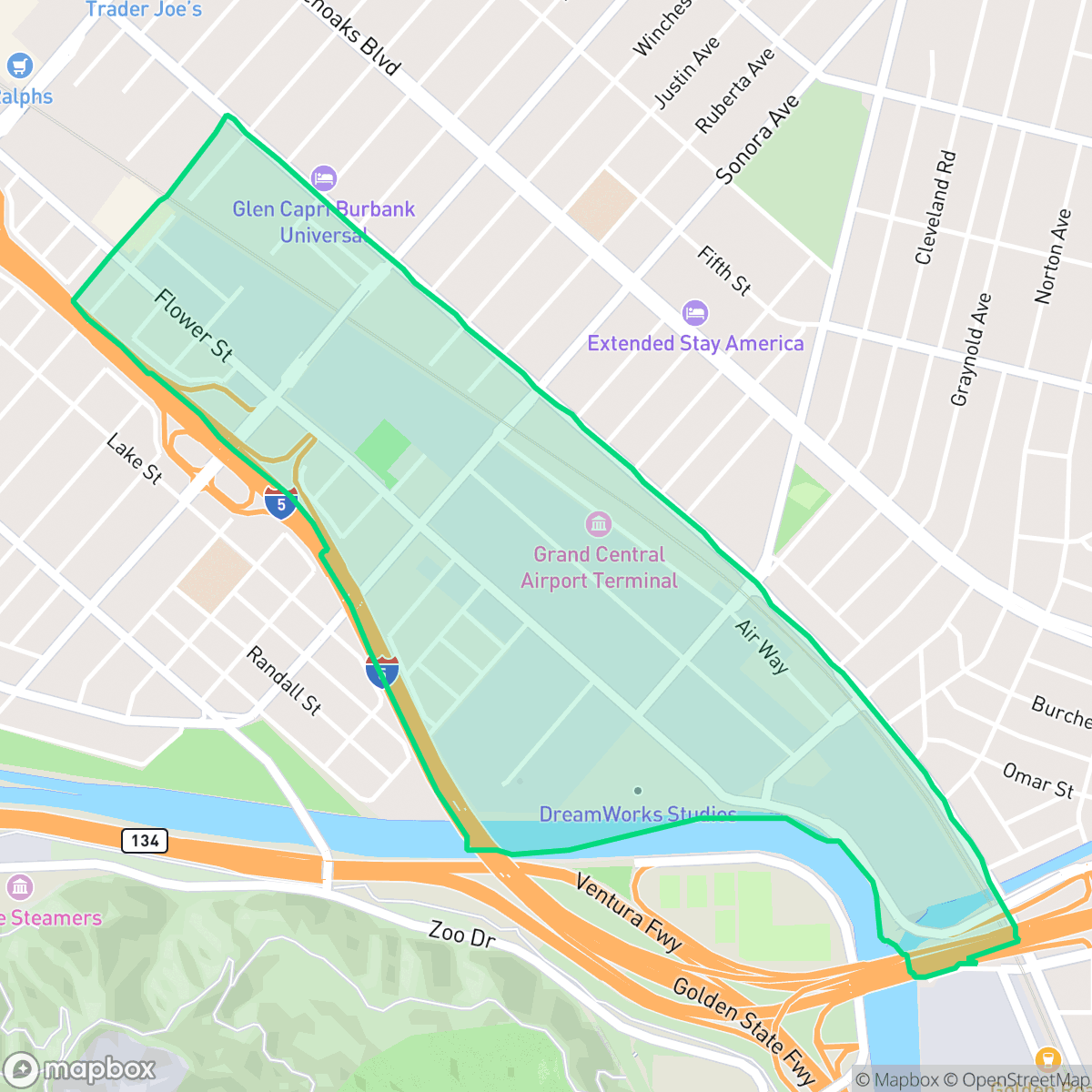
Grand Central is a dense, industrial-influenced enclave in Glendale defined by its unique blend of historic aviation roots and modern creative office space. While the area offers access to essential services and local dining, residents face challenges including significant road noise, limited green space, and proximity to an industrial site.
Key Highlights
About Grand Central
The Grand Central neighborhood in Glendale, California, is historically defined by the Grand Central Air Terminal (GCAT), which opened in 1929 as the first major commercial airport for the Los Angeles area. Designed by architect Henry L. Gogerty, the landmark terminal combined Spanish Colonial Revival and Art Deco styles. It served as a vital hub for aviation pioneers like Amelia Earhart and Howard Hughes, and was the departure point for the first scheduled transcontinental flight. After the airport closed in 1959, the area transitioned into a light industrial business park. In 1997, the Walt Disney Company acquired the property, meticulously restoring the historic terminal and establishing its Grand Central Creative Campus (GC3), which is today the headquarters of Walt Disney Imagineering.
The neighborhood is characterized by a dense mix of light industrial warehouses, mid-rise buildings, and high-density residential blocks. It serves as a major employment hub, most notably housing the Walt Disney Imagineering headquarters at the historic Grand Central Creative Campus. The landscape is dominated by concrete and asphalt, and while the area follows a standard grid system with sidewalks, the presence of high-traffic arterials and heavy freight movement creates a distinct urban environment that prioritizes commercial utility over residential aesthetics.
Living in this area requires navigating specific trade-offs, particularly regarding environmental and acoustic comfort. Residents experience elevated noise levels from nearby freeway infrastructure and constant road traffic. The neighborhood lacks significant green space and parks, making it less suitable for those seeking a pet-friendly or suburban atmosphere. It is best suited for professionals working within the local creative or industrial sectors who prioritize proximity to major employment centers over quiet, suburban living conditions.
Neighborhood Scores Across 15 Qualities
Residential and industrial structures are often closely packed with shared walls or narrow gaps between neighbors. According to iHuus data, this level of density is slightly higher than the Glendale average.
Sidewalks and safe crossings are available throughout the residential and commercial grid, though high-traffic arterials and industrial zones can impact ease of movement. This level of pedestrian accessibility is lower than the Glendale average.
Residential layouts consist of standard tract housing and multi-family units with minimal yard space. The area lacks the lush greenery and luxury amenities found more frequently across Glendale.
Limited public green space and narrow sidewalks make walking pets difficult. According to iHuus data, the area consists primarily of industrial concrete surfaces and lacks the accessible parks found more frequently across Glendale.
A combination of residential blocks, light industrial warehouses, and large-scale parking lots defines this area. According to iHuus data, this landscape is more densely urbanized than the typical Glendale neighborhood.
Characterized by a subdued rhythm, this area features a mix of light industrial units and suburban blocks that offer less activity than the Glendale average. Residents will find a calm environment with a steady but modest presence of local dining and essential services.
Constant noise from nearby railroad tracks and heavy freeway traffic is a persistent feature of this area. According to iHuus data, acoustic levels are significantly higher than the Glendale average.
Air quality is generally clean with infrequent periods of poor visibility or pollution. However, levels are slightly lower than the Glendale average according to iHuus data.
Industrial activity is significantly lower here than in the rest of Glendale. While the area lacks heavy freight corridors, residents should be aware of a nearby EPA Superfund site with potential groundwater contamination risks.
Health insurance coverage among residents is notably lower than the Glendale average, according to iHuus data.
Voting patterns and census indicators reflect a highly liberal political leaning that is more pronounced than the Glendale average, according to iHuus data.
Residents live alongside a balanced mix of young professionals, families, and older adults. This demographic distribution is largely in line with the broader Glendale area according to iHuus data.
Properties in this area are located within a designated floodplain, which may necessitate the purchase of flood insurance. This level of risk is slightly higher than the average for Glendale according to iHuus data.
Extreme fire hazards characterize this area, presenting a significantly higher risk than the Glendale average. Residents should be aware of the heightened need for rigorous fire prevention and safety measures according to iHuus data.
Address-Level Insights for Grand Central


iHuus Neighborhood Intelligence Insights
Get address-level neighborhood insights for Grand Central
- Street-level scores — see how individual blocks compare, not just neighborhood averages
- Micro-zone boundaries — identify quiet pockets, flood boundaries, and walkable clusters before you visit
- 15 dimensions in full — walkability, noise, air quality, school quality, insurance coverage, population age profile, urban/rural index, and more
- Boundary risk alerts — know if your address sits near a block boundary where scores drop, the kind of detail no listing will ever mention
- School insights — individual school ratings and insights, not just district-level data
- Compare before you commit — side-by-side data across neighborhoods, down to block precision
No credit card required
Compare with Any Neighborhood
| Dimension | Grand Central | Adams Hill |
|---|---|---|
| 🚶 Walkabilityavg 8.69 | ||
| 🔊 Acoustic Comfortavg 3.71 | ||
| 🤫 Privacy Indexavg 4.65 | ||
| 🎨 Visual Appealavg 6.99 | ||
| 🐕 Dog Friendlinessavg 5.3 | ||
| 🗺️ Urban-Rural Indexavg 6.32 | ||
| ✨ Neighborhood Vibeavg 5.1 | ||
| 🏥 Health Insurance Coverageavg 7.89 | ||
| 🌿 Air Qualityavg 8.01 | ||
| 🏭 Industrial Proximityavg 8.92 | ||
| 🌊 Flood Safetyavg 2.96 | ||
| 🗳️ Ideological Leanavg 8.52 | ||
| 👥 Population Age Profileavg 5.28 | ||
| 🔥 Fire Safetyavg 0.5 | ||
| 🏫 School Quality |
Grand Central Rankings
School Districts Serving Grand Central
School Insights for Grand Central
Below average outcomes; significant attendance and academic challenges.
School Insights
See what's really behind every school rating near Grand Central
- Individual school ratings — each school's own score with outcome context, not just a district average
- Enrollment & class size data — student-to-teacher ratio and how it compares to the state average
- Full demographics breakdown — ethnicity and gender composition for every school in the enrollment zone
- Every school in the district — all schools within the enrollment boundary ranked by rating, not just the closest one
- Grade levels & benchmarks — elementary through high school, with below/above state-average flags
No credit card required