Glenoaks Canyon, Glendale
Updated · 2,060 residents
Glenoaks Canyon is a serene, nature-oriented residential enclave in Glendale characterized by its rural landscape and significant open space. While the area offers high visual appeal and excellent dog-friendliness, it lacks commercial density and remains a quiet, low-traffic environment with limited walkability.
Key Highlights
About Glenoaks Canyon
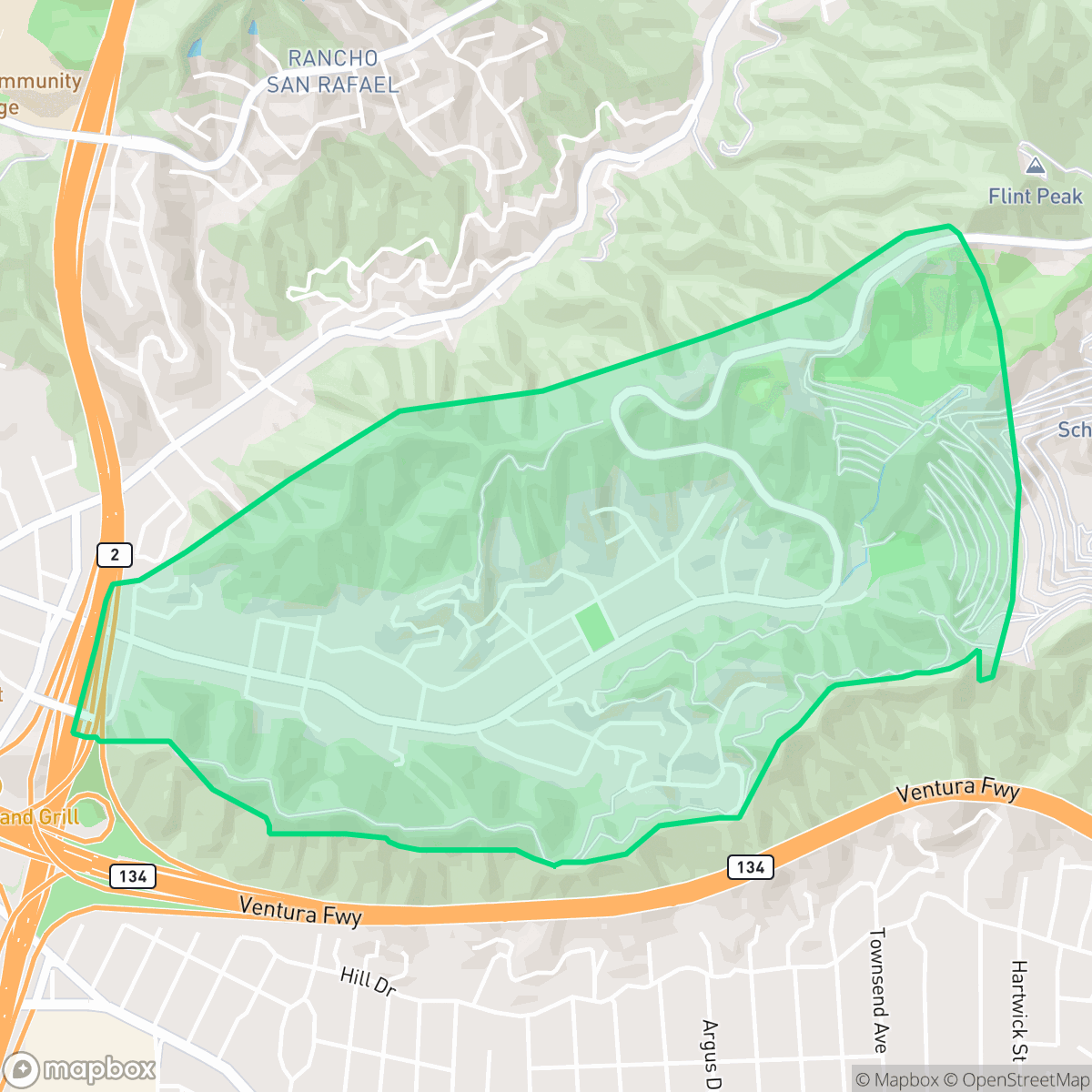
Once known as Scholl Canyon, the secluded Glenoaks Canyon in Glendale, California, was originally ranch land planted with fruit trees. In the 1920s, a syndicate of Los Angeles developers, including Glen Oaks Inc., subdivided the canyon into half-acre and one-acre lots. The developers presented Glenoaks Park to the city during a celebratory barbecue in March 1923. Primarily developed between the 1920s and 1950s, the neighborhood features a diverse array of architectural styles, including two notable Mid-Century Modern homes designed by legendary architect Richard Neutra on Suncourt Terrace. Today, this quiet, nature-oriented enclave is defined by its strong community identity, centered around local landmarks like Glenoaks Elementary School, Scholl Canyon Park, and the historic Joe Bridges Clubhouse, home to the neighborhood's long-running Scout Troop 125.
The neighborhood is defined by its low-density residential character and proximity to natural terrain, which creates a distinct rural atmosphere within the Glendale city limits. Residents benefit from high levels of health insurance coverage and clean air, contributing to a stable living environment. The area is largely free from industrial activity, reinforcing its status as a secluded residential pocket that prioritizes privacy and quiet over urban convenience.
Prospective residents should note that the area is not designed for pedestrian convenience, as local services are sparse and the landscape is better suited for those with vehicles. The location faces significant fire safety challenges due to its canyon geography, which serves as a primary consideration for those moving to the area. It is best suited for individuals or families who prioritize a quiet, pet-friendly environment and access to high-performing schools over immediate proximity to nightlife or commercial hubs.
Neighborhood Scores Across 15 Qualities
Residential spacing offers a reasonable buffer between neighbors, providing more privacy than the typical density found across Glendale. According to iHuus data, homes feature standard suburban setbacks that balance closeness with visible separation.
Tree-lined paths and sidewalks on select streets allow for safe pedestrian navigation, though the area is less walkable than the Glendale average. Many residential sections feature a grid-like layout that facilitates easier movement on foot.
Manicured landscapes and large private residences with amenities like pools create a highly polished environment that is notably more visually appealing than the Glendale average. According to iHuus data, the presence of spacious yards and well-maintained properties defines the area's premium character.
Access to northern hillside trails and wide, traffic-free residential paths makes this area significantly more dog friendly than the Glendale average. Proximity to connected green spaces offers ample opportunities for pet exercise according to iHuus data.
Vast natural hillsides and open recreational lands define this area, providing a much more secluded, wooded atmosphere than the typical Glendale suburban landscape. According to iHuus data, the low building density and frequent open land create a setting far more rural than the city average.
Low density and significant open space create a serene, rural atmosphere with very little commercial activity. This area is notably less lively than the Glendale average, as most of the landscape consists of quiet residential pockets and minimal local business hubs.
Frequent noise from nearby freeways and railroad corridors makes this area louder than the Glendale average. Residents may experience significant acoustic disturbance due to proximity to major transit paths, according to iHuus data.
Air quality in this area remains consistently clean with rare instances of elevated readings. This level of air purity is consistent with the average found throughout Glendale.
Industrial presence is virtually non-existent in this area, offering a much cleaner environment than the Glendale average. According to iHuus data, the landscape consists strictly of residential zones, commercial pockets, and natural parkland, with no warehouses or heavy industrial hazards detected.
Health insurance access is exceptionally high among residents, significantly exceeding the Glendale average according to iHuus data.
Voting patterns and census indicators reflect a more liberal leaning than the Glendale average, according to iHuus data.
Residents live alongside a diverse range of age groups, including young professionals, families, and seniors. This demographic spread is slightly more varied than the Glendale average, according to iHuus data.
Residual flood risks exist within this area due to its location in a 500-year floodplain. According to iHuus data, the safety level regarding flood hazards is significantly higher than the average for Glendale.
High wildfire vulnerability is a significant concern in this area, with fire hazard levels appearing even more severe than the Glendale average according to iHuus data.
Address-Level Insights for Glenoaks Canyon


iHuus Neighborhood Intelligence Insights
Get address-level neighborhood insights for Glenoaks Canyon
- Street-level scores — see how individual blocks compare, not just neighborhood averages
- Micro-zone boundaries — identify quiet pockets, flood boundaries, and walkable clusters before you visit
- 15 dimensions in full — walkability, noise, air quality, school quality, insurance coverage, population age profile, urban/rural index, and more
- Boundary risk alerts — know if your address sits near a block boundary where scores drop, the kind of detail no listing will ever mention
- School insights — individual school ratings and insights, not just district-level data
- Compare before you commit — side-by-side data across neighborhoods, down to block precision
No credit card required
Compare with Any Neighborhood
| Dimension | Glenoaks Canyon | Adams Hill |
|---|---|---|
| 🚶 Walkabilityavg 8.69 | ||
| 🔊 Acoustic Comfortavg 3.71 | ||
| 🤫 Privacy Indexavg 4.65 | ||
| 🎨 Visual Appealavg 6.99 | ||
| 🐕 Dog Friendlinessavg 5.3 | ||
| 🗺️ Urban-Rural Indexavg 6.32 | ||
| ✨ Neighborhood Vibeavg 5.1 | ||
| 🏥 Health Insurance Coverageavg 7.89 | ||
| 🌿 Air Qualityavg 8.01 | ||
| 🏭 Industrial Proximityavg 8.92 | ||
| 🌊 Flood Safetyavg 2.96 | ||
| 🗳️ Ideological Leanavg 8.52 | ||
| 👥 Population Age Profileavg 5.28 | ||
| 🔥 Fire Safetyavg 0.5 | ||
| 🏫 School Quality |
Glenoaks Canyon Rankings
School Districts Serving Glenoaks Canyon
School Insights for Glenoaks Canyon
Below average outcomes; significant attendance and academic challenges.
School Insights
See what's really behind every school rating near Glenoaks Canyon
- Individual school ratings — each school's own score with outcome context, not just a district average
- Enrollment & class size data — student-to-teacher ratio and how it compares to the state average
- Full demographics breakdown — ethnicity and gender composition for every school in the enrollment zone
- Every school in the district — all schools within the enrollment boundary ranked by rating, not just the closest one
- Grade levels & benchmarks — elementary through high school, with below/above state-average flags
No credit card required