Fremont Park, Glendale
Updated · 2,790 residents
Fremont Park is a dense residential neighborhood defined by its historic park and a mix of apartment complexes and single-family homes. While the area offers convenient access to local dining and high-performing schools, residents should be prepared for significant road traffic noise and limited private outdoor space.
Key Highlights
About Fremont Park
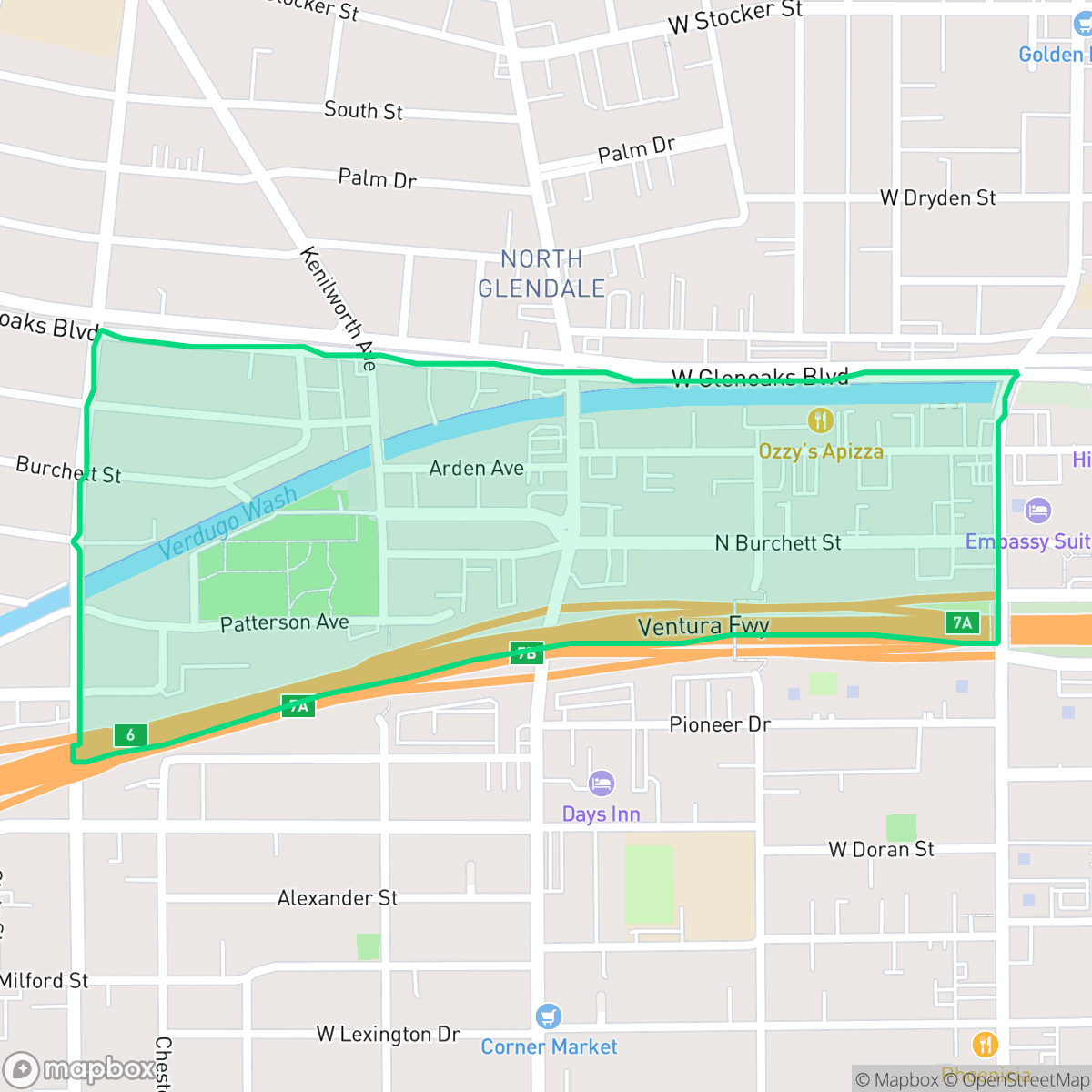
The Fremont Park neighborhood in Glendale, California, centers around the city's oldest public park. Established in 1922 on land purchased from John R. Gray, the eight-acre space was originally named Patterson Park before being renamed to honor John C. Frémont. Serving as a vital hub for the surrounding Glenwood and Vineyard residential areas, where early home construction began around 1910, the neighborhood has long maintained a distinct community identity. Local landmarks include a World War I-era French cannon memorial and the Glendale Model Railroad Club. Following a major $27 million municipal renovation completed in October 2025, the historic park was modernized with a new community building, an artificial turf field, and upgraded sports courts, continuing its century-long legacy as a central gathering place for the dense residential neighborhood.
The neighborhood functions as a dense suburban hub, characterized by a mix of multi-story apartment complexes and tightly packed residential properties. The area is generally accessible for pedestrians, though the presence of major freeway infrastructure creates physical barriers that can interrupt local walking routes. According to iHuus data, the community benefits from high air quality and strong flood safety, providing a stable environment despite the high-density layout. Residents have access to the Glendale Unified School District, which is recognized for its robust academic programs and college readiness initiatives.
Living in this part of Glendale involves specific trade-offs, particularly regarding acoustic comfort and privacy. The proximity to major thoroughfares results in elevated noise levels from road traffic, and the high-density construction means that homes are often positioned close together with limited private yards. While the area is well-suited for those who prioritize proximity to local amenities and schools, it may be less ideal for those seeking quiet, secluded living or extensive space for pets. The neighborhood remains a practical choice for individuals who value a central location within the city.
Neighborhood Scores Across 15 Qualities
Residential spacing is consistent with the Glendale average, featuring a mix of detached homes with modest yards and denser multi-unit complexes. According to iHuus data, some areas offer buffer zones between neighbors while others involve shared walls and narrow alleys.
Pedestrian infrastructure is exceptional, featuring continuous sidewalks on both sides of residential streets and well-marked crossings. This neighborhood offers superior walkability compared to the Glendale average, although major freeway access points can interrupt the sidewalk network.
Large homes, well-maintained properties, and frequent backyard swimming pools contribute to a visual landscape that is slightly more polished than the Glendale average. According to iHuus data, the presence of manicured yards and upscale amenities defines much of the area's aesthetic.
Public greenery and walking verges are sparse within this dense urban grid, making it less dog friendly than the Glendale average. According to iHuus data, most accessible vegetation is confined to private fenced yards rather than open public parks.
Residential streets and green spaces exist in relatively equal measure here. This area feels less urbanized than the Glendale average, featuring a blend of single-family homes and mid-rise apartment complexes.
Vibrant pockets of high-rise development and dining coexist with quieter, suburban streets. This area offers a more active atmosphere than much of Glendale, though access to amenities varies depending on your proximity to the main corridors.
Steady hum from nearby busy streets defines the acoustic environment. This level of noise is slightly higher than the Glendale average, according to iHuus data.
Air quality in this area is consistently good, matching the typical levels found throughout Glendale.
Largely residential and commercial, this area lacks heavy industrial hazards, though it features slightly more industrial-adjacent noise from the central freeway corridor than the Glendale average. According to iHuus data, some residents should be aware of a nearby Superfund site that may impact groundwater concerns.
Health insurance enrollment in this area is lower than the Glendale average, according to iHuus data.
Political leanings in this area are predominantly liberal, closely aligning with the broader trends seen across Glendale according to iHuus data.
Residents live alongside a diverse range of age groups, including young professionals, families, and seniors. This demographic spread is largely consistent with the broader Glendale area according to iHuus data.
Flood risk levels remain undetermined due to a lack of detailed local studies; however, the area presents a higher potential for flooding compared to the Glendale average.
Address-Level Insights for Fremont Park


iHuus Neighborhood Intelligence Insights
Get address-level neighborhood insights for Fremont Park
- Street-level scores — see how individual blocks compare, not just neighborhood averages
- Micro-zone boundaries — identify quiet pockets, flood boundaries, and walkable clusters before you visit
- 15 dimensions in full — walkability, noise, air quality, school quality, insurance coverage, population age profile, urban/rural index, and more
- Boundary risk alerts — know if your address sits near a block boundary where scores drop, the kind of detail no listing will ever mention
- School insights — individual school ratings and insights, not just district-level data
- Compare before you commit — side-by-side data across neighborhoods, down to block precision
No credit card required
Compare with Any Neighborhood
| Dimension | Fremont Park | Adams Hill |
|---|---|---|
| 🚶 Walkabilityavg 8.69 | ||
| 🔊 Acoustic Comfortavg 3.71 | ||
| 🤫 Privacy Indexavg 4.65 | ||
| 🎨 Visual Appealavg 6.99 | ||
| 🐕 Dog Friendlinessavg 5.3 | ||
| 🗺️ Urban-Rural Indexavg 6.32 | ||
| ✨ Neighborhood Vibeavg 5.1 | ||
| 🏥 Health Insurance Coverageavg 7.89 | ||
| 🌿 Air Qualityavg 8.01 | ||
| 🏭 Industrial Proximityavg 8.92 | ||
| 🌊 Flood Safetyavg 2.96 | ||
| 🗳️ Ideological Leanavg 8.52 | ||
| 👥 Population Age Profileavg 5.28 | ||
| 🔥 Fire Safetyavg 0.5 | ||
| 🏫 School Quality |
Fremont Park Rankings
School Districts Serving Fremont Park
School Insights for Fremont Park
Below average outcomes; significant attendance and academic challenges.
School Insights
See what's really behind every school rating near Fremont Park
- Individual school ratings — each school's own score with outcome context, not just a district average
- Enrollment & class size data — student-to-teacher ratio and how it compares to the state average
- Full demographics breakdown — ethnicity and gender composition for every school in the enrollment zone
- Every school in the district — all schools within the enrollment boundary ranked by rating, not just the closest one
- Grade levels & benchmarks — elementary through high school, with below/above state-average flags
No credit card required