Chevy Chase, Glendale
Updated · 3,120 residents
Chevy Chase is a serene, low-density canyon community defined by its rural atmosphere and exceptional visual appeal. While it offers high air quality and a quiet environment, residents should expect limited walkability and a lack of local commercial activity.
Key Highlights
About Chevy Chase
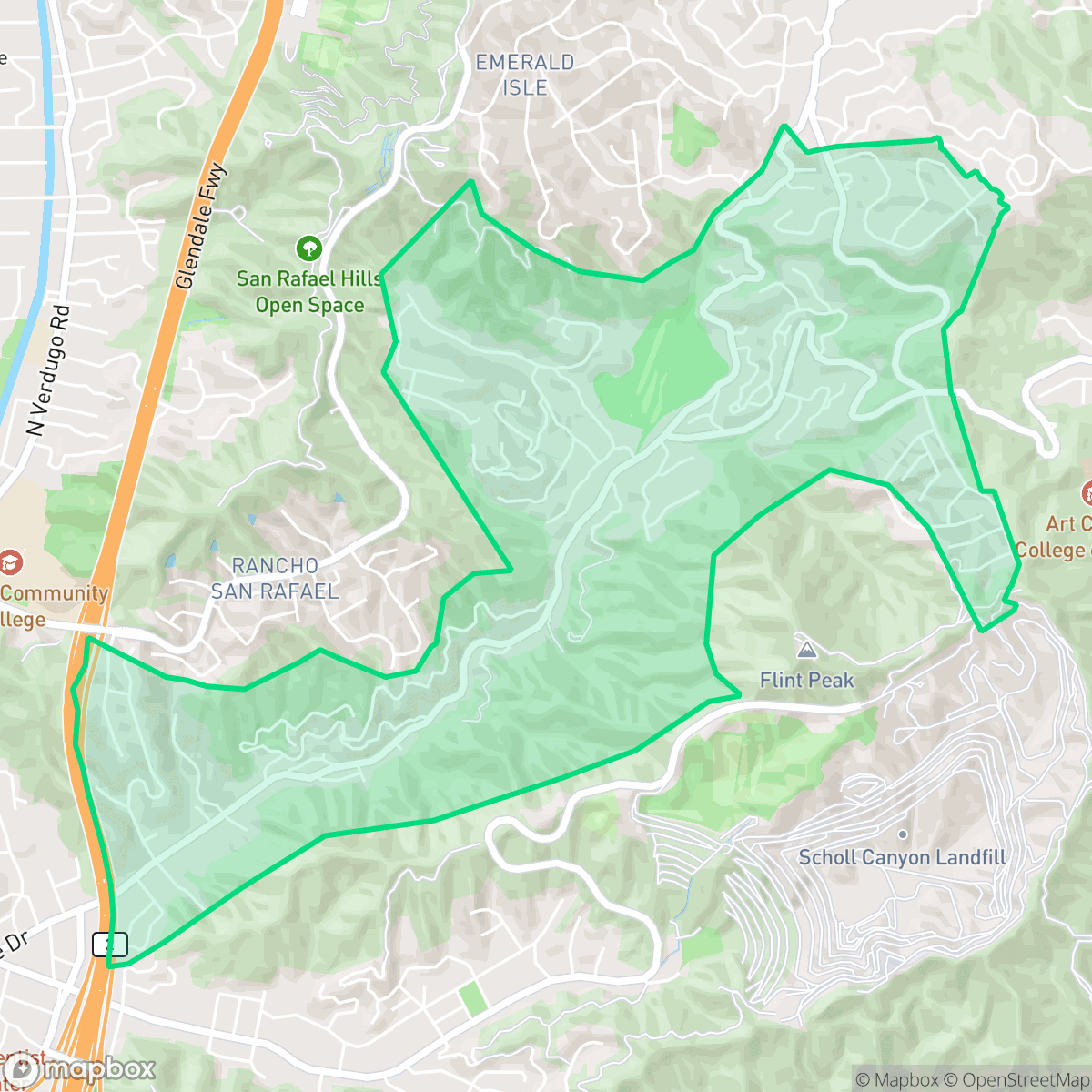
Nestled in the San Rafael Hills, Chevy Chase Canyon (originally Cañón de Sicomoro) was once part of the 1798 Verdugo Land Grant and served as a private game preserve for the Doheny family in the early 1900s. In 1925, developer Bert C. Farrar began transforming the rustic canyon into "Chevy Chase Estates," a parklike residential community woven with miles of nature trails. Its historic anchor is the Chevy Chase Country Club, featuring a landmark golf course designed by William P. "Billy" Bell in 1925. To preserve the canyon's natural beauty and fend off high-density development, residents formed the Chevy Chase Estates Association in 1937. Incorporated in 1948, it is recognized as the oldest active homeowners association in California, successfully securing protective zoning ordinances to maintain the neighborhood's unique, rural-like character.
The area is characterized by its steep, winding topography and expansive open spaces, creating a secluded residential environment that feels removed from the surrounding city. With a strong emphasis on privacy and natural beauty, the landscape is largely dominated by residential properties and native vegetation rather than commercial development. Residents benefit from high air quality and a peaceful acoustic environment, though the lack of local businesses means daily errands typically require a short drive to reach retail or service destinations.
Ideal for those seeking a quiet, nature-oriented lifestyle, this community presents specific trade-offs, including a high risk regarding fire safety and a reliance on vehicle travel for most amenities. Educational needs are well-served by proximity to highly-rated districts, including the nearby La Cañada Unified School District. The neighborhood is best suited for individuals who prioritize a tranquil, rural-like setting over urban convenience and who are comfortable with the inherent challenges of canyon living.
Neighborhood Scores Across 15 Qualities
Hillside residences offer significant separation between properties, providing a greater sense of privacy than the Glendale average. According to iHuus data, while commercial zones are denser, many residential lots feature substantial distance from neighboring structures.
Low traffic and safe crossings make residential streets pleasant for strolls, though sidewalks are often only present on one side of the street. According to iHuus data, walkability is lower than the Glendale average due to hilly terrain and freeway barriers.
Large hillside estates with custom architecture and private amenities provide a highly aesthetic streetscape that is notably more visually impressive than the Glendale average. According to iHuus data, the area features significant privacy buffers and luxury landscape elements.
Access to large hillside nature preserves and wide, low-traffic paths makes this area significantly more pet-friendly than the Glendale average. According to iHuus data, the proximity to green spaces and quiet residential verges provides ample space for outdoor exercise.
Vast natural hillsides and undeveloped canyon terrain characterize the area, providing a much more open and less dense environment than the typical Glendale suburban landscape. According to iHuus data, the neighborhood features significant patches of woodland and sparse luxury housing amid large expanses of open land.
Low-density residential blocks and vast open spaces define this area, which lacks the commercial activity and social density found in much of Glendale. Residents will find very few local businesses or destinations nearby, making the neighborhood a car-dependent environment focused on quiet, suburban living.
Steady noise from nearby busy streets is common in this area. This level of acoustic activity is slightly higher than the average found across Glendale.
Air quality remains consistently high with minimal health concerns for residents. According to iHuus data, the air quality in this area is notably better than the Glendale average.
Residential tranquility is maintained by an absence of warehouses or industrial facilities, making this area even more secluded from heavy industry than the Glendale average. While some large-scale earthworks are visible on the eastern and southern edges, the core of the neighborhood remains free of industrial hazards.
Health insurance accessibility is notably higher than the Glendale average, according to iHuus data. This reflects a resident population with stronger access to medical coverage compared to much of the city.
Political leanings in this area trend liberal, though the presence of opposing viewpoints is more notable here than in the broader Glendale area.
Residents experience a diverse demographic spread of young adults, families, and older individuals. This age distribution is slightly more varied than the Glendale average, according to iHuus data.
Residual flood risk exists within certain parts of the area, though safety levels remain significantly higher than the Glendale average according to iHuus data.
Fire risk in this area is critical; residents should be aware that the neighborhood faces a much higher danger level than the rest of Glendale according to iHuus data.
Address-Level Insights for Chevy Chase


iHuus Neighborhood Intelligence Insights
Get address-level neighborhood insights for Chevy Chase
- Street-level scores — see how individual blocks compare, not just neighborhood averages
- Micro-zone boundaries — identify quiet pockets, flood boundaries, and walkable clusters before you visit
- 15 dimensions in full — walkability, noise, air quality, school quality, insurance coverage, population age profile, urban/rural index, and more
- Boundary risk alerts — know if your address sits near a block boundary where scores drop, the kind of detail no listing will ever mention
- School insights — individual school ratings and insights, not just district-level data
- Compare before you commit — side-by-side data across neighborhoods, down to block precision
No credit card required
Compare with Any Neighborhood
| Dimension | Chevy Chase | Adams Hill |
|---|---|---|
| 🚶 Walkabilityavg 8.69 | ||
| 🔊 Acoustic Comfortavg 3.71 | ||
| 🤫 Privacy Indexavg 4.65 | ||
| 🎨 Visual Appealavg 6.99 | ||
| 🐕 Dog Friendlinessavg 5.3 | ||
| 🗺️ Urban-Rural Indexavg 6.32 | ||
| ✨ Neighborhood Vibeavg 5.1 | ||
| 🏥 Health Insurance Coverageavg 7.89 | ||
| 🌿 Air Qualityavg 8.01 | ||
| 🏭 Industrial Proximityavg 8.92 | ||
| 🌊 Flood Safetyavg 2.96 | ||
| 🗳️ Ideological Leanavg 8.52 | ||
| 👥 Population Age Profileavg 5.28 | ||
| 🔥 Fire Safetyavg 0.5 | ||
| 🏫 School Quality |
Chevy Chase Rankings
School Districts Serving Chevy Chase
School Insights for Chevy Chase
Below average outcomes; significant attendance and academic challenges.
School Insights
See what's really behind every school rating near Chevy Chase
- Individual school ratings — each school's own score with outcome context, not just a district average
- Enrollment & class size data — student-to-teacher ratio and how it compares to the state average
- Full demographics breakdown — ethnicity and gender composition for every school in the enrollment zone
- Every school in the district — all schools within the enrollment boundary ranked by rating, not just the closest one
- Grade levels & benchmarks — elementary through high school, with below/above state-average flags
No credit card required