Brockmont, Glendale
Updated · 2,290 residents
Brockmont is a quiet, visually striking residential neighborhood defined by its historic architecture and serene, low-density atmosphere. While the area offers high aesthetic appeal and excellent air quality, it remains a car-dependent environment with limited local commercial activity.
Key Highlights
About Brockmont
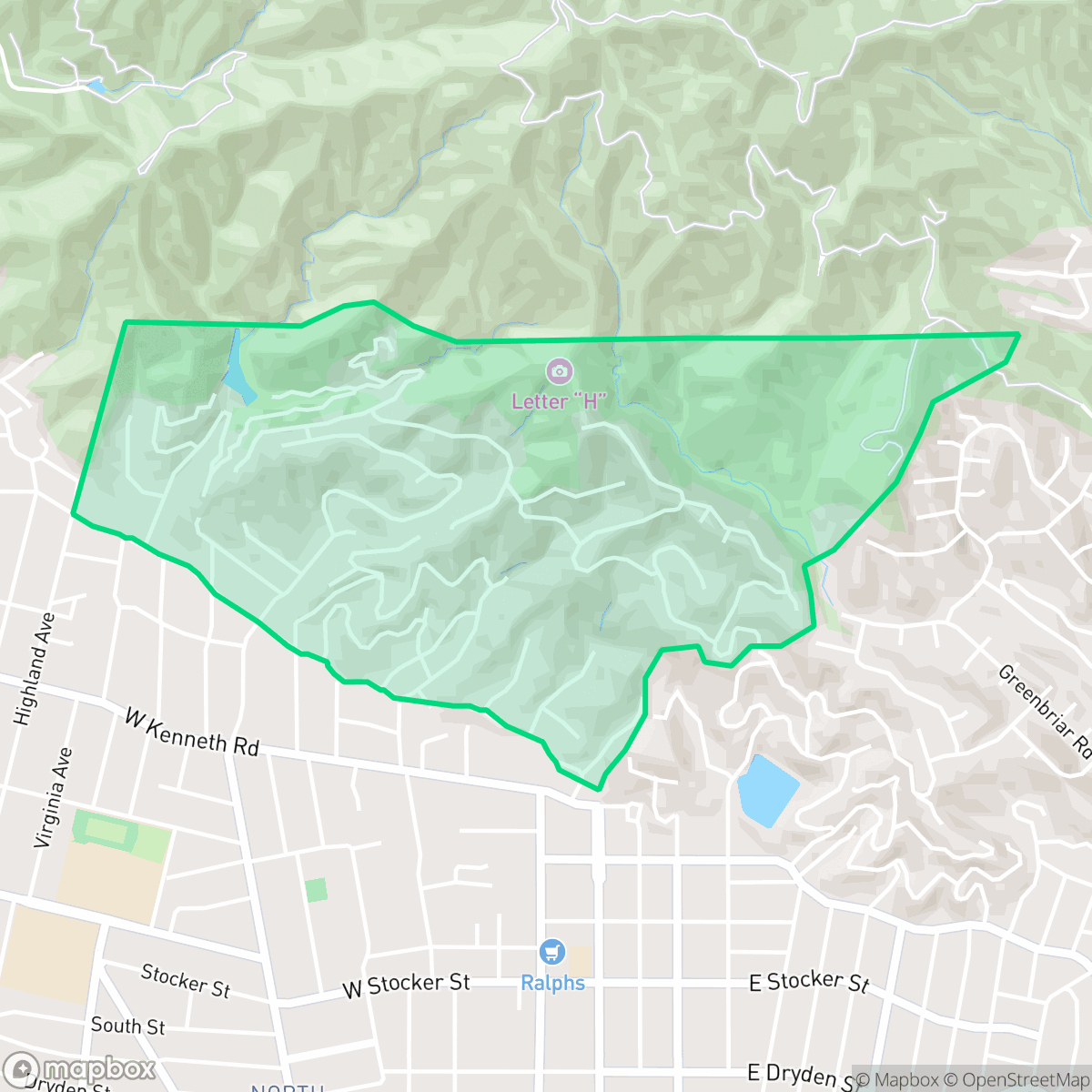
The Brockmont neighborhood in Glendale, California, originated as the 140-acre estate of John C. Brockman, a German immigrant, Civil War veteran, and real estate investor who purchased the foothill land in 1909. Brockman built his grand estate, "Brockmont," in 1910, followed by a landmark four-story clock tower in 1914. Following his death in 1925, the Home Realty Company subdivided the estate into the exclusive "Brockmont Park" tract. The neighborhood is renowned for its high-quality architecture, showcasing a rich collection of 1920s and 1930s Period Revival homes alongside 1950s Ranch-style homes built on the estate's former private parklands. In 2014, Brockmont Park was officially designated as Glendale’s sixth historic district, preserving its distinct architectural character and tree-lined streets.
This neighborhood serves as a peaceful retreat within Glendale, characterized by its well-preserved homes and abundant green spaces. Residents enjoy a high degree of acoustic comfort and privacy, with noise levels significantly lower than the city average. The area maintains a distinct suburban feel, prioritizing residential tranquility over high-traffic commercial development.
The trade-off for this quiet environment is a reliance on personal vehicles for daily errands, as walkability is lower here than in more central parts of the city. Prospective residents should note that while the neighborhood benefits from the high-performing Glendale Unified School District and excellent health insurance coverage, it is located in an area with a high risk of wildfire. It is best suited for those seeking a stable, scenic, and quiet living environment who do not mind a short commute to reach local amenities.
Neighborhood Scores Across 15 Qualities
Homes in this area offer more seclusion than the Glendale average, particularly for properties situated in the hillside. Residential lots in the flatter sections feature moderate spacing between neighbors.
Sidewalks and safe crosswalks are available throughout many residential and commercial sections, though overall accessibility is slightly lower than the Glendale average. According to iHuus data, some streets may lack a complete sidewalk network on both sides of the road.
Large homes and private backyard pools characterize this hilly area, offering a more manicured aesthetic than the Glendale average. According to iHuus data, the landscape features well-spaced properties and frequent upscale amenities.
Grassy parkways and a large open field in the northeast quadrant provide decent space for pets. This level of greenery and park access is slightly above the Glendale average, according to iHuus data.
Open land and scattered greenery characterize this area, providing a more semi-rural atmosphere than most of Glendale. According to iHuus data, the landscape features a low-density mix of single-family homes and wooded pockets.
Residential streets and open spaces offer a serene environment, though the lack of commercial density makes the area significantly less lively than the Glendale average. Most residents will find the neighborhood primarily car-oriented due to the limited number of local businesses and dining options available near the low-density housing.
Steady hums from nearby busy streets are present; however, acoustic comfort levels remain notably higher than the Glendale average according to iHuus data.
Air quality remains consistently good with only rare instances of elevated readings. According to iHuus data, these levels are typical for the Glendale area.
Industrial activity is nonexistent within the neighborhood, as the area consists exclusively of residential and light commercial zones. This lack of warehouses or heavy industrial facilities makes the area even more residential than the Glendale average, according to iHuus data.
Health insurance access is exceptionally high among Brockmont residents, significantly surpassing the average for Glendale. According to iHuus data, nearly all inhabitants are covered by a health plan.
Political leanings in this area trend liberal, though this tendency is less pronounced than the broader Glendale average according to iHuus data.
Residents live alongside a balanced variety of young professionals, families, and seniors. This age distribution is roughly in line with the broader Glendale area, according to iHuus data.
Property sits within a designated floodplain, which may necessitate flood insurance. According to iHuus data, this risk level is slightly above the Glendale average.
Wildfire hazards in this area are exceptionally high, representing a significantly greater danger than the Glendale average. Residents should prioritize maximum fire protection measures and emergency preparedness according to iHuus data.
Address-Level Insights for Brockmont


iHuus Neighborhood Intelligence Insights
Get address-level neighborhood insights for Brockmont
- Street-level scores — see how individual blocks compare, not just neighborhood averages
- Micro-zone boundaries — identify quiet pockets, flood boundaries, and walkable clusters before you visit
- 15 dimensions in full — walkability, noise, air quality, school quality, insurance coverage, population age profile, urban/rural index, and more
- Boundary risk alerts — know if your address sits near a block boundary where scores drop, the kind of detail no listing will ever mention
- School insights — individual school ratings and insights, not just district-level data
- Compare before you commit — side-by-side data across neighborhoods, down to block precision
No credit card required
Compare with Any Neighborhood
| Dimension | Brockmont | Adams Hill |
|---|---|---|
| 🚶 Walkabilityavg 8.69 | ||
| 🔊 Acoustic Comfortavg 3.71 | ||
| 🤫 Privacy Indexavg 4.65 | ||
| 🎨 Visual Appealavg 6.99 | ||
| 🐕 Dog Friendlinessavg 5.3 | ||
| 🗺️ Urban-Rural Indexavg 6.32 | ||
| ✨ Neighborhood Vibeavg 5.1 | ||
| 🏥 Health Insurance Coverageavg 7.89 | ||
| 🌿 Air Qualityavg 8.01 | ||
| 🏭 Industrial Proximityavg 8.92 | ||
| 🌊 Flood Safetyavg 2.96 | ||
| 🗳️ Ideological Leanavg 8.52 | ||
| 👥 Population Age Profileavg 5.28 | ||
| 🔥 Fire Safetyavg 0.5 | ||
| 🏫 School Quality |
Brockmont Rankings
School Districts Serving Brockmont
School Insights for Brockmont
Below average outcomes; significant attendance and academic challenges.
School Insights
See what's really behind every school rating near Brockmont
- Individual school ratings — each school's own score with outcome context, not just a district average
- Enrollment & class size data — student-to-teacher ratio and how it compares to the state average
- Full demographics breakdown — ethnicity and gender composition for every school in the enrollment zone
- Every school in the district — all schools within the enrollment boundary ranked by rating, not just the closest one
- Grade levels & benchmarks — elementary through high school, with below/above state-average flags
No credit card required