Roosevelt, Fresno
Updated · 146,110 residents
Roosevelt is a dense, highly walkable neighborhood characterized by its historic streetcar-era architecture and proximity to major regional landmarks. While it offers a convenient grid layout for pedestrians, residents should anticipate significant road noise and a high-density environment with limited private outdoor space.
Key Highlights
About Roosevelt
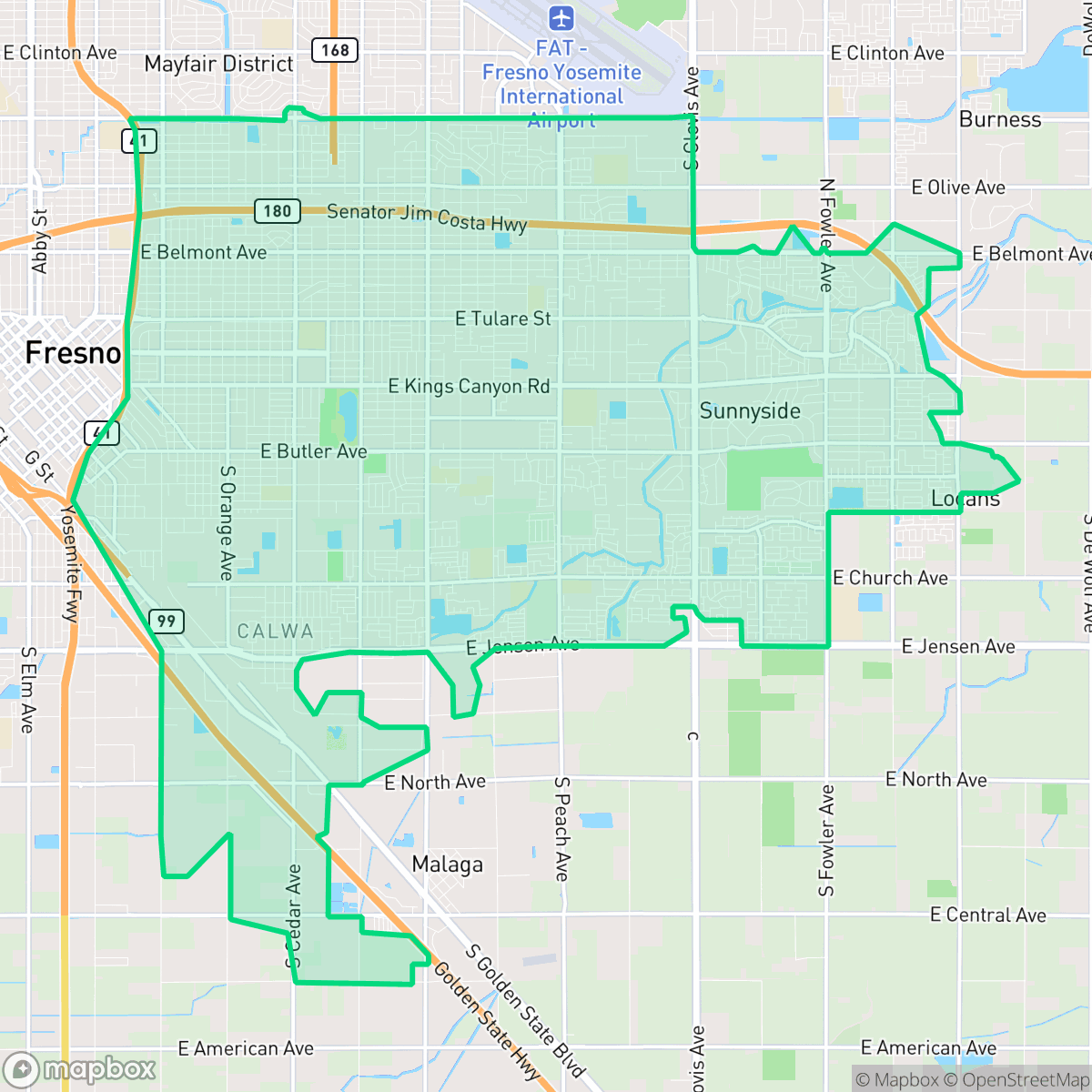
The Roosevelt neighborhood in southeast Fresno, California, is anchored by the historic Theodore Roosevelt High School, established in 1928. The school's Mediterranean Revival-style West Hall, designed by H. Rafael Lake, and its historic auditorium—renamed in 2018 to honor Tony-winning alumna Audra McDonald—serve as central cultural landmarks. The neighborhood's architectural crown jewel is the Huntington Boulevard Historic District, platted in 1911 as part of the Alta Vista Tract streetcar suburb. This grand boulevard, bisected by a grassy median, features an eclectic mix of Craftsman bungalows, Period Revival, and Mediterranean-style estates built for Fresno’s early civic and business leaders. Additionally, the neighborhood encompasses the Fresno Fairgrounds, which historically served as a temporary detention camp for Japanese Americans during World War II.
The area functions as a dense suburban hub defined by its proximity to the Fresno Fairgrounds and a well-connected grid of sidewalks that makes it one of the more pedestrian-friendly parts of the city. The residential landscape features closely spaced homes, often with minimal setbacks, which creates a high-density environment typical of mid-century development. While the neighborhood benefits from established infrastructure and a consistent grid, the presence of nearby logistics centers and major transit corridors contributes to a noticeable industrial influence and elevated noise levels from road traffic.
Prospective residents will find a community that prioritizes accessibility and historical character over expansive private yards or quiet solitude. The neighborhood is best suited for those who value a walkable lifestyle and central location, though it requires an adjustment to the acoustic environment and the trade-offs of living in a high-density setting. According to iHuus data, while the area provides strong connectivity, the combination of industrial proximity and high-density housing means that private outdoor space and noise mitigation remain primary considerations for those looking to relocate here.
Neighborhood Scores Across 15 Qualities
Residential spacing varies from tightly packed apartment clusters to detached homes with small side yards. This layout offers slightly less privacy than the Fresno average due to the close proximity of neighboring structures.
A consistent network of sidewalks and clear pedestrian crossings facilitates easy movement through residential blocks. While the area is slightly below the city average for walkability due to some highway-related barriers, the well-connected street grid remains highly functional for pedestrians.
Standard tract housing and multi-family apartments define the landscape, featuring modest yards and uniform rooflines. This visual character is slightly less diverse than the Fresno city average.
Access to dog walking areas is somewhat restricted due to narrow sidewalk verges and a reliance on private, fenced yards. While some central parks and school fields are available, the availability of accessible green space is slightly below the Fresno average.
A varied landscape of residential streets meets large-scale agricultural fields and industrial logistics hubs. This area feels slightly more open than the typical Fresno urban environment due to the presence of nearby orchards and warehouses.
A balanced mix of residential streets, light industrial units, and social hubs provides a steady rhythm of activity. While some areas feature diverse dining and local services, many sections remain quiet and car-dependent.
Frequent noise from nearby railroad tracks and major thoroughfares defines the area. According to iHuus data, acoustic comfort in Roosevelt is slightly lower than the Fresno average.
Air quality in Roosevelt is generally acceptable, though it remains slightly higher than the Fresno average. Residents may encounter occasional periods of concern, particularly for sensitive groups, according to iHuus data.
Industrial activity is minimal throughout most of the area, with far fewer heavy warehouses or factories than the city average. While some light commercial use exists, residents will find the neighborhood is primarily composed of residential and institutional spaces.
Health insurance coverage rates in Roosevelt are lower than the Fresno city average. According to iHuus data, a significant portion of the resident population lacks employer-sponsored or private coverage.
Voting patterns and census indicators reflect a much more liberal leaning than the Fresno city average, according to iHuus data.
Residents of all ages live in this area, providing a balanced mix of young adults, families, and seniors. This demographic variety is largely consistent with the broader Fresno area, according to iHuus data.
Frequent flooding is a concern in this area because it sits within a designated floodplain. According to iHuus data, the risk of flooding is notably higher than the average for Fresno.
Address-Level Insights for Roosevelt


iHuus Neighborhood Intelligence Insights
Get address-level neighborhood insights for Roosevelt
- Street-level scores — see how individual blocks compare, not just neighborhood averages
- Micro-zone boundaries — identify quiet pockets, flood boundaries, and walkable clusters before you visit
- 15 dimensions in full — walkability, noise, air quality, school quality, insurance coverage, population age profile, urban/rural index, and more
- Boundary risk alerts — know if your address sits near a block boundary where scores drop, the kind of detail no listing will ever mention
- School insights — individual school ratings and insights, not just district-level data
- Compare before you commit — side-by-side data across neighborhoods, down to block precision
No credit card required
Compare with Any Neighborhood
| Dimension | Roosevelt | Bullard |
|---|---|---|
| 🚶 Walkabilityavg 8.26 | ||
| 🔊 Acoustic Comfortavg 3.54 | ||
| 🤫 Privacy Indexavg 5.3 | ||
| 🎨 Visual Appealavg 6.38 | ||
| 🐕 Dog Friendlinessavg 5.63 | ||
| 🗺️ Urban-Rural Indexavg 6.71 | ||
| ✨ Neighborhood Vibeavg 4.35 | ||
| 🏥 Health Insurance Coverageavg 7.05 | ||
| 🌿 Air Qualityavg 4.98 | ||
| 🏭 Industrial Proximityavg 7.91 | ||
| 🌊 Flood Safetyavg 2.48 | ||
| 🗳️ Ideological Leanavg 7.13 | ||
| 👥 Population Age Profileavg 4.51 | ||
| 🔥 Fire Safetyavg 0.01 | ||
| 🏫 School Quality |
Roosevelt Rankings
School Districts Serving Roosevelt
School Insights for Roosevelt
Below average outcomes; significant attendance and academic challenges.
School Insights
See what's really behind every school rating near Roosevelt
- Individual school ratings — each school's own score with outcome context, not just a district average
- Enrollment & class size data — student-to-teacher ratio and how it compares to the state average
- Full demographics breakdown — ethnicity and gender composition for every school in the enrollment zone
- Every school in the district — all schools within the enrollment boundary ranked by rating, not just the closest one
- Grade levels & benchmarks — elementary through high school, with below/above state-average flags
No credit card required