Canyon Heights, Fremont
Updated · 2,635 residents
Canyon Heights is a highly walkable, dog-friendly community nestled against the foothills of Fremont. While the area provides excellent access to regional parks and local trails, residents should be prepared for notable noise levels from nearby road and rail traffic.
Key Highlights
About Canyon Heights
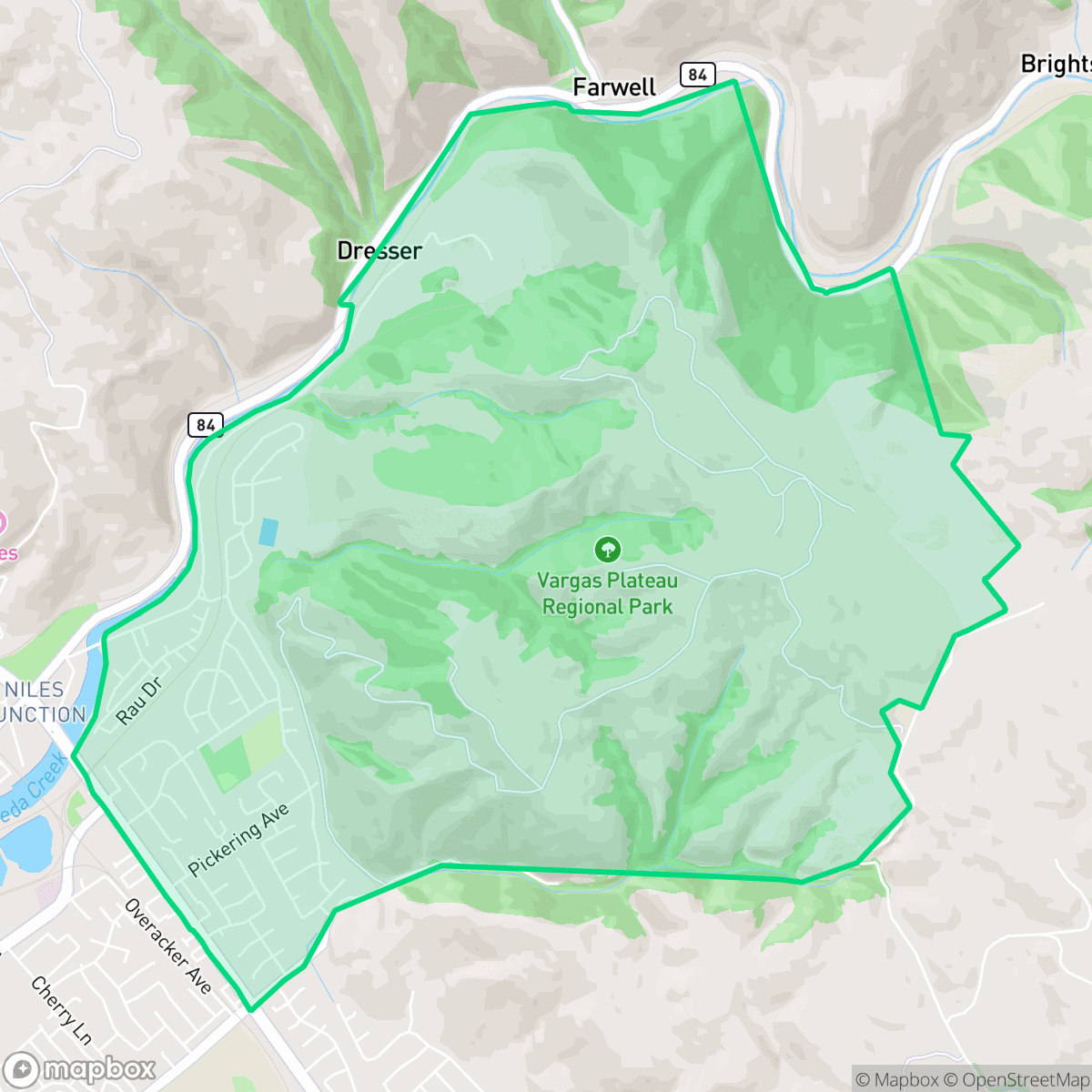
The Canyon Heights neighborhood in Fremont, California—often referred to as Canyon Heights/Vallejo Mills—is nestled in the foothills bordered by Niles Canyon Road, Mission Boulevard, and Morrison Canyon Road. The neighborhood derives its name from the historic Vallejo Flour Mill, constructed in 1853 by José de Jesús Vallejo on his Rancho Arroyo de la Alameda. The stone foundations of a second mill built in 1856 remain visible today at the nearby Vallejo Mill Historical Park. Development of the residential neighborhood occurred in two main phases: half of the area was established prior to Fremont’s incorporation in 1956, while the remaining portion was built during the mid-1970s. Today, the neighborhood is characterized by its quiet, tree-lined streets, proximity to the Vargas Plateau Regional Park, and a decommissioned railway trail that has been repurposed as a popular walking path.
The neighborhood is defined by its strong connection to the outdoors, offering a blend of suburban residential life and proximity to expansive natural spaces like the Vargas Plateau Regional Park. With a high walkability score, the area allows residents to reach local amenities and parks on foot with ease. According to iHuus data, the community maintains a high level of dog friendliness and excellent health insurance coverage, making it a stable environment for families and pet owners who value an active, outdoor-oriented lifestyle.
Prospective residents should consider certain trade-offs regarding the local environment. The neighborhood experiences significant acoustic challenges, with average noise levels reaching 66 decibels due to its location near major roadways and railway lines. Furthermore, the area faces a high risk regarding fire safety, which is a critical factor for those moving into this foothill-adjacent setting. While the pace of life is quiet and low-density, those seeking a bustling urban center may find the limited local business presence a notable contrast to more commercial parts of the city.
Neighborhood Scores Across 15 Qualities
Residential spacing offers a balance of proximity and separation, providing more buffer between neighbors than the typical Fremont area. According to iHuus data, the density remains moderate without the extreme closeness found in denser parts of the city.
Wide sidewalks and numerous crossings make navigating the area on foot easy. While highly accessible, the walkability remains slightly below the Fremont average according to iHuus data.
Large homes and upscale amenities provide a visually pleasant environment that is slightly above the Fremont average. Wide driveways and well-maintained properties characterize the local streetscape, according to iHuus data.
Extensive trail networks and large open parks provide ample space for pets. This access to outdoor recreation is significantly higher than the Fremont average, according to iHuus data.
Expansive woodlands and open fields characterize this area, providing a more rustic feel than the typical Fremont landscape. According to iHuus data, the neighborhood features a notable presence of undeveloped land and scattered homes compared to the city average.
Low density and significant open space create a tranquil environment, though the area lacks the social activity and commercial density found in more active parts of Fremont. Most parts of the neighborhood are highly serene with very few local businesses or social spots reachable by foot.
Frequent noise from nearby freeway and railroad activity significantly impacts acoustic comfort. This level of disturbance is notably higher than the Fremont average, according to iHuus data.
Air quality in this area fluctuates between acceptable and unhealthy levels, appearing slightly higher than the Fremont average. Residents with respiratory sensitivities should remain aware of occasional periods of concern.
This area is free from warehouses, industrial facilities, or hazard sites, offering a more residential environment than the Fremont average. According to iHuus data, the landscape consists primarily of homes and natural parkland with no detected industrial presence.
Health insurance access is nearly universal among Canyon Heights residents, appearing significantly higher than the Fremont city average according to iHuus data.
Voting patterns and census indicators show a predominantly liberal political leaning, which is very similar to the broader Fremont area according to iHuus data.
A balanced mix of young professionals, families, and seniors defines the local community. According to iHuus data, this demographic spread is more varied than the typical profile found across Fremont.
Flood risk in this area is significantly lower than the Fremont average, although some residual risk exists within the 500-year floodplain according to iHuus data.
Severe wildfire hazards exist within this area, representing a significantly higher risk level than the Fremont average. Residents should prioritize maximum protection measures and emergency preparedness according to iHuus data.
Address-Level Insights for Canyon Heights


iHuus Neighborhood Intelligence Insights
Get address-level neighborhood insights for Canyon Heights
- Street-level scores — see how individual blocks compare, not just neighborhood averages
- Micro-zone boundaries — identify quiet pockets, flood boundaries, and walkable clusters before you visit
- 15 dimensions in full — walkability, noise, air quality, school quality, insurance coverage, population age profile, urban/rural index, and more
- Boundary risk alerts — know if your address sits near a block boundary where scores drop, the kind of detail no listing will ever mention
- School insights — individual school ratings and insights, not just district-level data
- Compare before you commit — side-by-side data across neighborhoods, down to block precision
No credit card required
Compare with Any Neighborhood
| Dimension | Canyon Heights | 28 Palms |
|---|---|---|
| 🚶 Walkabilityavg 9.3 | ||
| 🔊 Acoustic Comfortavg 3.38 | ||
| 🤫 Privacy Indexavg 5.09 | ||
| 🎨 Visual Appealavg 6.63 | ||
| 🐕 Dog Friendlinessavg 7.76 | ||
| 🗺️ Urban-Rural Indexavg 6.78 | ||
| ✨ Neighborhood Vibeavg 4.75 | ||
| 🏥 Health Insurance Coverageavg 8.99 | ||
| 🌿 Air Qualityavg 5.76 | ||
| 🏭 Industrial Proximityavg 8.97 | ||
| 🌊 Flood Safetyavg 3.62 | ||
| 🗳️ Ideological Leanavg 9.57 | ||
| 👥 Population Age Profileavg 4.91 | ||
| 🔥 Fire Safetyavg 0.2 | ||
| 🏫 School Quality |
Canyon Heights Rankings
School Districts Serving Canyon Heights
School Insights for Canyon Heights
Below average outcomes; significant attendance and academic challenges.
School Insights
See what's really behind every school rating near Canyon Heights
- Individual school ratings — each school's own score with outcome context, not just a district average
- Enrollment & class size data — student-to-teacher ratio and how it compares to the state average
- Full demographics breakdown — ethnicity and gender composition for every school in the enrollment zone
- Every school in the district — all schools within the enrollment boundary ranked by rating, not just the closest one
- Grade levels & benchmarks — elementary through high school, with below/above state-average flags
No credit card required