Islands, Foster City
Updated · 1,873 residents
The Islands is a master-planned waterfront neighborhood defined by its serene lagoon access and meticulously landscaped residential streets. It offers exceptional walkability and a peaceful suburban environment, making it a highly desirable enclave for those seeking both recreational amenities and a quiet, well-maintained living space.
Key Highlights
About Islands
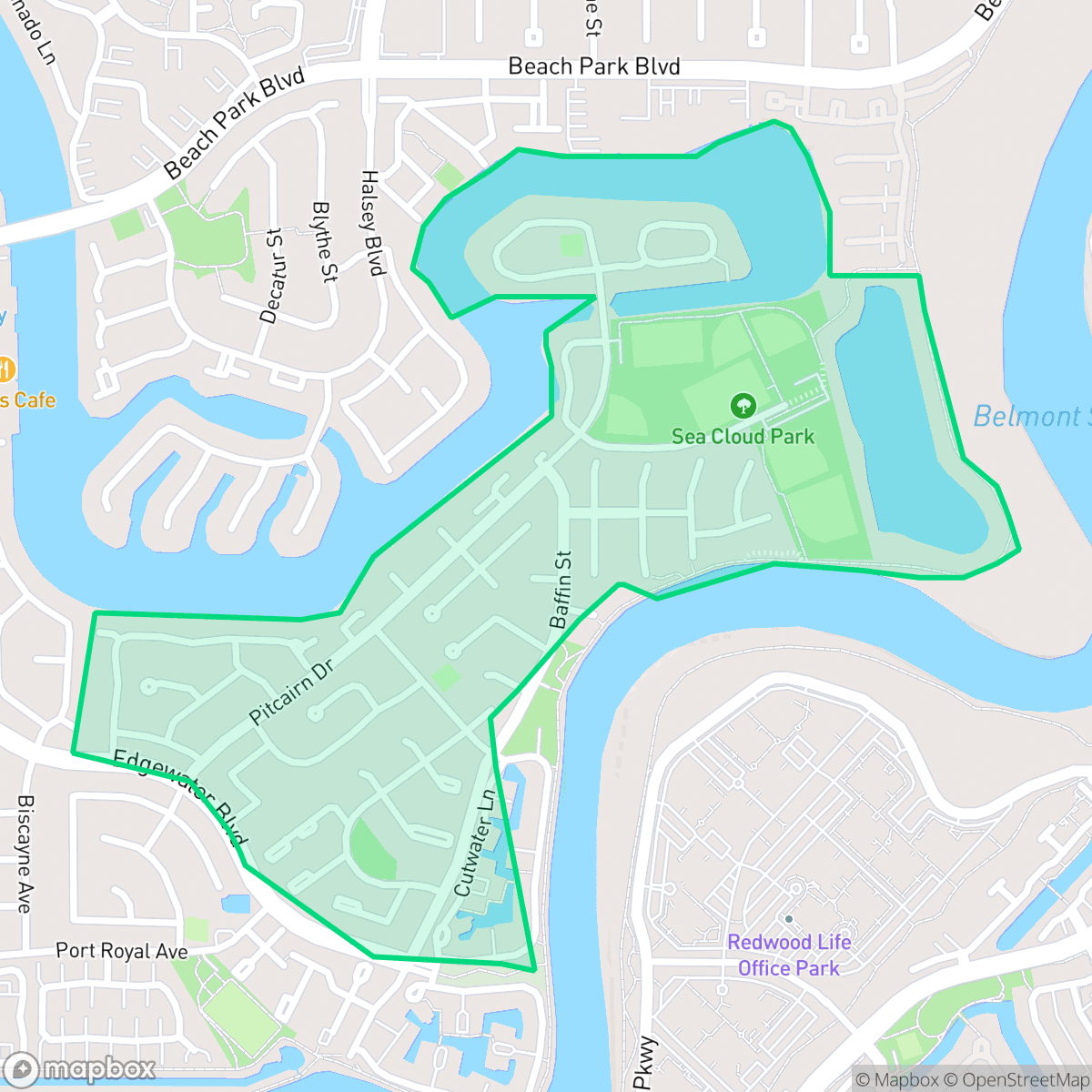
The Islands neighborhood (Neighborhood #5) in Foster City, California, is a residential enclave situated along the city’s central lagoon. The area's identity is anchored by "The Islands," a 174-unit condominium and townhome complex completed in the mid-1970s. Designed with a distinct waterfront orientation, the complex won the 1976 Award of Excellence from *Architectural Record* and the 1976 Award of Merit from the American Institute of Architects (AIA) and *House and Home* magazine. The neighborhood features a high density of multi-family housing, including the Winston Square and Winston Village townhomes, alongside waterfront single-family homes on Coronado and Pizarro Lanes that feature private docks. Residents enjoy localized community landmarks like the waterfront Catamaran Park and the popular Saturday morning farmers market held at Winston Square.
This residential area is characterized by its integration with the city's central lagoon system, providing residents with a unique blend of water-centric recreation and manicured suburban aesthetics. The neighborhood maintains a high visual appeal due to its well-kept lots and private waterfront access, while the complete absence of industrial activity reinforces its status as a purely residential retreat.
For those prioritizing accessibility, the neighborhood provides a highly walkable environment with clear pedestrian paths and safe crossings throughout. While housing density is moderate, the layout effectively balances community interaction with private space. The area is particularly well-suited for families and professionals who value proximity to high-performing schools and a quiet, stable atmosphere, as evidenced by the consistently high health insurance coverage and community engagement levels found in the district.
Neighborhood Scores Across 15 Qualities
Residential spacing varies between shared townhome walls and detached houses separated by yards or lagoons. This level of seclusion is higher than the average for Foster City, according to iHuus data.
Continuous sidewalks and dedicated pedestrian trails ensure easy movement throughout the neighborhood. This level of walkability is even higher than the Foster City average, providing ample crossings and clear pathways for all residents.
Large homes with private pools and meticulously landscaped lots create a premium aesthetic that is slightly above the Foster City average. Many properties feature high-end amenities and direct waterfront access according to iHuus data.
Abundant greenbelts, waterfront trails, and wide grassy verges provide ample space for pets. These connected park systems and safe paths are consistent with the city average for dog friendliness.
Planned residential density is consistent with the broader Foster City area, characterized by a mix of single-family homes and townhouses integrated with artificial lagoons. This master-planned environment offers a stable suburban landscape with significant paved infrastructure and organized housing tracts.
Primarily composed of peaceful residential blocks and green spaces, this area offers a slower pace than the Foster City average. While some local parks and leisure hubs provide occasional activity, most daily errands and commercial needs require a car.
Acoustic levels are notably lower than the Foster City average, with noise typically limited to infrequent trains or distant vehicle traffic. According to iHuus data, this area provides a tranquil environment for residents.
Air quality in this area fluctuates between acceptable and unhealthy levels. According to iHuus data, these conditions are consistent with the average found throughout Foster City.
Residential life in the Islands is characterized by a complete absence of warehouses, industrial facilities, or hazardous sites. This area is purely residential and recreational, matching the citywide standard for zero industrial proximity.
Nearly all residents in this area have access to health insurance, though coverage rates are slightly lower than the Foster City average according to iHuus data.
Voting patterns and census indicators show a very strong liberal leaning, which is consistent with the city average for Foster City.
Residents live alongside a balanced mix of young adults, families, and older populations. This demographic spread is largely consistent with the broader Foster City area according to iHuus data.
Residual flood risk exists within this area as it is located inside a 500-year floodplain, though safety levels remain comparable to the Foster City average according to iHuus data.
Address-Level Insights for Islands


iHuus Neighborhood Intelligence Insights
Get address-level neighborhood insights for Islands
- Street-level scores — see how individual blocks compare, not just neighborhood averages
- Micro-zone boundaries — identify quiet pockets, flood boundaries, and walkable clusters before you visit
- 15 dimensions in full — walkability, noise, air quality, school quality, insurance coverage, population age profile, urban/rural index, and more
- Boundary risk alerts — know if your address sits near a block boundary where scores drop, the kind of detail no listing will ever mention
- School insights — individual school ratings and insights, not just district-level data
- Compare before you commit — side-by-side data across neighborhoods, down to block precision
No credit card required
Compare with Any Neighborhood
| Dimension | Islands | Admirals |
|---|---|---|
| 🚶 Walkabilityavg 9.66 | ||
| 🔊 Acoustic Comfortavg 5.36 | ||
| 🤫 Privacy Indexavg 4.79 | ||
| 🎨 Visual Appealavg 7.56 | ||
| 🐕 Dog Friendlinessavg 8.13 | ||
| 🗺️ Urban-Rural Indexavg 6.57 | ||
| ✨ Neighborhood Vibeavg 5.89 | ||
| 🏥 Health Insurance Coverageavg 9.32 | ||
| 🌿 Air Qualityavg 6 | ||
| 🏭 Industrial Proximityavg 9.99 | ||
| 🌊 Flood Safetyavg 7.51 | ||
| 🗳️ Ideological Leanavg 9.61 | ||
| 👥 Population Age Profileavg 4.98 | ||
| 🔥 Fire Safety | ||
| 🏫 School Quality |
Islands Rankings
School Districts Serving Islands
School Insights for Islands
Below average outcomes; significant attendance and academic challenges.
School Insights
See what's really behind every school rating near Islands
- Individual school ratings — each school's own score with outcome context, not just a district average
- Enrollment & class size data — student-to-teacher ratio and how it compares to the state average
- Full demographics breakdown — ethnicity and gender composition for every school in the enrollment zone
- Every school in the district — all schools within the enrollment boundary ranked by rating, not just the closest one
- Grade levels & benchmarks — elementary through high school, with below/above state-average flags
No credit card required