Culver West, Culver City
Updated · 5,126 residents
Culver West is a highly walkable residential enclave defined by its dense, mid-century housing and immediate access to the diverse culinary corridor along Washington Boulevard. While residents benefit from exceptional pedestrian connectivity, the area is characterized by tight property spacing and notable ambient noise from local road traffic.
Key Highlights
About Culver West
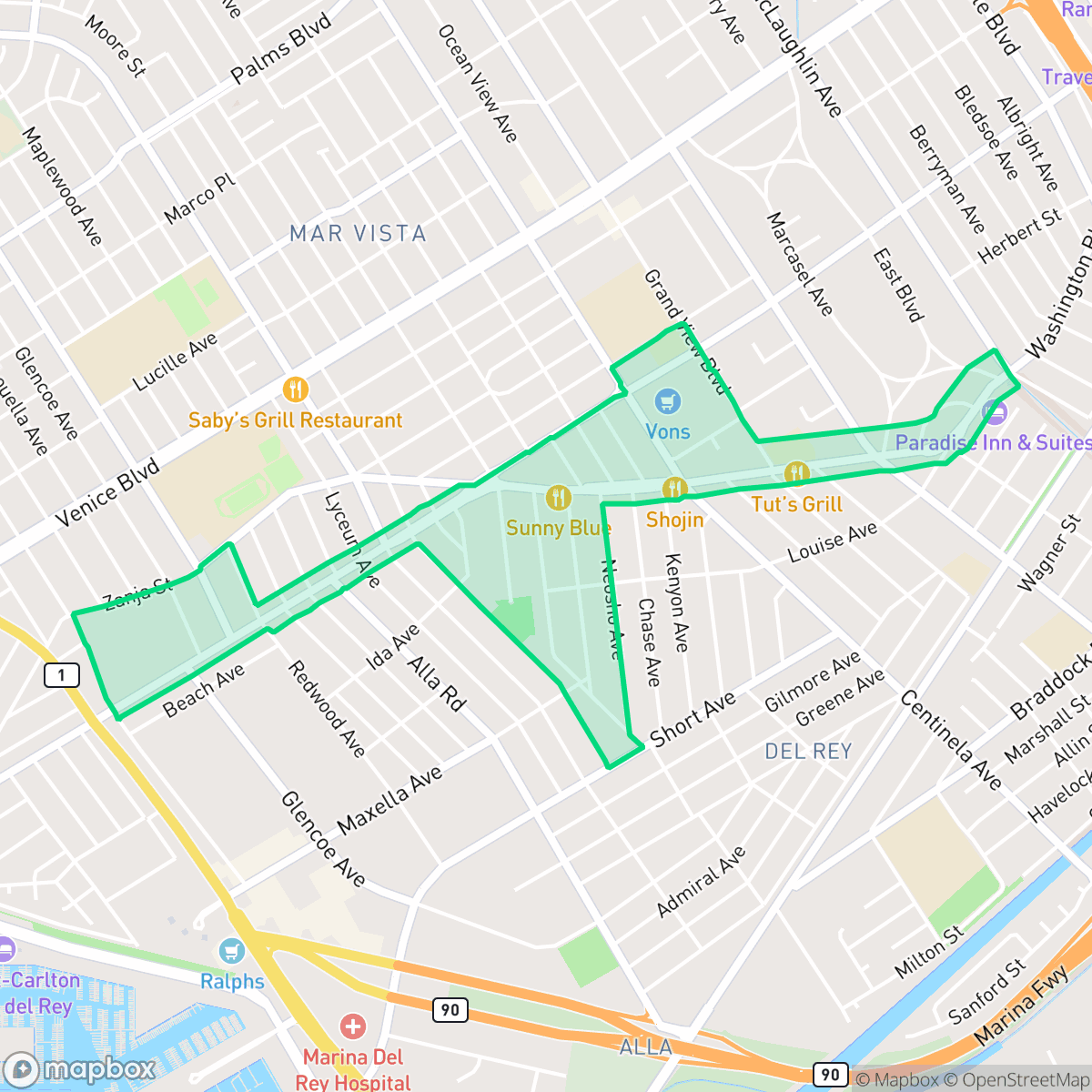
Annexed to Culver City in the mid-1920s, Culver West is a narrow, westernmost residential finger of the city that straddles Washington Boulevard. Originally known as the "West End," the neighborhood historically carried a distinct Los Angeles zip code (90066), which occasionally made residents feel separate from the rest of the municipality. Its primary community hub is Culver West Alexander Park, established in 1948 as West End Park. Notably, Wade Street, which leads directly into the park, was once home to legendary jazz musician Louis Armstrong. Architecturally characterized by mid-century single-family homes, Culver West has evolved into a prominent culinary destination, with its bustling Washington Boulevard corridor celebrated for a dense concentration of trendy gastropubs, cafes, and restaurants.
This neighborhood functions as a dense urban-suburban hybrid, offering a high degree of walkability that allows for easy access to local cafes and restaurants. According to iHuus data, the area maintains a high air quality index and strong health insurance coverage, contributing to its appeal as a stable residential choice. The architectural landscape consists primarily of mid-century bungalows and multi-unit dwellings, which are situated in close proximity to one another, resulting in limited privacy and minimal private green space. The area is best suited for individuals who prioritize pedestrian access to dining and services over quiet suburban seclusion, as the neighborhood experiences significant noise levels primarily from road traffic. While the proximity to industrial zones is relatively low, the high-density layout and lack of natural disaster mitigation infrastructure are factors for prospective residents to consider. Families often weigh the performance of the local Culver City Unified School District against the broader, more variable outcomes found in the neighboring Los Angeles Unified system.
Neighborhood Scores Across 15 Qualities
Buildings and apartment blocks are often closely packed with minimal spacing between neighbors. This density is slightly higher than the Culver City average, meaning privacy buffers between structures are frequently limited.
A dense street grid with continuous sidewalks on both sides of most roads and frequent crosswalks makes much of the area easily accessible on foot. This level of pedestrian infrastructure is even more robust than the average found throughout Culver City, according to iHuus data.
Housing consists primarily of modest tract homes and apartment complexes with small yards and few private pools. This level of visual variety is slightly below the Culver City average according to iHuus data.
Access to large public parks is limited, though some areas feature continuous sidewalks and green parkway strips for walking. According to iHuus data, the availability of accessible outdoor space for pets is slightly below the Culver City average.
Streetscapes feature a balanced blend of greenery and paved surfaces, mirroring the general character of Culver City. Residential pockets consist of a mix of single-family homes and low-rise apartment blocks.
Residential streets and green spaces provide a steady, calm atmosphere with a notable absence of the high-energy activity found in more central parts of the city. While local dining and wellness spots are available, many services require a short drive as walking access to businesses is limited.
Frequent noise from nearby freeways and rail lines defines the area. According to iHuus data, acoustic levels are higher than the Culver City average.
Air quality in Culver West remains consistently good with rare instances of elevated readings. This level of air purity is on par with the rest of Culver City according to iHuus data.
Heavy industrial activity is largely absent from the area, though some light commercial warehouses and loading docks are located along the eastern and western edges. According to iHuus data, the presence of large-scale industrial sites is roughly in line with the rest of Culver City.
Health insurance coverage levels in Culver West are consistent with the Culver City average. Residents can expect access to medical coverage comparable to the rest of the city, according to iHuus data.
Voting patterns and census indicators reflect a deeply liberal political leaning, which is consistent with the broader Culver City area according to iHuus data.
A diverse range of age groups resides here, with a demographic spread that is consistent with the broader Culver City area. This mix of young adults, families, and older residents creates a stable demographic profile according to iHuus data.
Flood risk levels remain undetermined due to a lack of detailed federal studies for this specific area. According to iHuus data, the potential for flooding is slightly higher than the average found in other parts of Culver City.
Address-Level Insights for Culver West


iHuus Neighborhood Intelligence Insights
Get address-level neighborhood insights for Culver West
- Street-level scores — see how individual blocks compare, not just neighborhood averages
- Micro-zone boundaries — identify quiet pockets, flood boundaries, and walkable clusters before you visit
- 15 dimensions in full — walkability, noise, air quality, school quality, insurance coverage, population age profile, urban/rural index, and more
- Boundary risk alerts — know if your address sits near a block boundary where scores drop, the kind of detail no listing will ever mention
- School insights — individual school ratings and insights, not just district-level data
- Compare before you commit — side-by-side data across neighborhoods, down to block precision
No credit card required
Compare with Any Neighborhood
| Dimension | Culver West | Blair Hills |
|---|---|---|
| 🚶 Walkabilityavg 9.25 | ||
| 🔊 Acoustic Comfortavg 1.98 | ||
| 🤫 Privacy Indexavg 4.22 | ||
| 🎨 Visual Appealavg 6.37 | ||
| 🐕 Dog Friendlinessavg 5.1 | ||
| 🗺️ Urban-Rural Indexavg 6.22 | ||
| ✨ Neighborhood Vibeavg 5.3 | ||
| 🏥 Health Insurance Coverageavg 8.25 | ||
| 🌿 Air Qualityavg 8 | ||
| 🏭 Industrial Proximityavg 8.28 | ||
| 🌊 Flood Safetyavg 5.25 | ||
| 🗳️ Ideological Leanavg 9.89 | ||
| 👥 Population Age Profileavg 5.05 | ||
| 🔥 Fire Safetyavg 0.02 | ||
| 🏫 School Quality |
Culver West Rankings
School Districts Serving Culver West
School Insights for Culver West
Below average outcomes; significant attendance and academic challenges.
School Insights
See what's really behind every school rating near Culver West
- Individual school ratings — each school's own score with outcome context, not just a district average
- Enrollment & class size data — student-to-teacher ratio and how it compares to the state average
- Full demographics breakdown — ethnicity and gender composition for every school in the enrollment zone
- Every school in the district — all schools within the enrollment boundary ranked by rating, not just the closest one
- Grade levels & benchmarks — elementary through high school, with below/above state-average flags
No credit card required