Sunrise Ranch, Citrus Heights
Updated · 8,492 residents
Sunrise Ranch is a quiet, suburban neighborhood in Citrus Heights characterized by a mix of tract housing and apartment complexes. While the area offers a peaceful residential setting with access to local dining and green space, residents should be aware of elevated road noise levels and a reliance on vehicles for most daily errands.
Key Highlights
About Sunrise Ranch
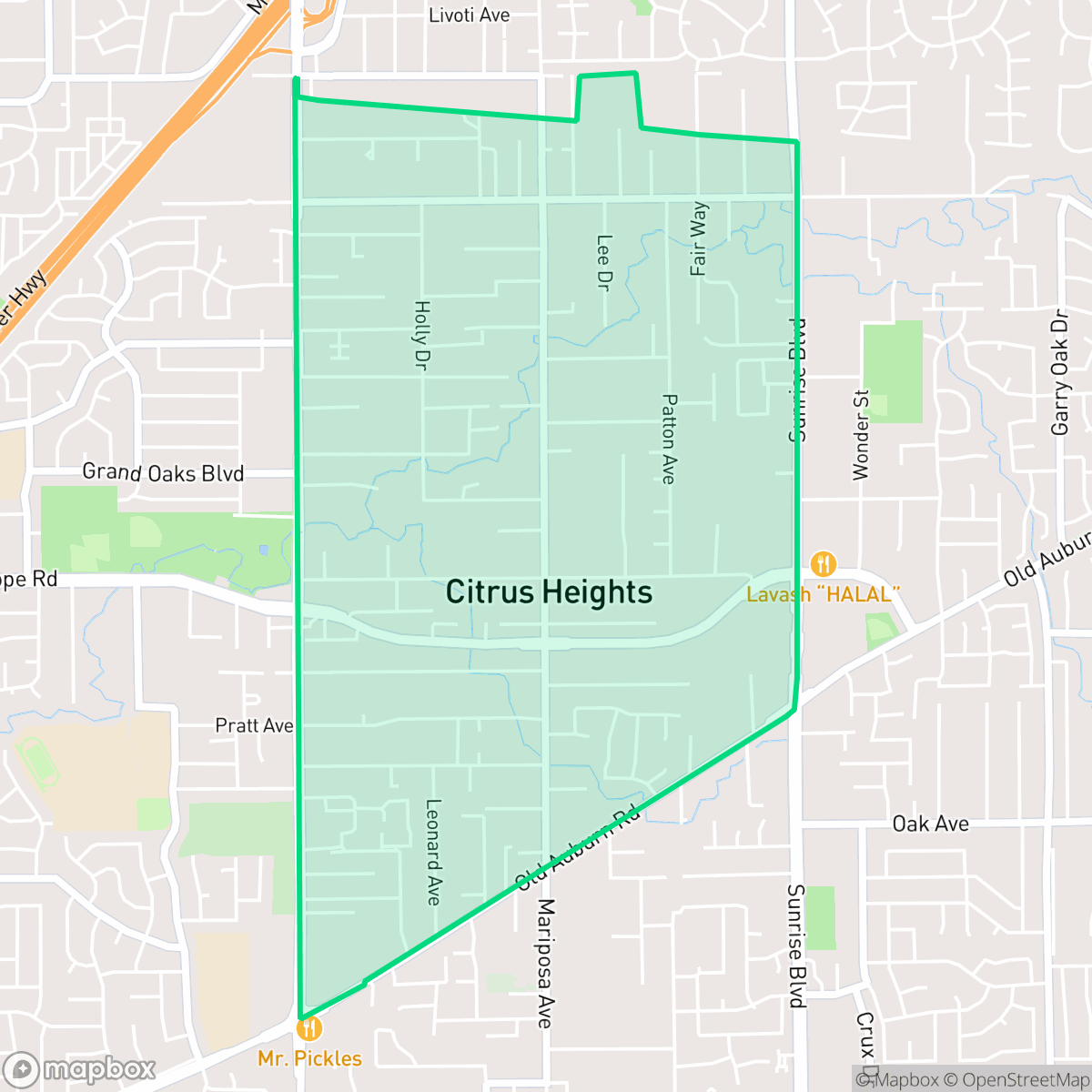
The Sunrise Ranch neighborhood in Citrus Heights, California, traces its origins to an 1868 homestead established by widow Georgiana Jane Pitcher (later DeKay) and her eight children. Pitcher claimed 650 acres near the Sacramento–Placer County line and named her property "Sunrise Ranch". This historic estate ultimately gave its name to both the modern neighborhood and Sunrise Boulevard, which originally developed as a road connecting her ranch to Greenback Lane. The original 1868 homestead, known as the Dekay/Sunrise Ranch Home, still stands as one of the oldest residential structures in the area, though it has been extensively remodeled over the decades. Following World War II, the agricultural ranch lands were subdivided to accommodate the suburban development that characterizes the neighborhood today.
The area maintains a low-density suburban atmosphere, featuring a blend of single-family homes and multi-family residences. It is situated away from industrial activity, providing a residential environment that is largely free from heavy commercial hazards. Residents benefit from proximity to local services and dining options, though the overall layout requires a vehicle for most daily tasks. According to iHuus data, the neighborhood provides a stable residential environment with high health insurance coverage rates among the local population.
Prospective residents should consider the trade-offs of living in this part of Citrus Heights. While the streets are generally quiet and safe for walking, the area experiences higher ambient noise levels due to road traffic. Educational options are mixed, with access to highly rated districts like the Roseville Joint Union High School District, while some local elementary schools face significant performance challenges. The neighborhood is well-suited for those prioritizing a residential atmosphere over high-density urban convenience.
Neighborhood Scores Across 15 Qualities
Typical suburban setbacks provide some separation between neighbors, though multi-family units are more compressed than detached single-family homes. This level of spacing is slightly higher than the Citrus Heights average according to iHuus data.
Sidewalks are available along main roads and most residential blocks, though connectivity is somewhat limited by nearby highway traffic and commercial zones. Low traffic streets provide safe walking conditions, though this level of walkability is slightly below the Citrus Heights average.
Residential scenery consists of a mix of standard tract housing and larger lots, often featuring private pools in backyards. Overall visual variety is slightly below the Citrus Heights average according to iHuus data.
Walking opportunities for dogs are somewhat limited by narrow sidewalk verges, though a large public park at the edge of the neighborhood provides accessible green space. According to iHuus data, the availability of pet-friendly areas in Sunrise Ranch is slightly below the Citrus Heights average.
Frequent open land and scattered homes amid fields or woodland define this area. The landscape reflects a balance of open space and residential density that is consistent with the Citrus Heights average.
Suburban streets and green spaces offer a steady rhythm of dining and essential services, though the area's liveliness is roughly in line with the Citrus Heights average. While various local eateries are accessible, much of the neighborhood remains low-density with limited business density within walking distance.
Frequent acoustic disturbances from nearby railroad tracks and major freeway traffic are common here. This level of noise is notably higher than the Citrus Heights average, according to iHuus data.
Air quality in this area typically fluctuates between acceptable and unhealthy levels. According to iHuus data, the air quality here is consistent with the average found throughout Citrus Heights.
Industrial activity and heavy warehouses are entirely absent from this area, providing a landscape that is even more purely residential than the Citrus Heights average. According to iHuus data, the neighborhood contains no visible industrial hazards or large scale logistics hubs.
Health insurance enrollment is prevalent among residents, sitting well above the Citrus Heights average according to iHuus data.
Political leanings in this area favor conservative perspectives more than the typical Citrus Heights neighborhood. This community maintains a conservative majority with a modest opposing presence according to iHuus data.
Residents live alongside a balanced variety of young adults, families, and older individuals. This age distribution is largely consistent with the broader Citrus Heights area.
Flood risk levels in this area are currently undetermined due to incomplete federal studies, though the risk appears slightly higher than the Citrus Heights average according to iHuus data.
Address-Level Insights for Sunrise Ranch


iHuus Neighborhood Intelligence Insights
Get address-level neighborhood insights for Sunrise Ranch
- Street-level scores — see how individual blocks compare, not just neighborhood averages
- Micro-zone boundaries — identify quiet pockets, flood boundaries, and walkable clusters before you visit
- 15 dimensions in full — walkability, noise, air quality, school quality, insurance coverage, population age profile, urban/rural index, and more
- Boundary risk alerts — know if your address sits near a block boundary where scores drop, the kind of detail no listing will ever mention
- School insights — individual school ratings and insights, not just district-level data
- Compare before you commit — side-by-side data across neighborhoods, down to block precision
No credit card required
Compare with Any Neighborhood
| Dimension | Sunrise Ranch | Arcade Creek |
|---|---|---|
| 🚶 Walkabilityavg 7.64 | ||
| 🔊 Acoustic Comfortavg 3.51 | ||
| 🤫 Privacy Indexavg 5.76 | ||
| 🎨 Visual Appealavg 6.71 | ||
| 🐕 Dog Friendlinessavg 6.51 | ||
| 🗺️ Urban-Rural Indexavg 6.7 | ||
| ✨ Neighborhood Vibeavg 4.83 | ||
| 🏥 Health Insurance Coverageavg 7.48 | ||
| 🌿 Air Qualityavg 6 | ||
| 🏭 Industrial Proximityavg 9.36 | ||
| 🌊 Flood Safetyavg 4.4 | ||
| 🗳️ Ideological Leanavg 4.27 | ||
| 👥 Population Age Profileavg 5.07 | ||
| 🔥 Fire Safety | ||
| 🏫 School Quality |
Sunrise Ranch Rankings
School Districts Serving Sunrise Ranch
School Insights for Sunrise Ranch
Below average outcomes; significant attendance and academic challenges.
School Insights
See what's really behind every school rating near Sunrise Ranch
- Individual school ratings — each school's own score with outcome context, not just a district average
- Enrollment & class size data — student-to-teacher ratio and how it compares to the state average
- Full demographics breakdown — ethnicity and gender composition for every school in the enrollment zone
- Every school in the district — all schools within the enrollment boundary ranked by rating, not just the closest one
- Grade levels & benchmarks — elementary through high school, with below/above state-average flags
No credit card required